 February 2024 in “Buletin Veteriner Udayana”
 Using sulfur soap helped improve skin problems in a dog with demodecosis.
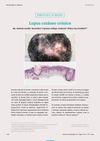 January 2024 in “Revista Dermatológica Centro Uraga”
 The patient has Chronic Cutaneous Lupus, a skin condition causing plaques and hair loss.
 August 2023 in “British journal of dermatology/British journal of dermatology, Supplement”
 Rubbing or pressing on the face can cause small bumps, and changing posture along with certain creams can improve them.
 August 2023 in “Journal of animal research”
 Ivermectin effectively treats mange in rabbits.
 May 2023 in “Buletin Veteriner Udayana”
 Dogs with dermatitis show significant skin changes and higher white blood cell counts.
Hair disorders can be genetic or acquired, affecting hair growth and loss differently.
 December 2022 in “Exploratory animal and medical research”
 The study concluded that Acral lick dermatitis is most common in young male Labrador retrievers, often caused by psychological factors, and leads to skin inflammation and stress-related blood changes.
 October 2022 in “Veterinária notícias/Veterinária Notícias”
 A 5-year-old Akita with a rare skin condition improved significantly after treatment.

A rare skin condition in a 17-year-old was diagnosed late, stressing the need for careful evaluation and genetic testing.
 July 2022 in “The journal of investigative dermatology/Journal of investigative dermatology”
 Scurvy still occurs today and can be diagnosed by symptoms like gum bleeding and a specific rash, confirmed by low vitamin C levels.
May 2021 in “The journal of investigative dermatology/Journal of investigative dermatology” Nicastrin deficiency may cause skin cell damage and pigmentation disorders in humans, similar to effects seen in fish.
 January 2021 in “Veterinary research forum”
 A Holstein calf in Iran with a severe genetic skin disorder was euthanized due to incurable symptoms.
 August 2020 in “Egyptian Veterinary Medical Society of Parasitology Journal (EVMSPJ)”
 10.5% of sheep in Ismailia, Egypt, had Sarcoptes scabiei, causing skin issues.
 January 2020 in “International journal of medical parasitology and epidemiology sciences”
 The study concluded that itching and scaling on the face may be caused by a Demodex mite infection.
June 2019 in “Kufa journal for veterinary medical sciences” Vitamin C deficiency causes severe skin problems in newborn dairy calves.
February 2019 in “Americanae (AECID Library)” Selenium and zinc deficiency in sheep leads to thyroid and skin problems.
 November 2018 in “Skin appendage disorders”
 The document concludes that a woman has both Frontal Fibrosing Alopecia and Lichen Simplex Chronicus, a previously unreported combination of conditions.
The extract combination can promote hair growth and act as a natural hair dye.
April 2018 in “Journal of Investigative Dermatology” Ceramide synthase 4 is essential for maintaining skin barrier health.
 April 2016 in “The journal of investigative dermatology/Journal of investigative dermatology”
 MPZL3 is crucial for seborrheic dermatitis development.
 January 2016 in “SpringerBriefs in bioengineering”
 Genetic defects and UV radiation cause skin damage and aging.
 August 2015 in “Free Radical Biology and Medicine”
 Some treatments can improve skin's defense against damage, but overuse may cause other skin problems.
 August 2015 in “Free Radical Biology and Medicine”
 Nrf2 helps protect skin from damage but too much can cause skin problems.
 February 2013 in “Journal of The American Academy of Dermatology”
 A boy with a rare birthmark called verrucous hemangioma needed careful timing for surgery due to its size and depth.
September 2012 in “Turkish Journal of Dermatology” Erythema multiforme-like lesions can occur in lupus without drug use or herpes infection.
 January 2012 in “The Japanese Journal of Veterinary Dermatology”
 The dog's hair loss healed on its own without treatment.

Laser hair removal may cause skin changes that prevent hair regrowth.
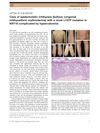 October 2011 in “Journal of dermatology”
 A man with a rare skin condition and a new gene mutation developed high calcium levels due to his treatment.
June 2008 in “The Knowledge Bank (The Ohio State University)” Smad2 and Smad3 are essential for normal skin development, and their absence causes severe skin issues and cancer.
April 2008 in “Experimental Dermatology” Early surgery and quitting smoking can help manage hidradenitis suppurativa.