 12 citations
,
February 2023 in “Journal of Personalized Medicine”
12 citations
,
February 2023 in “Journal of Personalized Medicine” Type 1 diabetes often occurs with other autoimmune diseases, and personalized treatment based on genetics can improve outcomes.
4 citations
,
July 2025 in “International Journal of Molecular Sciences” Targeting amphiregulin may improve treatment for fibrosis and cancer.
 1 citations
,
April 2022 in “BMC Genomics”
1 citations
,
April 2022 in “BMC Genomics” Researchers found genes linked to hair loss in male giant pandas.

Synthetic hair implants can cause scalp cancer years later.
 April 2026 in “International Journal of Molecular Sciences”
 Wnt signaling is crucial for skin, hair, and nail health and regeneration.
August 2025 in “Biomolecules” Fibroblast growth factors could be a better, safer treatment for hair loss than current options.
 May 2025 in “Frontiers in Pharmacology”
 New treatments are needed for non-scarring alopecia due to current limitations.
 January 2024 in “Authorea (Authorea)”
 Nanomaterials can significantly improve wound healing and future treatments may include smart, real-time monitoring.
81 citations
,
September 2009 in “Birth defects research” Different body areas in mice produce different hair types due to interactions between skin layers.
4 citations
,
January 2017 in “Acta dermato-venereologica” A new EDA gene mutation was found in a Chinese family with a specific skin disorder.
1 citations
,
July 2017 in “Cancer Research” Overexpressing NSD3 in mice causes breast cancer-like tumors and gland abnormalities.
21 citations
,
April 2004 in “Australasian Journal of Dermatology” A 3-year-old girl has a rare condition causing sparse hair and nail issues, with minimal improvement from treatment.
31 citations
,
February 2007 in “Molecular Carcinogenesis” Overexpressing ATF3 in mice's epithelial cells may lead to oral cancer.
4 citations
,
November 2020 in “Acta Dermato Venereologica” Tofacitinib effectively improved severe skin symptoms in a patient with Hypohidrotic Ectodermal Dysplasia.
 32 citations
,
April 1994 in “Journal of the American Academy of Dermatology”
32 citations
,
April 1994 in “Journal of the American Academy of Dermatology” High androgen levels and genetic factors likely cause Becker's nevus and related symptoms.
 12 citations
,
March 2011 in “Journal of pathology”
12 citations
,
March 2011 in “Journal of pathology” Oncogenic K-ras causes rapid cancerous changes in the mouth's lining.
201 citations
,
May 2001 in “Proceedings of the National Academy of Sciences” Overexpression of COX-2 in mice skin causes abnormal skin and hair development.
28 citations
,
May 2000 in “Proceedings of the National Academy of Sciences” The Walleye dermal sarcoma virus cyclin causes excessive skin cell growth in mice.
February 2025 in “Journal of Paediatrics and Child Health” Genetic analysis is crucial for diagnosing ectodermal dysplasia syndromes, and new therapies may help improve skin issues.
1 citations
,
January 2018 in “Indian dermatology online journal” Early diagnosis and genetic evaluation of ADULT syndrome are crucial to reduce stress and medical costs.
 August 2013 in “Gastroenterology”
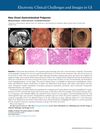
 A 60-year-old man with Cronkhite-Canada syndrome improved with treatment, but the condition has a high mortality rate and a risk of colorectal cancer.
 31 citations
,
August 2005 in “The American Journal of Dermatopathology”
31 citations
,
August 2005 in “The American Journal of Dermatopathology” The study concluded that PKP1 is essential for skin integrity and hair growth, and its dysfunction causes the symptoms of ectodermal dysplasia/skin fragility syndrome.
 4 citations
,
August 2016 in “JEADV. Journal of the European Academy of Dermatology and Venereology/Journal of the European Academy of Dermatology and Venereology”
4 citations
,
August 2016 in “JEADV. Journal of the European Academy of Dermatology and Venereology/Journal of the European Academy of Dermatology and Venereology” Using cetirizine on the skin and taking vitamin D can help increase hair growth in children with hair loss from ectodermal dysplasia.
 37 citations
,
June 2002 in “The Laryngoscope”
37 citations
,
June 2002 in “The Laryngoscope” Ectodermal dysplasia causes various symptoms and early treatment is important for eye, dental, and skin issues.
 28 citations
,
February 2012 in “PLoS ONE”
28 citations
,
February 2012 in “PLoS ONE” A PKP1 gene mutation causes skin fragility and hair loss in Chesapeake Bay retriever puppies.
 9 citations
,
June 2003 in “Veterinary dermatology”
9 citations
,
June 2003 in “Veterinary dermatology” Boxer dogs may have a genetic skin condition that worsens seasonally and can be treated with certain medications.
 January 2026 in “Frontiers in Medicine”
 A child has a rare hair and skin disorder due to specific gene variants, suggesting broader genetic testing is needed.
 1 citations
,
April 2025 in “Pediatria i Medycyna Rodzinna”
1 citations
,
April 2025 in “Pediatria i Medycyna Rodzinna” Restoring EDA and WNT pathways early may help improve skin, hair, and teeth issues in hypohidrotic ectodermal dysplasia.
 109 citations
,
October 2007 in “American Journal of Human Genetics”
109 citations
,
October 2007 in “American Journal of Human Genetics” Giving a special protein to dogs with a certain genetic disease improved their symptoms but didn't help with hair growth.