 June 1995 in “International Journal of Gynecology & Obstetrics”
 Cabergoline is more effective and has fewer side effects than bromocriptine for treating women with hyperprolactinemic amenorrhea.
 78 citations
,
November 2008 in “Fertility and Sterility”
78 citations
,
November 2008 in “Fertility and Sterility” Amenorrhea is relatively rare and initial testing should check FSH, TSH, and prolactin levels.
 38 citations
,
October 2006 in “Fertility and Sterility”
38 citations
,
October 2006 in “Fertility and Sterility” The document concludes that identifying the cause of amenorrhea is crucial for proper treatment.
 30 citations
,
July 2004 in “Fertility and Sterility”
30 citations
,
July 2004 in “Fertility and Sterility” Amenorrhea is when a woman doesn't have periods, with primary amenorrhea starting by age 15 or within five years of breast development, and secondary amenorrhea when periods stop for three months. It affects 3-4% of women not pregnant, breastfeeding, or in menopause, mainly due to polycystic ovary syndrome, hypothalamic amenorrhea, hyperprolactinemia, and ovarian failure.
 21 citations
,
September 2004 in “Fertility and Sterility”
21 citations
,
September 2004 in “Fertility and Sterility” Amenorrhea, or the absence of periods, should be evaluated by age 15 or within five years of early breast development, and is most commonly caused by conditions like polycystic ovary syndrome and hypothalamic amenorrhea.
 3 citations
,
January 1988 in “PubMed”
3 citations
,
January 1988 in “PubMed” High prolactin levels can cause skin and hair symptoms similar to those caused by hormone imbalances.
 October 2025 in “Česká gynekologie”
 Hyperprolactinemia is the most common cause of secondary amenorrhea, followed by drug use.
 107 citations
,
August 2002 in “Journal of Neurology, Neurosurgery, and Psychiatry”
107 citations
,
August 2002 in “Journal of Neurology, Neurosurgery, and Psychiatry” Women with epilepsy should be monitored for reproductive issues, which can be caused by epilepsy or its treatments, especially when using valproate.
 34 citations
,
January 2008 in “International Review of Neurobiology”
34 citations
,
January 2008 in “International Review of Neurobiology” Epilepsy and certain epilepsy drugs can lead to reproductive problems in women, but changing medication might improve these issues.
 April 2022 in “International Journal of Ayurveda and Pharma Research”
 Ayurveda views Polycystic Ovarian Syndrome (PCOS) as a metabolic disorder caused by an imbalance of Vata, Kapha, and Pitta, and suggests treatments like Samsodhanam, Agneya Dravyas, and Swayoni Vardhana dravyas.
 66 citations
,
August 1999 in “The Journal of Clinical Endocrinology & Metabolism”
66 citations
,
August 1999 in “The Journal of Clinical Endocrinology & Metabolism” Women with acromegaly often have irregular periods due to hormone imbalances and growth hormone effects.
 2 citations
,
May 2006 in “Women's Health Medicine”
2 citations
,
May 2006 in “Women's Health Medicine” Ovulation disorders are a major cause of infertility and menstrual problems in women.
July 1993 in “学術講演梗概集. A, 材料施工,防火,海洋,情報システム技術” Evaluate prolactin levels with androgen and thyroid tests to rule out endocrine issues in patients with SAHA syndrome symptoms.
 June 1995 in “International Journal of Gynecology & Obstetrics”
 Higher doses of oestradiol implants improve bone density in postmenopausal women.
 14 citations
,
January 1990 in “Fertility and Sterility”
14 citations
,
January 1990 in “Fertility and Sterility” Some patients with high prolactin levels don't show symptoms because they have a form of the hormone that's less active.
 22 citations
,
June 1993 in “Calcified Tissue International”
22 citations
,
June 1993 in “Calcified Tissue International” Women with hyperandrogenic amenorrhea have similar bone density to healthy women but lower than androgenized women without amenorrhea, and high DHEAS levels might affect bone density.
 4 citations
,
August 2017 in “The Nurse Practitioner”
4 citations
,
August 2017 in “The Nurse Practitioner” Secondary amenorrhea has many causes and requires thorough evaluation to treat and restore menstrual cycles.
 April 2024 in “International Journal of Advanced Multidisciplinary Research and Studies”
 Early investigation and a team approach are crucial for managing primary amenorrhea effectively.
 2 citations
,
February 2014 in “Journal of the European Academy of Dermatology and Venereology”
2 citations
,
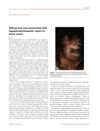
February 2014 in “Journal of the European Academy of Dermatology and Venereology” High levels of prolactin in the blood can be linked to widespread hair loss.
 December 2021 in “International Journal of Biomedicine”
 Hyperprolactinemia should be treated before confirming a PCOS diagnosis.
 January 2024 in “Women's health science journal”
 Hormonal imbalances are a key cause of missed menstrual periods in women.
 19 citations
,
January 2012 in “Dermato-endocrinology”
19 citations
,
January 2012 in “Dermato-endocrinology” Moderately high prolactin levels do not cause hair loss in women.
 11 citations
,
February 2013 in “Clinical Endocrinology”
11 citations
,
February 2013 in “Clinical Endocrinology” A small number of premenopausal female blood donors had high prolactin levels, often due to stress, and retesting is recommended to prevent misdiagnosis.
 November 2023 in “Manuju”
 Treating hyperprolactinemia can help manage PCOS symptoms.
 18 citations
,
January 2020 in “Journal of Clinical Research in Pediatric Endocrinology”
18 citations
,
January 2020 in “Journal of Clinical Research in Pediatric Endocrinology” The document concludes that Functional Hypothalamic Amenorrhea should be carefully diagnosed and managed to prevent health complications, using lifestyle changes and specific medications.
 2 citations
,
March 2011 in “Infertility”
2 citations
,
March 2011 in “Infertility” The conclusion is that lifestyle changes and weight loss are first-line treatments for infertility due to anovulation, with various medications and assisted reproductive technologies as additional options.
 7 citations
,
October 2012 in “S. Karger AG eBooks”
7 citations
,
October 2012 in “S. Karger AG eBooks” Some conditions mimic PCOS symptoms and need careful diagnosis to treat potentially serious health issues.
 1 citations
,
March 2011 in “Infertility”
1 citations
,
March 2011 in “Infertility” Hormone imbalances from the pituitary, thyroid, and adrenal glands can cause infertility, but treating these disorders can improve fertility.
 1540 citations
,
October 2008 in “Fertility and Sterility”
1540 citations
,
October 2008 in “Fertility and Sterility” The report concludes that PCOS is mainly a condition of excess male hormones and its definition may change as new information is discovered.
 35 citations
,
March 2012 in “Experimental and Clinical Endocrinology & Diabetes”
35 citations
,
March 2012 in “Experimental and Clinical Endocrinology & Diabetes” The conclusion is that accurately identifying the cause of high androgen levels in women with PCOS is crucial and requires specific tests.