5 citations
,
December 2018 in “Annals of plastic surgery” Some burn patients grew extra hair in areas treated with pressure garments or silicone.
44 citations
,
July 1993 in “Journal of Investigative Dermatology”  April 2026 in “American Journal of Dermatopathology”
 Increased blood vessel growth in lichen planopilaris may signal active disease needing aggressive treatment.
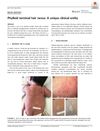 August 2018 in “Pediatric Dermatology”
 A baby had a unique skin condition with a pale patch and surrounding dark hairs, not linked to other health issues.
 March 2023 in “JAAD case reports”
 A new genetic change in the keratin 10 gene caused a skin condition called ichthyosis hystrix in a father and his daughter.
53 citations
,
September 2004 in “American journal of medical genetics. Part C, Seminars in medical genetics” Mutations in keratin genes cause cell fragility and various skin disorders.
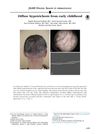 September 2016 in “Journal of The American Academy of Dermatology”
 The girl has a genetic hair condition causing thin hair since childhood.
22 citations
,
February 2012 in “Journal of Investigative Dermatology” A specific gene mutation causes severe skin and nail issues and hair loss.
80 citations
,
January 1979 in “Journal of Surgical Oncology” Keratoacanthoma is a common, usually non-dangerous skin tumor that looks like squamous cell carcinoma but rarely becomes severe.
6 citations
,
October 1998 in “PubMed” Antifungal treatment can improve severe skin infections with cutaneous horns.
26 citations
,
April 2007 in “Journal of clinical oncology” 7 citations
,
January 2020 in “Dermatology online journal” An adult with a rare skin condition improved with tazarotene treatment.
September 2025 in “British Journal of Dermatology” 16 citations
,
May 2017 in “Journal of Clinical Ultrasound” A rare finger tumor was imaged, showing a unique pattern not seen before.
 5 citations
,
January 2017 in “Anais brasileiros de dermatologia/Anais Brasileiros de Dermatologia”
5 citations
,
January 2017 in “Anais brasileiros de dermatologia/Anais Brasileiros de Dermatologia” Porokeratotic eccrine and hair follicle nevus is a very rare skin disorder possibly caused by a GJB2 gene mutation.
2 citations
,
September 2021 in “JAAD case reports” A man with a weakened immune system was diagnosed with a rare skin condition called trichodysplasia spinulosa using skin examination techniques.
January 1990 in “The Nishinihon Journal of Dermatology” Follicular structures help differentiate keratoacanthoma from squamous cell carcinoma.
 May 2023 in “Research Square (Research Square)”
 Blocking the HEDGEHOG-GLI1 pathway can reduce keloid growth and may be a potential treatment.
 10 citations
,
December 2015 in “International Journal of Molecular Sciences”
10 citations
,
December 2015 in “International Journal of Molecular Sciences” PDCD4 is important for controlling skin cell growth and healing.
48 citations
,
April 2008 in “Human Molecular Genetics” Progerin affects cell shape but not hair or skin in mice.
 23 citations
,
September 2014 in “JEADV. Journal of the European Academy of Dermatology and Venereology/Journal of the European Academy of Dermatology and Venereology”
23 citations
,
September 2014 in “JEADV. Journal of the European Academy of Dermatology and Venereology/Journal of the European Academy of Dermatology and Venereology” Laser treatments are the most effective for porokeratotic adnexal ostial nevus.
8 citations
,
January 2014 in “Indian Journal of Paediatric Dermatology” Congenital atrichia with papular lesions causes permanent hair loss and skin bumps from birth.
August 2024 in “Postgraduate Medical Journal” A rare skin reaction from cancer treatment was successfully managed with topical treatments and antihistamines.
1 citations
,
January 2015 in “Journal of clinical case reports” KFSD causes scarring hair loss and skin roughness, mainly in males.
 3 citations
,
January 1988 in “PubMed”
3 citations
,
January 1988 in “PubMed” High prolactin levels can cause skin and hair symptoms similar to those caused by hormone imbalances.
November 2022 in “Journal of Investigative Dermatology” NCSTN gene mutation causes abnormal skin cell differentiation and more inflammation, contributing to Hidradenitis Suppurativa.
37 citations
,
October 2009 in “Veterinary Dermatology” Canine hair follicles contain stem-like cells with high growth potential.
 July 2023 in “British journal of dermatology/British journal of dermatology, Supplement”
 HPV8 E6 gene causes growth of certain skin stem cells.
11 citations
,
January 2015 in “JOURNAL OF HEALTH SCIENCE” A 12-year-old boy's rare skin condition improved with topical treatments and may resolve by puberty.
5 citations
,
February 2005 in “Journal of the American Academy of Dermatology” Focal palmoplantar callosities may help diagnose non-Herlitz junctional epidermolysis bullosa.