13 citations
,
July 1994 in “PubMed” Keratins K6 and K16 are expressed more freely in regenerating mouse skin than K1 and K10.
 1 citations
,
January 2012 in “Journal of Toxicologic Pathology”
1 citations
,
January 2012 in “Journal of Toxicologic Pathology” A rat had a cyst similar to a hair follicle structure.
Loss of the p53 gene alone causes tumors, and losing both p53 and Rb genes speeds up aggressive skin cancer.
 5 citations
,
January 2023 in “Nature cell biology”
5 citations
,
January 2023 in “Nature cell biology” A specific signal from hair cells controls the tightening of the surrounding muscle, which is necessary for hair shedding.
18 citations
,
March 2009 in “Experimental Dermatology” Pilomatricoma can develop into various hair-related structures.
December 2021 in “Pathologica” Trichogerminoma is a rare, benign skin tumor from hair cells, with a small risk of becoming cancerous.
54 citations
,
September 1999 in “PubMed” K15 staining helps distinguish basal cell carcinoma from trichoepithelioma.
3 citations
,
December 2013 in “Journal of Cell Science” Keratin 79 cells help form and regenerate hair canals.
207 citations
,
July 2006 in “Development” MTS24 marks a new type of skin cell that helps hair growth and repair.
6 citations
,
January 2015 in “Indian Dermatology Online Journal” PEODDN is a rare skin disorder with limited treatment options, best treated with laser therapy.
November 2022 in “American Journal of Clinical Pathology” TURP specimens should be checked for various tumors, not just common prostate issues.
 23 citations
,
July 2007 in “The journal of investigative dermatology/Journal of investigative dermatology”
23 citations
,
July 2007 in “The journal of investigative dermatology/Journal of investigative dermatology” Hair follicle bulge cells don't help skin regrow after glucocorticoid damage; interfollicular epidermis cells do.
2 citations
,
June 2023 in “Medicine” A rare skin cancer on a man's elbow was successfully treated with surgery, showing no recurrence after one year.
 August 2023 in “bioRxiv (Cold Spring Harbor Laboratory)”
 The research found that specific stem cells maintain skin gland openings and that disrupting their activity can cause blockages or early cancer signs, indicating a need for targeted treatments.
 30 citations
,
April 2017 in “European Journal of Cell Biology”
30 citations
,
April 2017 in “European Journal of Cell Biology” CIP/KIP proteins help stop cell division and support hair growth.
5 citations
,
July 2022 in “Genes” Increasing EGR1 levels makes hair root cells grow faster.
4 citations
,
January 2019 in “Indian Dermatology Online Journal” The term "Porokeratotic Adnexal Ostial Nevus" is suggested as a more appropriate name.
4 citations
,
August 1991 in “The Journal of Dermatology” The tumor on the man's nose was a rare type called pedunculated follicular hamartoma.
 4 citations
,
May 2014 in “Biochemical Society Transactions”
4 citations
,
May 2014 in “Biochemical Society Transactions” Environmental cues can change the fate and function of epithelial cells, with potential for cell therapy.
 April 2023 in “Journal of Investigative Dermatology”
 Hair growth is driven by cells that move and change like a conveyor belt.
 April 2018 in “Radiotherapy and Oncology”
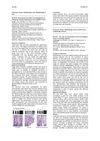
 Prostaglandin helps regenerate hair follicles after radiation damage.
21 citations
,
September 1968 in “Cancer” Citrulline in certain skin tumors suggests they mimic hair growth, helping distinguish them from other cancer types.
42 citations
,
September 1990 in “Journal of Investigative Dermatology” 12 citations
,
January 2025 in “Nature Reviews Molecular Cell Biology”  5 citations
,
August 2020 in “Curēus”
5 citations
,
August 2020 in “Curēus” The document concludes that recent studies help tell apart desmoplastic trichoepitheliomas from other skin tumors, but more research is needed for clear differentiation.
 49 citations
,
August 2004 in “The FASEB Journal”
49 citations
,
August 2004 in “The FASEB Journal” Mice with human skin protein K8 had more skin problems and cancer.
 August 2015 in “MOJ proteomics & bioinformatics”
 ePUKs could be valuable for regenerative medicine due to their wound healing abilities.
 June 2025 in “International Journal of Nephrology and Renovascular Disease”
 PLA2R1 overexpression harms kidney cells by stopping their growth cycle.
49 citations
,
July 2006 in “British Journal of Dermatology” Calcifying epithelioma cells can differentiate into hair cortex and outer root sheath.
1 citations
,
April 2018 in “Journal of Investigative Dermatology” Lower proximal cup cells, not bulge stem cells, regenerate hair follicles after chemotherapy.