 70 citations
,
June 2010 in “Clinics in Dermatology”
70 citations
,
June 2010 in “Clinics in Dermatology” Certain groups may need vitamin supplements to improve hair health and prevent other health problems.
 8 citations
,
January 2013 in “Journal of The Korean Medical Association”
8 citations
,
January 2013 in “Journal of The Korean Medical Association” Korean hair is typically thicker with a slower growth rate, and treatments like Dutasteride are effective for male pattern hair loss without major side effects.
January 1991 in “Linchuang pifuke zazhi”  11 citations
,
May 2011 in “World Journal of Pediatrics”
11 citations
,
May 2011 in “World Journal of Pediatrics” The document emphasizes the importance of correctly identifying and classifying genetic hair disorders to help diagnose related health conditions.
 January 2026 in “Forum Dermatologicum”
 Thorough hair examination is crucial for accurate diagnosis and treatment.
1 citations
,
January 2008 13 citations
,
July 2012 in “International Journal of Trichology” TTD symptoms vary widely, requiring thorough evaluations.
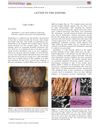
January 2026 in “Clinical Case Reports” A 6-year-old girl had both monilethrix and trichorrhexis nodosa, causing brittle hair, with minimal improvement from treatment.
 1 citations
,
February 2018 in “Australasian journal of dermatology”
1 citations
,
February 2018 in “Australasian journal of dermatology” Advanced imaging techniques are crucial for accurately diagnosing Monilethrix, a rare hair disorder.
 1 citations
,
December 2023 in “Curēus”
1 citations
,
December 2023 in “Curēus” Most children with a common hemochromatosis genotype had elevated iron levels but no severe symptoms.
28 citations
,
July 1980 in “British Journal of Dermatology” The hair disorder was caused by abnormal protein formation, making hair easily damaged.
 6 citations
,
January 2014 in “Clinical hemorheology and microcirculation”
6 citations
,
January 2014 in “Clinical hemorheology and microcirculation” Hereditary elliptocytosis causes elongated red blood cells and can lead to mild or no symptoms.
January 2011 in “Linchuang pifuke zazhi” 4 citations
,
January 2011 in “European journal of dermatology/EJD. European journal of dermatology” A boy had a rare scalp condition with thickened skin and different-colored hair.
2 citations
,
July 2019 in “Indian dermatology online journal” A 17-year-old girl and her brothers have a rare hair condition with long eyelashes, thick eyebrows, and easily pluckable hair.
30 citations
,
August 2005 in “British journal of dermatology/British journal of dermatology, Supplement” A specific gene mutation causes hair loss and potential eye issues, even if vision seems normal.
June 2025 in “British Journal of Dermatology” Segmented hair color changes can indicate active alopecia areata.
 4 citations
,
January 2018 in “International Journal of Trichology”
4 citations
,
January 2018 in “International Journal of Trichology” A rare genetic disease causes sparse hair and early blindness due to a gene mutation.
November 2021 in “Skin appendage disorders” Self-induced hair loss should be considered in patients with androgenetic alopecia.
6 citations
,
June 1993 in “Veterinary Dermatology” A female Rottweiler had a rare genetic condition causing mostly hairless skin.
July 2025 in “Dermatology Practical & Conceptual” Hair changes and a high occipital hairline may help diagnose Trichorhinophalangeal Syndrome.
September 2018 in “CRC Press eBooks” Hair and nail disorders can cause changes in scalp pigmentation, especially with sun exposure and alopecia.
21 citations
,
April 2004 in “Australasian Journal of Dermatology” A 3-year-old girl has a rare condition causing sparse hair and nail issues, with minimal improvement from treatment.
10 citations
,
March 1997 in “Pediatric Dermatology” A rare case of trichothiodystrophy was found with autism, seizures, and mental retardation.
1 citations
,
January 2018 in “Jornal Brasileiro de Patologia e Medicina Laboratorial” Monilethrix causes brittle hair and hair loss, and it runs in families.
144 citations
,
May 1990 in “Journal of the American Academy of Dermatology” January 2020 in “Revista Dermatológica Centro Uraga” Recognizing trichoscopic features is crucial for diagnosing various hair loss conditions.
 42 citations
,
September 2000 in “British Journal of Dermatology”
42 citations
,
September 2000 in “British Journal of Dermatology” Some children are born with unusually short, fine hair because their hair growth phase is short, but this often gets better by itself during puberty.
2 citations
,
July 2016 in “Veterinary dermatology” Hyperaesthetic leucotrichia in horses causes painful, recurring skin lesions and hair color changes, especially in Arabian and American paint horses.
October 1995 in “Pediatric Research”