 855 citations
,
June 2009 in “The Journal of Clinical Endocrinology & Metabolism”
855 citations
,
June 2009 in “The Journal of Clinical Endocrinology & Metabolism” The guideline recommends mental health involvement in diagnosing gender identity disorder and outlines hormone and surgical treatment protocols, emphasizing safety, informed consent, and long-term monitoring.
 7 citations
,
January 2009 in “Immunological investigations”
7 citations
,
January 2009 in “Immunological investigations” A 3-year-old boy lost all his hair due to a rare reaction to phenobarbital, but it grew back after steroid treatment.
24 citations
,
January 2004 in “The scientific world journal/TheScientificWorldjournal” HAIR-AN syndrome is common in young women and can be effectively managed with a comprehensive treatment plan.
 38 citations
,
January 1997 in “Gynecological Endocrinology”
38 citations
,
January 1997 in “Gynecological Endocrinology” Finasteride and flutamide effectively reduce hirsutism in PCOS women, with flutamide also lowering hormone levels.
1 citations
,
January 2025 in “JAAD reviews.” Hypertrichosis involves excessive hair growth and needs careful diagnosis and treatment, considering its psychological effects.
3 citations
,
February 2025 in “Journal of the American Academy of Dermatology” Feminizing hormone therapy increases hair counts and improves hair-related quality of life, while masculinizing therapy may reduce large terminal hairs.
 3 citations
,
October 2003 in “Annals of Oncology”
3 citations
,
October 2003 in “Annals of Oncology” A woman with low thyroid function did not lose her hair during chemotherapy, possibly because her hair follicles were less affected by the treatment.
 October 2024 in “Journal of the Endocrine Society”
 A woman experienced fluctuating thyroid conditions and eye disease, but her symptoms improved with treatment.
 July 2019 in “Mayo Clinic proceedings”
 The man's fatigue and erectile dysfunction were improved by treating his obesity-related low testosterone without needing testosterone replacement.
May 2021 in “Journal of the Endocrine Society” Hashimoto's can rarely change to Graves disease, needing careful monitoring.
 March 2025 in “FEBS Journal”
 Epiprofin suppresses parathyroid hormone gene activity, helping regulate calcium levels and could be a treatment target for hyperparathyroidism.
1 citations
,
October 2020 in “International Journal of Zoology and Animal Biology” A golden lion tamarin had Cushing's disease due to a pituitary tumor, leading to its euthanasia.
 64 citations
,
August 1999 in “The American journal of medicine”
64 citations
,
August 1999 in “The American journal of medicine” The transscrotal testosterone patch normalizes hormone levels in men with AIDS and weight loss but does not improve weight, body mass, or quality of life.
8 citations
,
June 2016 in “PubMed” Finasteride is effective and safe for treating hidradenitis suppurativa in both adults and some younger patients.
 6 citations
,
August 2009 in “Mini-reviews in Medicinal Chemistry”
6 citations
,
August 2009 in “Mini-reviews in Medicinal Chemistry” Different drugs can treat high male hormone levels in women, but they have various effects and some may harm a fetus.
20 citations
,
December 1994 in “Fertility and sterility” Flutamide combined with a low-dose birth control pill effectively reduces excessive hair growth in women with polycystic ovarian disease.
December 2020 in “Research Square (Research Square)” Rare ovarian tumors can cause increased male hormones in postmenopausal women; surgery is an effective treatment.
4 citations
,
November 2019 in “Harper's Textbook of Pediatric Dermatology” Endocrine diseases in children can cause various skin and hair changes.
 May 2021 in “Journal of the Endocrine Society”
 A woman with a rare ovarian tumor and hyperparathyroidism improved after surgery, highlighting the need for reporting unusual cases to understand and manage rare diseases.
 14 citations
,
March 2010 in “Gynecological endocrinology”
14 citations
,
March 2010 in “Gynecological endocrinology” New treatments for excessive hair growth in women include insulin modulators and enzyme inhibitors.

Erythropoietin overexpression disrupts hair growth and fat formation in mice.
 April 2023 in “Expert opinion on pharmacotherapy”
 Birth control pills and antiandrogens are the most effective medicines for excessive body hair in women, but combining them with other treatments and psychological support is best.
25 citations
,
April 1988 in “Geburtshilfe und Frauenheilkunde” Treatment balancing hormones stopped hair loss in most women with androgenetic alopecia.
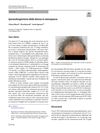 July 2022 in “L Endocrinologo”
 A 77-year-old woman with hair loss had high testosterone and 17OH-progesterone levels, but no significant findings on imaging.
 April 2020 in “Journal of the Endocrine Society”
 A woman's severe hirsutism was caused by Leydig cell tumors in her ovaries, which improved after surgery.
5 citations
,
July 1987 in “European Journal of Obstetrics & Gynecology and Reproductive Biology” The treatment temporarily improved symptoms of hyperandrogenism in adolescents.
3 citations
,
April 2017 in “Medicine” An 11-year-old boy in Saudi Arabia has a rare case of hypoparathyroidism with severe brain calcifications but normal development and no known cause.
 November 2022 in “Journal of the Endocrine Society”
 A woman's masculine symptoms were caused by a rare tumor in her left ovary, which was found using a special blood test.
 January 2023 in “Journal of surgery and research”
 New treatment effectively reverses hair thinning in most patients with mild side effects.
 32 citations
,
December 2003 in “Planta”
32 citations
,
December 2003 in “Planta” Hypaphorine from a fungus changes the internal structure of Eucalyptus root hairs, stopping their growth.