35 citations
,
January 2024 in “BioMolecular Concepts” Lifestyle changes, exercise, and antioxidants can help manage polycystic ovary syndrome.
98 citations
,
May 2010 in “British Journal of Dermatology” Isotretinoin is effective for severe acne but requires careful monitoring for side effects, especially in women who could become pregnant.
3 citations
,
February 2025 in “Frontiers in Food Science and Technology” Focus on sustainable plant-based superfoods to reduce environmental impact.
1 citations
,
February 2024 in “Cosmetics” Cannabidiol shows promise as an effective treatment for acne.
 14 citations
,
December 2017 in “Journal of Bone and Mineral Metabolism”
14 citations
,
December 2017 in “Journal of Bone and Mineral Metabolism” Women with polycystic ovary syndrome have a higher risk of certain fractures.
 2 citations
,
June 2022 in “Scientific reports”
2 citations
,
June 2022 in “Scientific reports” Women with PCOS have higher hair cortisol levels, which are linked to worse metabolic and inflammatory conditions.
 February 2018 in “Medical Hypotheses”
 Male pattern hair loss may have evolved to promote younger fathers for offspring health and survival, encouraging monogamy and paternal nurturing.
110 citations
,
November 1984 in “The American Journal of Medicine” A genetic defect in vitamin D receptors causes severe rickets and hair loss in children, but some heal as they age.
12 citations
,
September 2014 in “Bone” A vitamin D receptor mutation causes rickets and affects immune responses.
October 1990 in “Pediatric Research” Nocturnal calcium infusions improved a boy's severe rickets without causing hair loss.
October 2024 in “Journal of the Endocrine Society” A rare genetic mutation causes resistance to vitamin D, leading to severe rickets and requires high doses of calcium and vitamin D for management.
 October 2024 in “Journal of the Endocrine Society”
 A rare genetic mutation causes resistance to vitamin D, leading to severe rickets and requiring high doses of calcium and vitamin D for treatment.
 6 citations
,
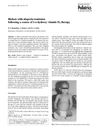
August 1989 in “European journal of pediatrics”
6 citations
,
August 1989 in “European journal of pediatrics” Child with rickets improved with a specific vitamin D therapy, but alopecia did not change.
 50 citations
,
October 1986 in “European journal of pediatrics”
50 citations
,
October 1986 in “European journal of pediatrics” A boy with severe Vitamin D-resistant rickets did not respond to treatment and lacked a common symptom, suggesting a need for alternative treatments.
82 citations
,
October 1980 in “The Journal of Clinical Endocrinology & Metabolism” The child's body didn't respond well to vitamin D, causing hair loss and rickets.
88 citations
,
October 1983 in “The Journal of clinical endocrinology and metabolism/Journal of clinical endocrinology & metabolism” Patients with this syndrome can have different responses and worsening resistance to treatment over time.
 82 citations
,
April 1981 in “Clinical endocrinology”
82 citations
,
April 1981 in “Clinical endocrinology” A girl with rickets and hair loss was found to have a rare condition where her body didn't respond to vitamin D treatment.
45 citations
,
December 2006 in “Baillière's best practice and research in clinical endocrinology and metabolism/Baillière's best practice & research. Clinical endocrinology & metabolism” Vitamin D and its receptor are essential for hair growth, cell regulation, immune function, and heart health.
Vitamin D3 is crucial for health, preventing issues like bone disorders and hair loss.
 January 2024 in “Clinical, cosmetic and investigational dermatology”
 A child with a rare vitamin D-resistant condition improved with treatment.
13 citations
,
April 1994 in “Baillière's clinical endocrinology and metabolism” Some people have genetic mutations that make them resistant to vitamin D, leading to rickets even with enough vitamin D intake.
151 citations
,
June 2010 in “Endocrinology and metabolism clinics of North America” Two rare genetic diseases cause severe rickets in children due to defects in vitamin D metabolism.
 August 2019 in “International journal of contemporary pediatrics”
 A child with a rare type of rickets showed some improvement with high doses of vitamin D, but such conditions often respond poorly to treatment.
 24 citations
,
November 2008 in “Arquivos Brasileiros de Endocrinologia & Metabologia”
24 citations
,
November 2008 in “Arquivos Brasileiros de Endocrinologia & Metabologia” Four patients with a type of rickets and hair loss had different mutations in their vitamin D receptor gene, causing it to not work properly.
170 citations
,
May 1979 in “The journal of pediatrics/The Journal of pediatrics” Two sisters with rickets and hair loss had a genetic issue with vitamin D processing, and only improved when given phosphorus supplements.
 6 citations
,
January 2014 in “Journal of pediatric endocrinology & metabolism/Journal of pediatric endocrinology and metabolism”
6 citations
,
January 2014 in “Journal of pediatric endocrinology & metabolism/Journal of pediatric endocrinology and metabolism” Three siblings with a genetic form of rickets showed different symptoms of the disease.
29 citations
,
January 2003 in “KARGER eBooks” HVDRR is caused by VDR gene mutations, leading to vitamin D resistance, treatable with high calcium doses, but alopecia remains permanent.
10 citations
,
January 2014 in “Journal of Pediatric Endocrinology and Metabolism” Three new gene mutations cause rickets and hair loss, treatable with high calcium and calcidol, but hair regrowth is rare.
111 citations
,
April 2006 in “Annals of the New York Academy of Sciences” Vitamin D receptor is essential for healthy bones and skin.