Search
for
Sort by
Research
390-420 / 1000+ results
research P6590Androgenic effects on ventricular repolarization: a translational study from pharmacovigilance databases to iPSC-cardiomyocytes
Androgen-deprivation therapies increase the risk of certain heart conditions, but testosterone treatment may help.
research Findings from the assessment of real-world disease characteristics and outcomes in alopecia areata in a global non-interventional observational cohort (ADAAGIO) study
Most patients with alopecia areata did not achieve lasting hair regrowth despite treatment.
research Treatment of Del(5q) Myelodysplastic Syndrome with All-Trans-Retinoic Acid and Tocopherol-α.
The treatment was not recommended due to limited effectiveness and significant side effects.
research Mesotherapy with dutasteride in the treatment of androgenetic alopecia

research POS0080 TOFACITINIB TREATMENT IN CHILDREN WITH RHEUMATIC DISEASES: SINGLE-CENTER EXPERIENCE
Tofacitinib is a promising treatment for children with rheumatic diseases.

research Novel association of trichothiodystrophy with autoimmune thyroiditis and autoimmune hemolytic anemia: A case report
A child with trichothiodystrophy also had autoimmune thyroiditis and anemia, which is a new finding.

research Vitiliginous lesions during contact immunotherapy for alopecia in a patient with autoimmune thyroiditis
Contact immunotherapy can cause vitiligo in patients with autoimmune conditions.

research 44096 Efficacy in Subgroups related to Disease Characteristics in Patients with Alopecia Areata from BRAVE-AA1 and BRAVE-AA2
Baricitinib significantly improves hair regrowth in severe alopecia areata.
research Antagonistic Effect of Iodides in Baldness and Toxicity due to Thallium Acetate

research A Real-World Study of Steroid-Free Monotherapy with Tofacitinib in Severe and Therapy-Recalcitrant Alopecia Areata, Alopecia Totalis, and Alopecia Universalis Cases: A Retrospective Analysis
Tofacitinib was effective for severe, treatment-resistant hair loss without side effects.
research Update From 2017 Embracing the World of Dermatology Convention
The convention highlighted knowledge sharing, networking, and the importance of active participation in dermatology.

research ORAL TOFACITINIB IN MODERATE AND SEVERE ALOPECIA AREATA: CASE SERIES OF 14 PATIENTS
Tofacitinib helped regrow hair in most patients with severe hair loss.

research 9th ANNUAL MARCH 5. 8. 2003. ORLANDO. F.L LIVE SURGERY WORKSHOP Sponsored by The International Socity of Hair Restoration Surgery
The International Society of Hair Restoration Surgery sponsored a live surgery workshop in Orlando, Florida on March 5-8, 2003.

research The IBHRS Is Up and Running!
The IBHRS is now operational.
research Trichoscopic evaluation in oral tofacitinib and oral betamethasone in the treatment of moderate to severe alopecia areata
Oral betamethasone works faster than oral tofacitinib for hair regrowth in alopecia areata.
research Baricitinib: Exploring the Safety Profile for the Treatment of Alopecia Areata
Baricitinib is effective for severe alopecia areata with manageable side effects, mainly upper respiratory infections.
research Notes on the internet
research Disposable Linear Slot Punches

research Integrated safety analysis of baricitinib in adults with severe alopecia areata from two randomized clinical trials
Baricitinib for severe alopecia areata is generally safe, with common side effects like infections and acne, and low rates of serious complications.
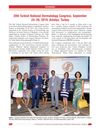
research 28th Turkish National Dermatology Congress, September 24–28, 2019, Antalya, Turkey
The congress was praised for its organization and educational value.
research Calendar
research Baricitinib (Olumiant)
Baricitinib is effective and cost-efficient for treating severe alopecia areata in adults.

research Hair India 2010
The Hair India 2010 conference introduced a new hair loss classification and highlighted advanced diagnostic techniques in trichology.

research Which is the ideal JAK inhibitor for alopecia areata – Baricitinib, tofacitinib, ritlecitinib or ifidancitinib - Revisiting the immunomechanisms of the JAK pathway
No single ideal JAK inhibitor for alopecia areata has been determined; JAK3 inhibitors may be promising with fewer side effects.
research Risk of autoimmune thyroid diseases in individuals with alopecia areata: A nationwide case‐control study
People with alopecia areata may have a higher risk of thyroid diseases.
research Image 1_Associations between ionomic profile and metabolic abnormalities in a murine model of sodium sulfide induced alopecia areata.tif
Targeting specific metabolic and ionic pathways may improve alopecia areata treatment.

research Major improvement of very severe alopecia areata in patients treated with the combination of baricitinib and low doses of corticosteroids: an eight-case series
Combining baricitinib with low-dose corticosteroids significantly improved severe hair loss in eight patients.
research Clinical response to oral tofacitinib in pediatric patients with alopecia areata

research The ISHRS Achieves ACCME Accreditation with Commendation for Educational Activities
The ISHRS received high-level approval for its educational programs.