December 2025 in “Journal of Paediatrics and Child Health” Tick-bite alopecia can be identified by a bite-centered mark and treated with topical steroids, while SENLAT needs doxycycline.
48 citations
,
November 2022 in “Journal of Cosmetic Dermatology” Skin rashes can help diagnose COVID-19 early.
 November 2023 in “Global Medical Genetics”
 Netherton syndrome can cause severe dehydration, infections, and growth issues in infants.
 17 citations
,
August 2012 in “Journal of Medical Genetics”
17 citations
,
August 2012 in “Journal of Medical Genetics” A new mutation in the XEDAR gene might cause a rare skin condition called hypohidrotic ectodermal dysplasia.
January 2018 in “Indian Dermatology Online Journal” DM and AA may share a common cause.
November 2024 in “Journal of Investigative Dermatology” January 2026 in “Clinical Case Reports” A 6-year-old girl had both monilethrix and trichorrhexis nodosa, causing brittle hair, with minimal improvement from treatment.
2 citations
,
March 2010 in “European journal of dermatology/EJD. European journal of dermatology” A young Caucasian girl had both woolly hair and alopecia areata, which is rare.
 27 citations
,
July 2015 in “International Journal of Dermatology”
27 citations
,
July 2015 in “International Journal of Dermatology” Every elderly patient had at least one skin condition, often linked to other diseases, highlighting the need for integrated skin and general healthcare in the elderly.
 March 2019 in “Nasza Dermatologia Online”
 A man had both alopecia areata and lichen planus, which is uncommon.
2 citations
,
November 2023 in “Skin Appendage Disorders” Lipedematous scalp may have a genetic link and could be associated with psychiatric conditions.
Early genetic testing and new therapies like secukinumab are crucial for managing Netherton syndrome effectively.
 January 2024 in “Brazilian journal of veterinary pathology”
 The dog likely has a condition similar to Canine alopecia X.
6 citations
,
March 2005 in “Journal of the American Academy of Dermatology” Follicular dystrophy in immunocompromised patients may be linked to medication or viral factors and can improve with treatment changes.
 1 citations
,
January 2018 in “ARC Journal of Dermatology”
1 citations
,
January 2018 in “ARC Journal of Dermatology” A patient had both chronic lupus and systemic scleroderma, requiring careful treatment to manage symptoms.
13 citations
,
June 2011 in “PubMed” The patient improved significantly after treatment, with only one small scar remaining.
March 2018 in “The journal of applied laboratory medicine” The rash on the infant indicated a serious underlying condition.
September 2011 in “Archives of dermatology” The child was diagnosed with cutaneous leishmaniasis.

Orchiectomy and melatonin helped a German Spitz regrow hair lost due to alopecia X.
 September 2019 in “The journal of investigative dermatology/Journal of investigative dermatology”
 Not having enough cystatin M/E protein causes less hair growth and dry skin.
3 citations
,
November 2018 in “Journal of osteopathic medicine” A rare scalp condition causing hair loss improved with a specific cream.
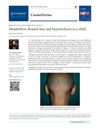 January 2026 in “Cosmoderma”
 A 9-year-old girl has a rare hair disorder causing beaded, sparse hair.
 41 citations
,
August 1988 in “Journal of The American Academy of Dermatology”
41 citations
,
August 1988 in “Journal of The American Academy of Dermatology” A woman with subacute cutaneous lupus erythematosus had widespread skin symptoms triggered by medication and sunlight, which improved with specific treatments.
March 2004 in “Journal of Investigative Dermatology” Razor bumps are linked to a genetic variant, misoprostol helps erythromelalgia pain, steroid ointments don't affect skin rhythms, and certain antibodies are common in localized scleroderma.
1 citations
,
April 2025 in “Journal of Feline Medicine and Surgery” Early diagnosis and treatment by vets are crucial for managing rare but severe feline skin disorders.
 September 2023 in “Cutis”
 A baby girl has a hair disorder called monilethrix, causing fragile hair that may improve over time.
January 1998 in “The Nishinihon Journal of Dermatology” A 7-year-old girl was diagnosed with Netherton's Syndrome, shown by skin and hair symptoms.
3 citations
,
January 2007 in “Korean Journal of Pediatrics” Zinc supplements can help skin issues even if blood zinc levels are normal.
 2 citations
,
January 2015 in “Springer eBooks”
2 citations
,
January 2015 in “Springer eBooks” Early diagnosis and aggressive treatment are crucial for Cicatricial Alopecia, and treatment effectiveness varies among patients.
November 2024 in “Journal of Investigative Dermatology” Blocking the JAK/STAT pathway may help reduce skin sensitivity in Xeroderma pigmentosum.