13 citations
,
January 2022 in “Microvascular Research” LSCI-HR is reliable for monitoring blood flow in wound healing in mice.
January 2005 in “Enlighten: Publications (The University of Glasgow)” Melanocyte pathology requires keratinocyte hyperplasia and regulation dysfunction.
51 citations
,
January 2004 in “European Journal of Cell Biology” Human cathepsin V can replace mouse cathepsin L to maintain normal skin and hair in mice.
April 2019 in “The journal of investigative dermatology/Journal of investigative dermatology” Blocking JAK1 or JAK3 helps reverse hair loss in a mouse model of alopecia areata.
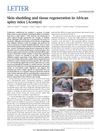 418 citations
,
September 2012 in “Nature”
418 citations
,
September 2012 in “Nature” African spiny mice can regenerate skin, hair, and cartilage, but not muscle, and their unique abilities could be useful for regenerative medicine.
 23 citations
,
January 2024 in “Nature Immunology”
23 citations
,
January 2024 in “Nature Immunology” γδ T cells adapt uniquely to different tissues in mice.
18 citations
,
February 2006 in “Genomics” A new genetic mutation in mice causes permanent hair loss and skin wrinkling.
4 citations
,
September 2024 in “Cell Reports” Granulocyte colony stimulating factor helps heal wounds without scars.
29 citations
,
October 2010 in “Journal of Investigative Dermatology” Activating Kras in mouse skin causes excess skin and hair loss.
 16 citations
,
November 2005 in “Journal of Investigative Dermatology Symposium Proceedings”
16 citations
,
November 2005 in “Journal of Investigative Dermatology Symposium Proceedings” Blocking interferon-gamma helps prevent and treat hair loss in Alopecia Areata.
 1 citations
,
August 2023 in “Genome research”
1 citations
,
August 2023 in “Genome research” The spiny mouse regenerates ear tissue asymmetrically, with gene expression differences possibly explaining its unique healing abilities.
 99 citations
,
August 2009 in “Nature Genetics”
99 citations
,
August 2009 in “Nature Genetics” Removing both Atr and Trp53 genes in adult mice causes severe tissue damage and death due to DNA damage.
11 citations
,
January 2015 in “Journal of cellular physiology” HR protein causes abnormal hair cycles by increasing Tgf-β2 and reducing miR-31.
IL-18 signaling helps mature Tregs move into the thymus.
 16 citations
,
April 1978 in “Genetics Research”
16 citations
,
April 1978 in “Genetics Research” Mice with the ab gene have abnormal sebaceous gland development, affecting sebum production.
37 citations
,
January 2006 in “Carcinogenesis” Antizyme slows skin tumor growth by reducing cell growth in mice.

Lhx2 is a crucial regulator of the Sonic Hedgehog signaling in early mouse retinal development.
 206 citations
,
September 2010 in “PLoS ONE”
206 citations
,
September 2010 in “PLoS ONE” The PIRL laser cuts tissue with less damage and scarring than traditional methods.
May 2018 in “The journal of immunology/The Journal of immunology” Mutations in the FOXN1 gene cause severe immune issues but don't affect hair and nails.
14 citations
,
May 2016 in “International Journal of Molecular Sciences” PP2Acα is essential for proper hair and skin development.
4 citations
,
August 2023 in “Biomedicine & Pharmacotherapy” Ivacaftor can protect against noise-induced hearing loss by reducing oxidative stress.
44 citations
,
May 1998 in “PubMed” The retinoid receptor antagonist effectively disrupts vitamin A-related development in embryos.
2 citations
,
May 2019 in “International Journal of Molecular Sciences” Tranexamic acid turns white hair brown in certain mice by affecting specific proteins.
January 2008 in “HAL (Le Centre pour la Communication Scientifique Directe)” The mutant HR bmh protein affects hair follicle formation by failing to repress vitamin D receptor activity.
 5 citations
,
June 2022 in “Frontiers in immunology”
5 citations
,
June 2022 in “Frontiers in immunology” Increasing Treg cells in the skin does not cure hair loss from alopecia areata in mice.
July 2026 in “Frontiers in Immunology” Ivarmacitinib may effectively treat complex atopic dermatitis and related hair loss.
December 2015 in “OPAL (Open@LaTrobe) (La Trobe University)” Oleuropein increases IGF-1 levels in mouse skin.
18 citations
,
June 2010 in “Cell Stress and Chaperones” Heat treatment increases hair loss in certain mice.
 301 citations
,
May 1998 in “Genes & Development”
301 citations
,
May 1998 in “Genes & Development” Ets2 gene is crucial for placental development in mice.
 19 citations
,
September 2010 in “The American journal of pathology”
19 citations
,
September 2010 in “The American journal of pathology” High glucocorticoids cause pancreatic malfunction and malabsorption, reversible with enzyme supplements.