 April 2019 in “The journal of investigative dermatology/Journal of investigative dermatology”
 Machine learning can predict how well patients with alopecia areata will respond to certain treatments.
 April 2018 in “Journal of Investigative Dermatology”
 Aging reduces skin cell renewal and defense against germs due to TGFbeta, but blocking TGFbeta could help restore these functions.
 30 citations
,
May 2016 in “Expert Opinion on Biological Therapy”
30 citations
,
May 2016 in “Expert Opinion on Biological Therapy” New treatments targeting immune pathways show promise for severe hair loss but need more research for safety and effectiveness.
 5 citations
,
June 2022 in “Frontiers in immunology”
5 citations
,
June 2022 in “Frontiers in immunology” Increasing Treg cells in the skin does not cure hair loss from alopecia areata in mice.
 June 2026 in “Frontiers in Immunology”
 Upadacitinib effectively treated severe atopic dermatitis, vitiligo, and alopecia areata in one patient.
 September 2025 in “Arthritis Research & Therapy”
 BMS-470539 reduces skin fibrosis and inflammation.
 August 2025 in “Frontiers in Pharmacology”
 [6]-Gingerdiol 3-monoacetate shows promise for treating T. whipplei infections.
 January 2017 in “Springer eBooks”
 The document concludes that Cutaneous Lupus Erythematosus has different forms, is influenced by genetic and environmental factors, and can be treated with various medications, but more targeted therapies are needed.
 130 citations
,
November 2017 in “Frontiers in Immunology”
130 citations
,
November 2017 in “Frontiers in Immunology” The conclusion is that Treg-targeted therapies have potential, but more knowledge of Treg biology is needed for effective treatments, including for cancer.
 2 citations
,
November 2023 in “Frontiers in microbiology”
2 citations
,
November 2023 in “Frontiers in microbiology” The health of the gut may be important in developing new ways to prevent, diagnose, and treat alopecia areata.
 4 citations
,
July 2025 in “Frontiers in Immunology”
4 citations
,
July 2025 in “Frontiers in Immunology” Early intervention with JAK inhibitors may prevent alopecia areata progression.
 1 citations
,
January 2025 in “American Journal of Translational Research”
1 citations
,
January 2025 in “American Journal of Translational Research” PPARα agonists may help treat alopecia areata by reducing inflammation.
 155 citations
,
May 2016 in “Nature communications”
155 citations
,
May 2016 in “Nature communications” Memory T cells in the skin balance staying put and moving into the blood, clustering around hair follicles, and increasing in number after infection.
 68 citations
,
November 2015 in “The Journal of Allergy and Clinical Immunology”
68 citations
,
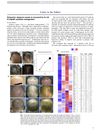
November 2015 in “The Journal of Allergy and Clinical Immunology” Blocking IL-12/IL-23p40 helped reverse severe hair loss in patients.
 63 citations
,
April 2018 in “Journal of the American Academy of Dermatology”
63 citations
,
April 2018 in “Journal of the American Academy of Dermatology” Topical JAK inhibitors may help treat some skin conditions but need more research.
 10 citations
,
July 2015 in “Journal of Cosmetic Dermatology”
10 citations
,
July 2015 in “Journal of Cosmetic Dermatology” Higher DKK-1 levels found in hair loss patients; L-ascorbic acid 2-phosphate, L-threonate, and ginsenoside F2 may help promote hair growth.
 9 citations
,
February 2022 in “Nature communications”
9 citations
,
February 2022 in “Nature communications” Rare changes in the KRT82 gene are linked to a higher risk of Alopecia Areata.
 4 citations
,
July 2025 in “Molecular Diversity”
4 citations
,
July 2025 in “Molecular Diversity” Using existing drugs for new treatments is cost-effective and safer.
 4 citations
,
January 2011 in “Journal of UOEH”
4 citations
,
January 2011 in “Journal of UOEH” Autoimmune hair loss may be linked to increased Th1 and Th17 cells and decreased Th2 cells.
 2 citations
,
September 2020 in “Journal of Education Health and Sport”
2 citations
,
September 2020 in “Journal of Education Health and Sport” Higher IL-15 levels are linked to more severe hair loss in alopecia areata.
 1 citations
,
May 2026 in “Nature Communications”
1 citations
,
May 2026 in “Nature Communications” CD19-CAR T cell therapy may help regenerate skin in systemic sclerosis.
 1 citations
,
May 2017 in “InTech eBooks”
1 citations
,
May 2017 in “InTech eBooks” The document concludes that alopecia areata is an unpredictable autoimmune hair loss condition with no cure, but various treatments exist that require personalized approaches.
 April 2026 in “Nature Communications”
 Aged corneal cells can revert to a stem-like state to help repair tissue.
 April 2026 in “Frontiers in Immunology”
 Blocking the CXCL12–CXCR4 axis may help treat hair loss in alopecia.
 November 2025 in “Turkish Journal of Dermatology”
 Both baricitinib and tofacitinib effectively reduce alopecia areata severity, with tofacitinib showing more improvement over longer use.
 May 2025 in “The Journal of Rheumatology”
 Lupus patients in Ghana face healthcare challenges, and the Oyemam Autoimmune Foundation is working to improve awareness and support.
 January 2025 in “American Journal of Translational Research”
 Erianin may effectively treat alopecia areata by targeting the immune system.
 December 2023 in “Research Square (Research Square)”
 People with Down syndrome have higher rates of certain immune-related conditions and need special medical attention.
 March 2023 in “Revista română de reumatologie”
 Skin problems are common in lupus, often appearing first, with various types and treatments, and careful monitoring is important for diagnosis and management.
 58 citations
,
December 2020 in “Mayo Clinic Proceedings”
58 citations
,
December 2020 in “Mayo Clinic Proceedings” The conclusion is that individual differences in COVID-19 severity are influenced by factors like age, sex, race, and genetics, which are important for personalized medicine.