 March 2018 in “Suez Canal University Medical Journal”
 New drugs targeting the JAK-STAT pathway show promise for treating inflammatory skin diseases.
 124 citations
,
October 2019 in “Frontiers in Immunology”
124 citations
,
October 2019 in “Frontiers in Immunology” Janus kinase inhibitors are promising treatments for autoimmune skin diseases like eczema and psoriasis.
 November 2024 in “Open Repository of the University of Porto (University of Porto)”
 Pharmacists play a crucial role in safe medication use and interdisciplinary collaboration is key to reducing antimicrobial resistance.
 290 citations
,
December 2017 in “Journal of The American Academy of Dermatology”
290 citations
,
December 2017 in “Journal of The American Academy of Dermatology” Alopecia areata is an autoimmune condition causing hair loss, influenced by genetics, stress, and diet, and may be prevented by a high soy oil diet.
 February 2026 in “Eduvest - Journal Of Universal Studies”
 Janus Kinase Inhibitors are promising new treatments for various skin conditions due to their effectiveness and safety.
March 2017 in “Current dermatology reports” Topical JAK inhibitors can effectively treat alopecia areata and vitiligo by modulating immune responses.
3 citations
,
July 2023 in “International journal of molecular sciences” Stress may contribute to hair loss in alopecia areata by affecting immune responses and cell death in hair follicles.
51 citations
,
October 2019 in “Cells” Baricitinib reduces inflammation and improves cell health in premature aging cells.
June 2020 in “Dermatologic therapy” Using Janus kinase inhibitors (JAKi) in COVID-19 treatment requires careful consideration due to their immunosuppressive effects.
3 citations
,
November 2024 in “Clinical Research” Deuruxolitinib is FDA-approved for treating severe alopecia areata.
July 2025 in “Cell & Bioscience” Specific immune cells and pathways contribute to hair follicle inflammation and hair loss, suggesting potential treatments for lichen planopilaris.
9 citations
,
May 2023 in “Stem Cell Research & Therapy” Stem cell treatment from umbilical cords reduces symptoms of atopic dermatitis and may help hair growth.
1 citations
,
December 2023 in “Molecules/Molecules online/Molecules annual” JAK inhibitors show promise for treating various skin diseases.
15 citations
,
June 2020 in “Processes” CMX from Centipeda minima can significantly improve hair growth in mild to moderate balding.
 June 2026 in “Wiener klinische Wochenschrift”
 New treatments for alopecia areata show promise but need ongoing use and have infection risks.
 April 2026 in “Journal of Inflammation Research”
 Alopecia areata and atopic dermatitis share immune system issues, and treatments like JAK inhibitors can help both.
September 2025 in “Frontiers in Immunology” Atopic dermatitis and alopecia areata share immune and genetic factors, and targeted therapies may help both.
 82 citations
,
March 2016 in “Autoimmunity reviews”
82 citations
,
March 2016 in “Autoimmunity reviews” Animal models have helped understand hair loss from alopecia areata and find new treatments.
 1 citations
,
March 2024 in “Signal transduction and targeted therapy”
1 citations
,
March 2024 in “Signal transduction and targeted therapy” NF-κB signaling is crucial in many diseases and can be targeted for new treatments.
701 citations
,
August 2014 in “Nature medicine” Alopecia areata can be reversed by JAK inhibitors, promoting hair regrowth.
59 citations
,
September 2021 in “Journal of Allergy and Clinical Immunology” Netherton syndrome has two subtypes with shared immune traits but different allergic and immune responses, suggesting targeted treatments.

New hair regrowth therapies show promise but need more research.
October 2025 in “Cosmetics” Genetic insights can lead to personalized treatments for acne, androgenetic alopecia, and alopecia areata.
 April 2025 in “International Journal of Molecular Sciences”
 New treatments for hair loss show promise with advanced therapies and better targeting.
24 citations
,
July 2021 in “Pharmaceutics” Ruxolitinib cream effectively targets and treats inflammatory skin diseases.
December 2025 in “Cosmetics” New treatments for alopecia show promise in restoring hair growth by targeting immune and hormonal factors.
Baricitinib shows promise for treating alopecia areata with mild side effects.
 April 2019 in “The journal of investigative dermatology/Journal of investigative dermatology”
 Machine learning can predict how well patients with alopecia areata will respond to certain treatments.
JAK inhibitors effectively regrow hair in alopecia areata but hair loss often returns after stopping treatment.
 August 2024 in “New Zealand Medical Student Journal”
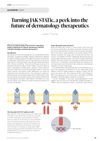
 JAK inhibitors show promise for treating skin diseases effectively and safely.