97 citations
,
March 2006 in “Journal of Investigative Dermatology” Mutations in the DSG4 gene cause a severe form of brittle hair and skin issues.
2 citations
,
August 2021 in “Animal Cells and Systems” Egfl6 is not needed for zebrafish face development.
14 citations
,
October 2017 in “Gene Expression Patterns” A new mouse model helps study melanocyte cells using GFP expression.
44 citations
,
October 2016 in “Epilepsia” 2-DG reduces seizures by enhancing brain inhibition through specific receptor activation.
January 2025 in “SSRN Electronic Journal” The hydrogel speeds up wound healing by fighting infections and supporting tissue repair.
28 citations
,
October 2014 in “Development” Fz3 and Fz6 can partially replace each other in tissue polarity and axon guidance.
2 citations
,
June 2018 in “International Journal of Pharmacological Research” Hutchinson-Gilford Progeria Syndrome caused rapid aging due to a genetic mutation, with treatments to manage symptoms.
 94 citations
,
February 1994 in “The journal of investigative dermatology/Journal of investigative dermatology”
94 citations
,
February 1994 in “The journal of investigative dermatology/Journal of investigative dermatology” EGF makes hair follicles grow longer but stops hair production.
 5 citations
,
November 2017 in “Asian journal of pharmaceutical and clinical research”
5 citations
,
November 2017 in “Asian journal of pharmaceutical and clinical research” Pakis Gajah (Angiopteris evecta) water extract may promote hair growth in rabbits, but more research is needed for human use.
 82 citations
,
May 2009 in “Development”
82 citations
,
May 2009 in “Development” EGF and KGF signalling prevent hair follicle formation and promote skin cell development in mice.
 19 citations
,
July 2015 in “Journal of Ginseng Research”
19 citations
,
July 2015 in “Journal of Ginseng Research” Korean Red Ginseng may protect against hair loss caused by chemotherapy.
 August 2018 in “Reactions Weekly”
 Two men experienced hair regrowth while being treated with immune globulin for other health issues, but there were also side effects.
3 citations
,
September 2013 in “Journal of the American Academy of Dermatology” A new genetic mutation linked to Hutchinson-Gilford progeria syndrome was found in China.
 September 2020 in “bioRxiv (Cold Spring Harbor Laboratory)”
 Glutamic acid helps mice grow hair.
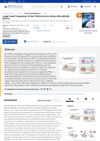 January 2024 in “ACS Biomaterials Science & Engineering”
 A new method using a microfluidic device can prepare hair follicle germs efficiently for potential use in hair loss treatments.
 3 citations
,
January 2021 in “Applied sciences”
3 citations
,
January 2021 in “Applied sciences” Fermented red ginseng and a traditional herb mix improved hair growth in mice.
 1 citations
,
October 2022 in “JCI insight”
1 citations
,
October 2022 in “JCI insight” Deleting the BRD4 protein in certain skin cells causes hair loss and skin inflammation.
 March 2025 in “Wound Repair and Regeneration”
 The hydrogel scaffold improved skin flap healing and reduced inflammation.
4 citations
,
March 2024 in “Developmental Dynamics” ALX4 is crucial for normal craniofacial and hair development, with specific roles in different cell types.
9 citations
,
April 2022 in “Cell Communication and Signaling” High S100A4 levels worsen glioblastoma by promoting blood vessel growth.
55 citations
,
October 2008 in “American Journal Of Pathology” mIGF-1 in skin cells speeds up wound healing and hair growth in mice without harmful effects.
 August 2019 in “Journal of Invertebrate Pathology”
 Thymosin beta 4 protects cells from damage by blocking a harmful microRNA and boosting a protective gene.
March 2025 in “Multidisciplinary Science Journal” Sonic hedgehog (Shh) is crucial for gecko tail regeneration.
 1 citations
,
April 2018 in “The journal of investigative dermatology/Journal of investigative dermatology”
1 citations
,
April 2018 in “The journal of investigative dermatology/Journal of investigative dermatology” Topical patidegib gel effectively treats basal cell carcinoma in Gorlin syndrome patients without causing the side effects seen with oral treatments.
 23 citations
,
June 2012 in “PLOS ONE”
23 citations
,
June 2012 in “PLOS ONE” KLF4 is important for maintaining skin stem cells and helps heal wounds.
November 2023 in “Вопросы современной педиатрии” Genetic testing can diagnose hair loss linked to DSG4 gene variants.
 1 citations
,
September 2016 in “Journal of Dermatological Science”
1 citations
,
September 2016 in “Journal of Dermatological Science” FGF18 treatment during hair's resting phase can protect against hair loss from radiation.
April 2012 in “Cancer Research” EGFR deficiency in skin causes hair follicle issues and inflammation.
24 citations
,
March 2008 in “Neuroscience Research” Cat paws have complex touch sensors for detailed sensory processing.
 1 citations
,
August 2014 in “Asian-Australasian Journal of Animal Sciences”
1 citations
,
August 2014 in “Asian-Australasian Journal of Animal Sciences” Recombinant goat VEGF164 speeds up hair growth in mice.