ILC1-like cells can independently cause alopecia areata by affecting hair follicles.
June 2015 in “Annals of the Rheumatic Diseases” Managing multiple autoimmune diseases in one patient is very challenging.
38 citations
,
May 2017 in “Medical Science Monitor” Myositis in lupus patients is linked to skin rash, hair loss, blood issues, and high disease activity.
 April 2019 in “The journal of investigative dermatology/Journal of investigative dermatology”
 Machine learning can predict how well patients with alopecia areata will respond to certain treatments.
April 2022 in “Microbiology and Immunology” A specific DNA pattern in Malassezia restricta may be linked to hair loss in men.
 3 citations
,
February 2022 in “Rheumatology”
3 citations
,
February 2022 in “Rheumatology” Baricitinib was effective in treating a patient with dermatomyositis and hair loss.
 February 2016 in “The journal of investigative dermatology/Journal of investigative dermatology”
 JAK inhibitors may help treat alopecia areata by reversing hair loss.
 January 2019 in “Przegląd Dermatologiczny”
 Patients with one autoimmune disease should be checked for other autoimmune disorders.
ILC1-like cells may contribute to hair loss in alopecia areata and could be new treatment targets.
January 2025 in “Mansoura Medical Journal” Serum IMA levels don't help diagnose AGA but may indicate its severity.
 48 citations
,
June 2014 in “Neurobiology of Disease”
48 citations
,
June 2014 in “Neurobiology of Disease” The study suggests that motor neurons created from stem cells of patients with spinal and bulbar muscular atrophy show signs of the disease, including changes in protein levels and cell functions.
227 citations
,
April 2020 in “Cell” More precise, personalized therapies are needed for autoimmune diseases.
 82 citations
,
March 2016 in “Autoimmunity reviews”
82 citations
,
March 2016 in “Autoimmunity reviews” Animal models have helped understand hair loss from alopecia areata and find new treatments.
 2 citations
,
February 2014 in “Hair therapy & transplantation”
2 citations
,
February 2014 in “Hair therapy & transplantation” Alopecia Areata is an autoimmune condition causing hair loss, influenced by genetics, environment, and possibly improved by anti-MIF therapy, with many patients experiencing regrowth within a year.
 12 citations
,
February 2010 in “Journal of the European Academy of Dermatology and Venereology”
12 citations
,
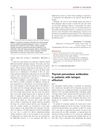
February 2010 in “Journal of the European Academy of Dermatology and Venereology” Some people with chronic hair loss may have thyroid autoimmunity.
December 2010 in “Elsevier eBooks” Systemic lupus erythematosus is an autoimmune disease causing diverse symptoms and major organ involvement.
November 2023 in “Journal of Investigative Dermatology” Highly active but fewer CD14+CD16- monocytes are found in Alopecia Areata patients, regardless of severity.
July 2026 in “Journal of Investigative Dermatology” April 2011 in “Medical Journal of Tabriz University of Medical Sciences and Health Services” Many patients with Alopecia Areata have underlying autoimmune disorders, especially thyroid issues.

γδTregs may help treat autoimmune diseases like alopecia areata by promoting hair regrowth and reducing immune attacks.
October 2018 in “The American journal of gastroenterology” Pembrolizumab can cause serious liver issues, requiring close monitoring and early treatment.
 9 citations
,
November 2016 in “Journal of medical science and clinical research”
9 citations
,
November 2016 in “Journal of medical science and clinical research” Only 22% of teenage girls in the study knew about PCOS, despite many having symptoms.
 February 2024 in “Journal of medical science and clinical research”
 Radiotherapy effectively treated a large scalp tumor in an elderly woman, avoiding surgery.
 June 2022 in “Journal of medical science and clinical research”
 Brandt syndrome, with symptoms like skin rash, hair loss, and diarrhea, improves quickly with zinc supplements.
 December 2020 in “Journal of medical science and clinical research”
 Most child skin problems during the COVID-19 lockdown were not emergencies and could have been handled by teleconsultation.
 October 2017 in “Journal of medical science and clinical research”
 Obese people are more likely to have certain skin conditions like dark patches, stretch marks, skin tags, and bumpy skin.
 8 citations
,
May 2004 in “Textile Research Journal”
8 citations
,
May 2004 in “Textile Research Journal” Scientists made antibodies to tell cashmere and wool apart, which could improve how we identify animal fibers.
8 citations
,
April 2023 in “Dermatology Practical & Conceptual” Certain blood markers, especially MLR, can help diagnose alopecia areata.
2 citations
,
January 2020 in “Enlighten: Theses (The University of Glasgow)” Alopecia areata is an autoimmune disease causing hair loss, and targeting macrophages may help treat it.
 19 citations
,
March 1997 in “Journal of Cutaneous Pathology”
19 citations
,
March 1997 in “Journal of Cutaneous Pathology” Alopecia areata involves specific T-cells, unlike androgenetic alopecia.