 2 citations
,
January 2024 in “Advances in Dermatology and Allergology”
2 citations
,
January 2024 in “Advances in Dermatology and Allergology” S100A7 and IL-17 may contribute to inflammation in lichen planopilaris.
 December 2025 in “Cureus”
 Higher IL-17A and IL-23 levels are linked to alopecia areata severity and could help in tracking and treating the disease.
 December 2023 in “International journal of multidisciplinary research and analysis”
 SH-MSCs gel reduced IL-6 and increased TGF-β, suggesting it could treat alopecia.
 April 2018 in “Journal of Investigative Dermatology”
 Acne patients' skin, both with and without lesions, shows a strong immune response and higher antimicrobial activity.
 July 2003 in “Journal of Cutaneous Medicine and Surgery”
 Various skin conditions can be treated effectively with different methods, such as discontinuing certain drugs, using specific vaccines, applying creams, and changing lifestyle habits like smoking and drinking.
 176 citations
,
August 2015 in “The journal of allergy and clinical immunology/Journal of allergy and clinical immunology/The journal of allergy and clinical immunology”
176 citations
,
August 2015 in “The journal of allergy and clinical immunology/Journal of allergy and clinical immunology/The journal of allergy and clinical immunology” Alopecia areata involves immune activation in the scalp, suggesting treatments targeting TH1, TH2, and IL-23 pathways.
 140 citations
,
March 2013 in “The journal of immunology/The Journal of immunology”
140 citations
,
March 2013 in “The journal of immunology/The Journal of immunology” Memory regulatory T cells need IL-7, not IL-2, to stay in peripheral tissues.
 48 citations
,
January 2024 in “Immune Network”
48 citations
,
January 2024 in “Immune Network” IL-15 is key for T cell function and could help improve treatments for immune-related diseases.
 March 2023 in “Clinical, cosmetic and investigational dermatology”
 IL-33 is linked to hair follicle damage in psoriasis and could be a treatment target for hair loss in this condition.
 December 2025 in “Nature Communications”
 Blocking IL-17a can improve age-related smell loss in mice.
 April 2021 in “Journal of Investigative Dermatology”
 IL-15 helps protect hair follicles from immune attacks and encourages hair growth.
 57 citations
,
March 2024 in “Nano-Micro Letters”
57 citations
,
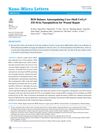
March 2024 in “Nano-Micro Letters” The nanoplatform helps heal wounds by balancing bacteria-killing and inflammation-reducing functions.
 42 citations
,
October 2009 in “The journal of investigative dermatology/Journal of investigative dermatology”
42 citations
,
October 2009 in “The journal of investigative dermatology/Journal of investigative dermatology” Mutations in the KRT85 gene cause hair and nail problems.
 20 citations
,
December 2019 in “The journal of allergy and clinical immunology/Journal of allergy and clinical immunology/The journal of allergy and clinical immunology”
20 citations
,
December 2019 in “The journal of allergy and clinical immunology/Journal of allergy and clinical immunology/The journal of allergy and clinical immunology” Blocking IL-12/IL-23 does not help with hair loss in alopecia areata for mice or humans.
 20 citations
,
November 2005 in “Journal of Investigative Dermatology Symposium Proceedings”
20 citations
,
November 2005 in “Journal of Investigative Dermatology Symposium Proceedings” IFN-γ and IL-2 are important for T cell activation in hair loss in mice.
 16 citations
,
July 2018 in “Dermatologic Surgery”
16 citations
,
July 2018 in “Dermatologic Surgery” iL-PRF treatment improves hair growth for androgenetic alopecia.
 15 citations
,
January 2010 in “Experimental Dermatology”
15 citations
,
January 2010 in “Experimental Dermatology” Hair loss in certain young mice is linked to a specific gene and can be caused by lack of iron.
 March 2026 in “Medeniyet Medical Journal”
 EH-MSCs may help treat hair loss by boosting regeneration and reducing inflammation.
 December 2023 in “Research Square (Research Square)”
 These specific gene polymorphisms are not linked to Alopecia Areata in Egyptians.
 December 2023 in “International journal of multidisciplinary research and analysis”
 SH-MSCs gel can effectively treat alopecia by increasing IL-10 and decreasing TNF-α gene expression.
 April 2021 in “Journal of Investigative Dermatology”
 Bacteria can help skin regenerate through a process called IL-1β signaling.
 January 2010 in “CNR Solar (Scientific Open-access Literature Archive and Repository) (Consiglio Nazionale delle Ricerche)”
 Metformin and clomiphene citrate together improve pregnancy chances and reduce miscarriages in women with PCOS.
 April 2017 in “Journal of Investigative Dermatology”
 The BMP/Smads pathway and Id2 gene control hair follicle stem cells, affecting their rest and growth phases.
 April 2017 in “Journal of Investigative Dermatology”
 Triptolide effectively and safely reduces actinic keratosis lesions in mice.
 April 2017 in “Journal of Investigative Dermatology”
 Scientists created a tiny, 3D model of a hair follicle that grows and acts like a real one.
 April 2017 in “Journal of Investigative Dermatology”
 A boy with Oculodentodigital syndrome had a unique GJA1 gene mutation causing his symptoms.
 April 2017 in “Journal of Investigative Dermatology”
  12 citations
,
January 2011 in “Photodermatology, photoimmunology & photomedicine”
12 citations
,
January 2011 in “Photodermatology, photoimmunology & photomedicine” This therapy effectively treats resistant alopecia areata with minimal side effects.
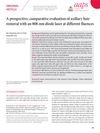 April 2019 in “Archives of aesthetic plastic surgery”
 Higher fluences in 808-nm diode laser treatments are more effective for axillary hair removal.
 April 2019 in “The journal of investigative dermatology/Journal of investigative dermatology”
 848 genes related to fat and metabolism are less active in people with Central Centrifugal Cicatricial Alopecia.