 176 citations
,
August 2015 in “The journal of allergy and clinical immunology/Journal of allergy and clinical immunology/The journal of allergy and clinical immunology”
176 citations
,
August 2015 in “The journal of allergy and clinical immunology/Journal of allergy and clinical immunology/The journal of allergy and clinical immunology” Alopecia areata involves immune activation in the scalp, suggesting treatments targeting TH1, TH2, and IL-23 pathways.
 23 citations
,
December 2021 in “Frontiers in Immunology”
23 citations
,
December 2021 in “Frontiers in Immunology” IL-1 family cytokines are crucial for skin defense and healing, but their imbalance can cause skin diseases.
 144 citations
,
November 2020 in “Frontiers in immunology”
144 citations
,
November 2020 in “Frontiers in immunology” Targeting the IL-23/IL-17 pathway effectively treats several inflammatory skin diseases.
 68 citations
,
November 2015 in “The Journal of Allergy and Clinical Immunology”
68 citations
,
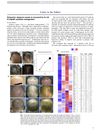
November 2015 in “The Journal of Allergy and Clinical Immunology” Blocking IL-12/IL-23p40 helped reverse severe hair loss in patients.
59 citations
,
September 2021 in “Journal of Allergy and Clinical Immunology” Netherton syndrome has two subtypes with shared immune traits but different allergic and immune responses, suggesting targeted treatments.
 53 citations
,
April 2021 in “Cell Host & Microbe”
53 citations
,
April 2021 in “Cell Host & Microbe” Skin bacteria, specifically Staphylococcus aureus, help in wound healing and hair growth by using IL-1β signaling. Using antibiotics on skin wounds can slow down this natural healing process.
 48 citations
,
January 2024 in “Immune Network”
48 citations
,
January 2024 in “Immune Network” IL-15 is key for T cell function and could help improve treatments for immune-related diseases.
40 citations
,
July 2015 in “Kidney International” IL-3 worsens lupus nephritis and blocking it improves kidney health.
34 citations
,
January 2022 in “Frontiers in Immunology” IL-25 helps heal diabetic wounds by improving blood vessel and skin cell functions.
 9 citations
,
August 2017 in “Photochemistry and Photobiology”
9 citations
,
August 2017 in “Photochemistry and Photobiology” Red light at 627 nm can safely trigger IL-4 release in skin cells, potentially helping treat inflammatory skin conditions.
4 citations
,
October 2020 in “The journal of investigative dermatology. Symposium proceedings/The Journal of investigative dermatology symposium proceedings” IL-4 and IL-13 might play a role in a type of hair loss similar to alopecia areata.
 1 citations
,
July 2012 in “Nasza Dermatologia Online”
1 citations
,
July 2012 in “Nasza Dermatologia Online” IL-1α levels are higher in alopecia areata patients, suggesting a role in the disease.
 August 2024 in “Qucosa (Saxon State and University Library Dresden)”
 White fat tissue in the skin helps control inflammation by affecting certain immune cells.
 July 2024 in “Egyptian Journal of Medical Human Genetics”
 These gene variations are not linked to alopecia areata in Egyptians.
July 2024 in “Journal of Investigative Dermatology” IL-13 protein is much higher in the skin of atopic dermatitis patients than in healthy skin.
 June 2024 in “Journal of Allergy and Clinical Immunology”
 TSLP affects atopic dermatitis by increasing sebum and reducing fat through IL-4/IL-13 signaling.
 December 2023 in “Research Square (Research Square)”
 These specific gene polymorphisms are not linked to Alopecia Areata in Egyptians.
 April 2021 in “Journal of Investigative Dermatology”
 IL-15 helps protect hair follicles from immune attacks and encourages hair growth.
 April 2021 in “Journal of Investigative Dermatology”
 Bacteria can help skin regenerate through a process called IL-1β signaling.
 April 2018 in “Journal of Investigative Dermatology”
 Acne patients' skin, both with and without lesions, shows a strong immune response and higher antimicrobial activity.
 April 2018 in “Journal of Investigative Dermatology”
 IL-17C is important in inflammatory skin diseases and could be a target for treatment.
1 citations
,
August 2021 in “Journal of Investigative Dermatology” ASLAN004 was safe and well-tolerated, supporting further development for treating certain diseases.
181 citations
,
January 2019 in “Cell” Innate lymphoid cells help control skin bacteria by regulating sebaceous glands.
 125 citations
,
September 2019 in “Journal of Clinical Immunology”
125 citations
,
September 2019 in “Journal of Clinical Immunology” Foxp3 is crucial for regulatory T cell function, and targeting these cells may help treat immune disorders.
 77 citations
,
June 2017 in “Advances in Therapy”
77 citations
,
June 2017 in “Advances in Therapy” New treatments for Alopecia Areata, like JAK inhibitors, show promise for hair regrowth and are likely to change future treatment approaches.
 59 citations
,
July 2015 in “Journal of Immunology”
59 citations
,
July 2015 in “Journal of Immunology” Certain proteins, caspases-1 and -11, are important in the early development of skin inflammation in mice.
58 citations
,
July 2018 in “Journal of Allergy and Clinical Immunology” Alopecia areata severity is linked to increased TH1 and TH2 activity.
 57 citations
,
April 2019 in “British journal of dermatology/British journal of dermatology, Supplement”
57 citations
,
April 2019 in “British journal of dermatology/British journal of dermatology, Supplement” Alopecia areata involves immune system imbalances that may lead to depression and anxiety.
 50 citations
,
March 2021 in “Journal of investigational allergology & clinical immunology”
50 citations
,
March 2021 in “Journal of investigational allergology & clinical immunology” Dupilumab is being tested for many new skin, respiratory, and gastrointestinal conditions.
 40 citations
,
December 2012 in “PLoS ONE”
40 citations
,
December 2012 in “PLoS ONE” Removing Ctip2 in skin cells causes skin inflammation similar to atopic dermatitis.