April 2018 in “Journal of Investigative Dermatology” Screening for the NUDT15 gene variant can prevent severe side effects from thiopurine drugs in East-Asian people.
 April 2018 in “The journal of investigative dermatology/Journal of investigative dermatology”
 GATA6 is important for maintaining and differentiating cells in a key area of human skin.
Deleting the MAD2L1 gene in mice led to rapid tumor growth despite chromosomal instability.
 2 citations
,
July 2015 in “Archives of Dermatological Research”
2 citations
,
July 2015 in “Archives of Dermatological Research” A new gene variant in the DSP gene is linked to a unique type of hair loss.
34 citations
,
January 2022 in “Frontiers in Immunology” IL-25 helps heal diabetic wounds by improving blood vessel and skin cell functions.
 20 citations
,
December 2019 in “The journal of allergy and clinical immunology/Journal of allergy and clinical immunology/The journal of allergy and clinical immunology”
20 citations
,
December 2019 in “The journal of allergy and clinical immunology/Journal of allergy and clinical immunology/The journal of allergy and clinical immunology” Blocking IL-12/IL-23 does not help with hair loss in alopecia areata for mice or humans.
April 2019 in “Journal of Investigative Dermatology” Blocking LFA-1 prevents hair loss in mice.
32 citations
,
December 2019 in “The Journal of clinical investigation/The journal of clinical investigation” A protein called IL-36γ causes skin side effects from certain cancer treatments when combined with a common skin bacteria.
 8 citations
,
February 2015 in “Cellular immunology”
8 citations
,
February 2015 in “Cellular immunology” Deleting Snai2 and Snai3 causes fatal autoimmunity.
 23 citations
,
December 2021 in “Frontiers in Immunology”
23 citations
,
December 2021 in “Frontiers in Immunology” IL-1 family cytokines are crucial for skin defense and healing, but their imbalance can cause skin diseases.
70 citations
,
March 1997 in “Journal of Investigative Dermatology”  November 2022 in “Gigascience”
 A specific genetic deletion in goats affects cashmere yield and thickness.
 June 2024 in “Skin Research and Technology”
 hsa-miR-193a-5p may help diagnose and treat alopecia areata.
 36 citations
,
October 2000 in “British Journal of Dermatology”
36 citations
,
October 2000 in “British Journal of Dermatology” A different gene near the hairless gene on chromosome 8p21 causes a rare hair loss condition in a German family.
January 2018 in “bioRxiv (Cold Spring Harbor Laboratory)” The mutant HR bmh protein mis-localizes in cells, affecting skin and hair development.
34 citations
,
November 1998 in “Journal of Investigative Dermatology” A common mutation in the hHb6 gene is linked to monilethrix, but other factors may also play a role.
 April 2023 in “Journal of Investigative Dermatology”
 IL-9/IL-9R signaling can negatively affect human hair growth and may be a target for treating hair loss conditions.
 19 citations
,
August 1999 in “European journal of endocrinology”
19 citations
,
August 1999 in “European journal of endocrinology” The study concluded that testing hormone levels after stimulation is not reliable for identifying carriers of 21-hydroxylase deficiency; genetic testing is necessary.
 6 citations
,
May 2013 in “PloS one”
6 citations
,
May 2013 in “PloS one” The Foxn1(-/-) nude mouse shows disrupted and expanded skin stem cell areas due to high Lhx2 levels.
 April 2017 in “The journal of investigative dermatology/Journal of investigative dermatology”
 HSD11b1 affects skin nerves and increases non-histaminergic itch.
 January 2026 in “Figshare”
 ASLNC168501 may help treat hair loss by boosting hair follicle stem cell activity.
 144 citations
,
November 2020 in “Frontiers in immunology”
144 citations
,
November 2020 in “Frontiers in immunology” Targeting the IL-23/IL-17 pathway effectively treats several inflammatory skin diseases.
 April 2023 in “Research Square (Research Square)”
 A specific RNA helps increase the growth of skin cells in Liaoning cashmere goats by working with a protein to boost a growth-related gene.
100 citations
,
November 1997 in “Human Genetics” A new mutation in the hHb1 keratin gene is linked to the hair disorder monilethrix.
April 2023 in “The Egyptian Journal of Hospital Medicine” Higher Interleukin 17A levels may indicate more severe alopecia areata.
 8 citations
,
April 2022 in “The journal of investigative dermatology/Journal of investigative dermatology”
8 citations
,
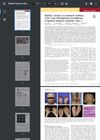
April 2022 in “The journal of investigative dermatology/Journal of investigative dermatology” Certain genetic changes in the LSS gene cause a rare skin and hair condition.
 March 2026 in “European journal of ecology, biology and agriculture.”
 Patients with alopecia areata have higher levels of certain immune markers, suggesting new treatment targets.
 January 2025 in “Cellular and Molecular Biology”
 The PIP5K1A gene helps cashmere growth in goats by promoting cell proliferation, and melatonin boosts its expression.
 1 citations
,
January 2020 in “Benha Journal of Applied Sciences”
1 citations
,
January 2020 in “Benha Journal of Applied Sciences” Certain gene variations may increase the risk and severity of alopecia areata.
32 citations
,
November 2020 in “UNC Libraries” A point mutation in the androgen receptor gene causes complete androgen insensitivity.