69 citations
,
February 2008 in “The American journal of pathology” Controlled delivery of specific RNA and IL-4 restored hair growth in mice with autoimmune alopecia.
8 citations
,
January 2015 in “Genetics and Molecular Research” Certain gene variations increase the risk of alopecia areata in Koreans.
44 citations
,
April 2013 in “Proceedings of the National Academy of Sciences of the United States of America” FGF13 gene changes cause excessive hair growth in a rare condition.
 September 2016 in “Journal of Dermatological Science”
 Plasmacytoid dendritic cells, which overproduce IFN-α, may play a crucial role in starting alopecia areata, an autoimmune disease causing hair loss.
 January 2018 in “bioRxiv (Cold Spring Harbor Laboratory)”
 Researchers found key regions in the mouse hairless gene that control its activity in skin and brain cells, affecting hair follicle function.
June 2020 in “The journal of investigative dermatology/Journal of investigative dermatology” Scientists found new and known long non-coding RNAs in mouse hair follicle stem cells that may be important for stem cell function and could be targets for cancer treatment.
July 2022 in “Journal of Investigative Dermatology” 14 citations
,
November 2019 in “Mediators of inflammation” IL-6 from stem cells helps repair skin and grow hair.
April 2016 in “Journal of Investigative Dermatology” Blocking certain proteins can significantly regrow hair in severe alopecia areata.
April 2018 in “The journal of investigative dermatology/Journal of investigative dermatology” Certain immune cells, when activated by specific signals, can encourage hair growth.
 December 2025 in “Cureus”
 Higher IL-17A and IL-23 levels are linked to alopecia areata severity and could help in tracking and treating the disease.
15 citations
,
June 2012 in “British Journal of Dermatology” A new mutation in the KRT86 gene causes a hair disorder with variable expression.
April 2023 in “Journal of Investigative Dermatology” CD8+ T cells attack hair follicle stem cells, causing scarring and hair loss.
 181 citations
,
January 2009 in “Nature Genetics”
181 citations
,
January 2009 in “Nature Genetics” Certain mutations in a hair growth-related gene cause a type of genetic hair loss.
9 citations
,
May 2019 in “Medicine” The C-allele and CC-genotype in the PTPN22 gene lower the risk of alopecia areata.
 23 citations
,
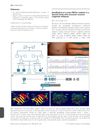
December 2013 in “British Journal of Dermatology”
23 citations
,
December 2013 in “British Journal of Dermatology” A new gene mutation linked to a skin condition was found in a Spanish family.
 January 2026 in “Figshare”
 ASLNC168501 may help restore hair growth in androgenetic alopecia by improving hair follicle stem cell function.
The trichohyalin gene is located at chromosomal region 1q21 with other skin-related protein genes.
10 citations
,
January 2003 in “Dermatology” The E413K mutation in the hHb6 gene causes monilethrix, a hair disorder, but doesn't show consistent symptoms.
1 citations
,
March 2022 in “Journal of biological chemistry/The Journal of biological chemistry” Removing a specific gene in certain skin cells causes hair loss in mice by disrupting hair follicle development.
 April 2018 in “The journal of investigative dermatology/Journal of investigative dermatology”
 miR-486 may help prevent hair loss in alopecia areata.
21 citations
,
March 2003 in “Clinical and Experimental Dermatology” Mutations in the hHb6 gene cause the hair disorder monilethrix.
2 citations
,
May 2024 in “International Journal of Molecular Sciences” Targeting CD169+ skin macrophages may help treat psoriasis.
31 citations
,
April 2004 in “Journal of Investigative Dermatology” A new mouse gene, Keratin 17n, is mainly found in nail tissue and may explain why mice without Keratin 17 don't have nail issues.
4 citations
,
August 2024 in “Skin Research and Technology” The study was retracted.
26 citations
,
October 1998 in “Experimental Dermatology” A keratin hHb6 mutation causes a hair disorder with varying severity, influenced by other factors.
November 2025 in “Figshare” SQSTM1 is linked to increased risk of alopecia areata.
 February 2023 in “Journal of dermatology”
 The first Japanese case of a genetic hair disorder caused by specific mutations in the LIPH gene was identified.
7 citations
,
August 2008 in “Immunogenetics” A gene mutation in mice causes increased mast cells and disorganized hair follicles in their skin.
 April 2018 in “Journal of Investigative Dermatology”