7 citations
,
March 2022 in “International Journal of Molecular Sciences” FGF21 can help reduce skin inflammation caused by C. acnes.
249 citations
,
November 2018 in “Cell” TNFα helps grow and maintain liver cells in 3D culture for a long time.
 March 2026 in “Journal of Nanobiotechnology”
 A new microneedle treatment can effectively repigment skin in vitiligo.
 14 citations
,
November 2015 in “Annals of the New York Academy of Sciences”
14 citations
,
November 2015 in “Annals of the New York Academy of Sciences” Changing the diet of mice lacking the enzyme CBS can affect symptoms related to the genetic condition.
 10 citations
,
October 2020 in “Frontiers in Cell and Developmental Biology”
10 citations
,
October 2020 in “Frontiers in Cell and Developmental Biology” Wounds can regenerate hair in young mice, but this ability declines with age, offering insights for improving tissue regeneration in the elderly.
 11 citations
,
October 2021 in “Stem Cell Research & Therapy”
11 citations
,
October 2021 in “Stem Cell Research & Therapy” Hair follicle stem cells reduced hair loss and inflammation in mice with a condition similar to human alopecia.
 23 citations
,
February 2020 in “PLOS genetics”
23 citations
,
February 2020 in “PLOS genetics” Mice with LSS deficiency showed hair loss and cataracts, similar to humans, and can help in understanding and treating this condition.
 6 citations
,
April 2017 in “Experimental dermatology”
6 citations
,
April 2017 in “Experimental dermatology” CD80CD86 deficiency causes hair loss by disrupting regulatory T cells.
87 citations
,
March 2007 in “Biological Chemistry” Deleting the scd1 gene in mice prevents obesity by disrupting skin lipids and improving heat regulation.
 December 2020 in “bioRxiv (Cold Spring Harbor Laboratory)”
 Stress can cause a type of hair loss in mice lacking the CCHCR1 gene.
 53 citations
,
May 2010 in “Journal of Cellular Physiology”
53 citations
,
May 2010 in “Journal of Cellular Physiology” Mice without Vitamin D receptors have hair growth problems because of issues in the hedgehog signaling pathway.
 17 citations
,
December 2010 in “Journal of Investigative Dermatology”
17 citations
,
December 2010 in “Journal of Investigative Dermatology” Flightless I protein affects hair growth, with low levels delaying it and high levels increasing hair length in rodents.
 4 citations
,
December 2020 in “Mammalian genome”
4 citations
,
December 2020 in “Mammalian genome” Harlequin mutant mice have hair loss due to low AIF protein levels and retroviral element activity.
 63 citations
,
May 2011 in “Clinical cancer research”
63 citations
,
May 2011 in “Clinical cancer research” The topical inhibitor CUR61414 was not effective in treating basal cell carcinoma in human trials.
 July 2024 in “Journal of Investigative Dermatology”
 Losing both ERBB2 and ERBB3 receptors in mice causes significant skin problems and inflammation.
5 citations
,
April 2024 in “Journal of Ovarian Research” miR-21 helps improve ovarian function recovery in treated mice.
15 citations
,
June 2020 in “The journal of investigative dermatology/Journal of investigative dermatology” Mice with extra human KLK14 had hair and skin problems, including weaker cell bonds and inflammation, linked to Netherton syndrome.
 53 citations
,
November 2006 in “Journal of Endocrinology”
53 citations
,
November 2006 in “Journal of Endocrinology” Prolactin slows down hair growth in mice.
 4 citations
,
March 2018 in “Daehan han'yi hag'hoeji/Journal of Korean medicine”
4 citations
,
March 2018 in “Daehan han'yi hag'hoeji/Journal of Korean medicine” Astragalus membranaceus helps regrow hair and reduce hair loss symptoms.
 82 citations
,
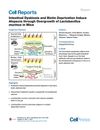
August 2017 in “Cell Reports”
82 citations
,
August 2017 in “Cell Reports” An imbalanced gut and lack of biotin can cause hair loss in mice.
16 citations
,
June 2015 in “The journal of investigative dermatology/Journal of investigative dermatology” The enzyme DHHC13 is essential for healthy hair and skin, and its deficiency leads to hair loss and skin problems.
3 citations
,
April 2025 in “Science Advances” Loss of Ten1 in mice causes telomere shortening and symptoms similar to human dyskeratosis congenita.
 2 citations
,
October 2022 in “The journal of investigative dermatology/Journal of investigative dermatology”
2 citations
,
October 2022 in “The journal of investigative dermatology/Journal of investigative dermatology” AIRE deficiency causes hair loss similar to alopecia areata in mice.
10 citations
,
April 2020 in “PloS one” Lack of Crif1 in hair follicle stem cells slows down hair growth in mice.
216 citations
,
May 2003 in “Journal of Investigative Dermatology” Glycerol is essential for skin hydration in mice without sebaceous glands.

Lack of Fgf21 slows hair growth by affecting gene interactions.
173 citations
,
September 2011 in “Journal of Investigative Dermatology” IL-6 contributes to hair loss by shortening the growth phase and causing hair follicles to regress.
 October 2012 in “Humana Press eBooks”
 Grape seed extract is good for skin care, with antioxidant, anti-inflammatory, and anti-cancer effects.

The treatment was ineffective in humans.
 January 2025 in “Journal of Food Biochemistry”
 2′‐Fucosyllactose reduces hair loss and promotes hair growth in mice.