34 citations
,
January 2022 in “Frontiers in Immunology” IL-25 helps heal diabetic wounds by improving blood vessel and skin cell functions.
 25 citations
,
October 2018 in “PloS one”
25 citations
,
October 2018 in “PloS one” Key genes regulate hair follicle phase changes in Inner Mongolia cashmere goats.
 144 citations
,
November 2020 in “Frontiers in immunology”
144 citations
,
November 2020 in “Frontiers in immunology” Targeting the IL-23/IL-17 pathway effectively treats several inflammatory skin diseases.
32 citations
,
February 2024 in “The Journal of Experimental Medicine” CXCL12+ fibroblasts help recruit neutrophils to fight skin infections.
 June 2023 in “Benha Journal of Applied Sciences”
 Targeting IL-17 could help treat pattern hair loss.
51 citations
,
March 2022 in “Frontiers in Immunology” Alarmin cytokines are key in controlling skin immunity and inflammation.
 January 2016 in “Research Explorer (The University of Manchester)”
 Activating the Eda/Edar pathway improves wound healing by enhancing hair follicle growth.
 20 citations
,
October 2021 in “PLoS ONE”
20 citations
,
October 2021 in “PLoS ONE” Newborn skin is uniquely prepared to adapt to new environments compared to adult skin.
 17 citations
,
April 2023 in “Aging”
17 citations
,
April 2023 in “Aging” CNGA3, GLUD1, and SIRT1 are promising targets for treating aging and glioblastoma.
 12 citations
,
April 2014 in “Molecular Medicine Reports”
12 citations
,
April 2014 in “Molecular Medicine Reports” Targeting specific miRNAs may help treat hair follicle issues caused by hydrogen peroxide.
 1 citations
,
November 2024 in “Romanian Journal of Morphology and Embryology”
1 citations
,
November 2024 in “Romanian Journal of Morphology and Embryology” Recent findings in cell biology help understand cell roles in health and disease.

Wasabi leaf extract affects gene expression in skin cells.
November 2025 in “Journal of Investigative Dermatology” Certain immune cells in atopic dermatitis skin could be targeted for treatment.
181 citations
,
January 2019 in “Cell” Innate lymphoid cells help control skin bacteria by regulating sebaceous glands.
47 citations
,
April 2021 in “BMC Medical Genomics” Certain gene variants can influence acne risk and severity.
21 citations
,
April 2025 in “MedComm” Alopecia areata causes unpredictable hair loss, and more research is needed to fully understand and treat it effectively.
9 citations
,
August 2024 in “International Journal of Molecular Sciences” Promising treatments for EBS include anti-inflammatory drugs, antibiotics, creams, mTOR inhibitors, and gene editing, but more trials are needed.
 February 2026 in “Nature Communications”
 A specific group of immune and skin cells may cause chronic inflammation in atopic dermatitis.
 343 citations
,
March 2016 in “Nature Communications”
343 citations
,
March 2016 in “Nature Communications” IL-17-producing γδ T cells help improve bone healing.
 278 citations
,
March 2013 in “Gut”
278 citations
,
March 2013 in “Gut” Anti-IL-12/IL-23 antibody therapy effectively treats psoriasiform skin lesions in IBD patients.
245 citations
,
October 2015 in “Nature medicine” Hair follicle-derived IL-7 and IL-15 are crucial for maintaining skin-resident memory T cells and could be targeted for treating skin diseases and lymphoma.
 176 citations
,
August 2015 in “The journal of allergy and clinical immunology/Journal of allergy and clinical immunology/The journal of allergy and clinical immunology”
176 citations
,
August 2015 in “The journal of allergy and clinical immunology/Journal of allergy and clinical immunology/The journal of allergy and clinical immunology” Alopecia areata involves immune activation in the scalp, suggesting treatments targeting TH1, TH2, and IL-23 pathways.
173 citations
,
September 2011 in “Journal of Investigative Dermatology” IL-6 contributes to hair loss by shortening the growth phase and causing hair follicles to regress.
 140 citations
,
March 2013 in “The journal of immunology/The Journal of immunology”
140 citations
,
March 2013 in “The journal of immunology/The Journal of immunology” Memory regulatory T cells need IL-7, not IL-2, to stay in peripheral tissues.
101 citations
,
July 1998 in “Journal of Investigative Dermatology” UVB exposure in human skin causes macrophages to produce more IL-10 and less IL-12, leading to immunosuppression.
 68 citations
,
November 2015 in “The Journal of Allergy and Clinical Immunology”
68 citations
,
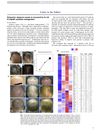
November 2015 in “The Journal of Allergy and Clinical Immunology” Blocking IL-12/IL-23p40 helped reverse severe hair loss in patients.
 59 citations
,
June 2023 in “Nature Aging”
59 citations
,
June 2023 in “Nature Aging” Blocking IL-17 signaling may reduce skin inflammation and delay aging.
59 citations
,
September 2021 in “Journal of Allergy and Clinical Immunology” Netherton syndrome has two subtypes with shared immune traits but different allergic and immune responses, suggesting targeted treatments.
 53 citations
,
April 2021 in “Cell Host & Microbe”
53 citations
,
April 2021 in “Cell Host & Microbe” Skin bacteria, specifically Staphylococcus aureus, help in wound healing and hair growth by using IL-1β signaling. Using antibiotics on skin wounds can slow down this natural healing process.
 49 citations
,
October 2017 in “Nutrients”
49 citations
,
October 2017 in “Nutrients” Equisetum debile extract, especially the ethyl acetate type, may be a promising natural ingredient for anti-hair loss products.