 December 2025 in “Babcock University Medical Journal”
 CD27 and IL-35 can help diagnose alopecia areata linked to bacterial infections.
 140 citations
,
March 2013 in “The journal of immunology/The Journal of immunology”
140 citations
,
March 2013 in “The journal of immunology/The Journal of immunology” Memory regulatory T cells need IL-7, not IL-2, to stay in peripheral tissues.
 49 citations
,
October 2017 in “Nutrients”
49 citations
,
October 2017 in “Nutrients” Equisetum debile extract, especially the ethyl acetate type, may be a promising natural ingredient for anti-hair loss products.
 32 citations
,
June 2012 in “PLoS ONE”
32 citations
,
June 2012 in “PLoS ONE” Blocking IL-8 can reduce skin rashes from cancer treatment.
 20 citations
,
November 2005 in “Journal of Investigative Dermatology Symposium Proceedings”
20 citations
,
November 2005 in “Journal of Investigative Dermatology Symposium Proceedings” IFN-γ and IL-2 are important for T cell activation in hair loss in mice.
 13 citations
,
February 2018 in “Dermatologic Therapy”
13 citations
,
February 2018 in “Dermatologic Therapy” Finasteride 2.5 mg/day can effectively treat female hair loss.
 7 citations
,
January 2018 in “Medicinski arhiv”
7 citations
,
January 2018 in “Medicinski arhiv” A herbal extract may help treat certain types of hair loss by reducing a specific gene's activity.
 December 2025 in “Cureus”
 Higher IL-17A and IL-23 levels are linked to alopecia areata severity and could help in tracking and treating the disease.
 August 2024 in “Qucosa (Saxon State and University Library Dresden)”
 White fat tissue in the skin helps control inflammation by affecting certain immune cells.
 December 2023 in “International journal of multidisciplinary research and analysis”
 SH-MSCs gel can effectively treat alopecia by increasing IL-10 and decreasing TNF-α gene expression.
 April 2021 in “Journal of Investigative Dermatology”
 IL-15 helps protect hair follicles from immune attacks and encourages hair growth.
 48 citations
,
January 2024 in “Immune Network”
48 citations
,
January 2024 in “Immune Network” IL-15 is key for T cell function and could help improve treatments for immune-related diseases.
 9 citations
,
August 2017 in “Photochemistry and Photobiology”
9 citations
,
August 2017 in “Photochemistry and Photobiology” Red light at 627 nm can safely trigger IL-4 release in skin cells, potentially helping treat inflammatory skin conditions.
 184 citations
,
February 2015 in “EBioMedicine”
184 citations
,
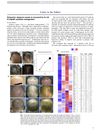
February 2015 in “EBioMedicine” A patient with Alopecia Areata had complete hair regrowth after using the drug baricitinib.
 68 citations
,
November 2015 in “The Journal of Allergy and Clinical Immunology”
68 citations
,
November 2015 in “The Journal of Allergy and Clinical Immunology” Blocking IL-12/IL-23p40 helped reverse severe hair loss in patients.
 16 citations
,
July 2018 in “Dermatologic Surgery”
16 citations
,
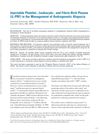
July 2018 in “Dermatologic Surgery” iL-PRF treatment improves hair growth for androgenetic alopecia.
 12 citations
,
September 2018 in “Journal of Drug Delivery Science and Technology”
12 citations
,
September 2018 in “Journal of Drug Delivery Science and Technology” The silk fibroin hydrogel with FGF-2-liposome can potentially treat hair loss in mice.
 12 citations
,
December 2017 in “Food and chemical toxicology”
12 citations
,
December 2017 in “Food and chemical toxicology” Permanent hair dye mixtures can irritate and damage the skin.
 July 2024 in “Egyptian Journal of Medical Human Genetics”
 These gene variations are not linked to alopecia areata in Egyptians.
 176 citations
,
August 2015 in “The journal of allergy and clinical immunology/Journal of allergy and clinical immunology/The journal of allergy and clinical immunology”
176 citations
,
August 2015 in “The journal of allergy and clinical immunology/Journal of allergy and clinical immunology/The journal of allergy and clinical immunology” Alopecia areata involves immune activation in the scalp, suggesting treatments targeting TH1, TH2, and IL-23 pathways.
 144 citations
,
November 2020 in “Frontiers in immunology”
144 citations
,
November 2020 in “Frontiers in immunology” Targeting the IL-23/IL-17 pathway effectively treats several inflammatory skin diseases.
 2 citations
,
January 2024 in “Advances in Dermatology and Allergology”
2 citations
,
January 2024 in “Advances in Dermatology and Allergology” S100A7 and IL-17 may contribute to inflammation in lichen planopilaris.
 103 citations
,
November 2014 in “Journal of Cell Biology”
103 citations
,
November 2014 in “Journal of Cell Biology” MicroRNA-214 is important for skin and hair growth because it affects the Wnt pathway.
 55 citations
,
June 2014 in “Nature Communications”
55 citations
,
June 2014 in “Nature Communications” Tcf3 helps cells move and heal wounds by controlling lipocalin 2.
 54 citations
,
April 2020 in “Experimental & Molecular Medicine”
54 citations
,
April 2020 in “Experimental & Molecular Medicine” Cox-2 significantly contributes to the development and progression of skin and esophageal cancers.
 54 citations
,
April 2019 in “Journal of cellular physiology”
54 citations
,
April 2019 in “Journal of cellular physiology” miR-218-5p helps skin and hair growth by targeting SFRP2 and activating a specific signaling pathway.
 54 citations
,
November 2017 in “Scientific Reports”
54 citations
,
November 2017 in “Scientific Reports” The study found that certain microRNAs are higher in the cells and lower in the fluid of women with a specific type of polycystic ovary syndrome, and one microRNA could potentially help diagnose the condition.
 47 citations
,
April 2000 in “The American journal of pathology”
47 citations
,
April 2000 in “The American journal of pathology” Bcl-2 overexpression protects against UVB damage but worsens hair loss from chemotherapy.
 45 citations
,
September 1998 in “Journal of Investigative Dermatology”
45 citations
,
September 1998 in “Journal of Investigative Dermatology” The enzyme 17β-HSD type 2 mainly performs oxidation in human sebaceous glands, which may help protect against acne.
 28 citations
,
August 2003 in “Steroids”
28 citations
,
August 2003 in “Steroids” Hirsute women have lower type 2 17β-HSD enzyme levels, which improve with treatment.