2 citations
,
May 2019 in “Small ruminant research” Mutations in specific llama genes may affect fiber quality for textiles.
 November 2023 in “Journal of cosmetic dermatology”
 The 595-nm pulsed dye laser effectively reduces symptoms of EFFC with minimal side effects.
39 citations
,
April 2019 in “The journal of immunology/The Journal of immunology” Malt1 protease is essential for regulatory T cell function and could be targeted to boost antitumor immunity.
 23 citations
,
February 2020 in “PLOS genetics”
23 citations
,
February 2020 in “PLOS genetics” Mice with LSS deficiency showed hair loss and cataracts, similar to humans, and can help in understanding and treating this condition.
 17 citations
,
October 2006 in “Molecular and Cellular Endocrinology”
17 citations
,
October 2006 in “Molecular and Cellular Endocrinology” The L457(3.43)R mutation in the human lutropin receptor causes increased activity and hormone insensitivity, leading to precocious puberty.
 November 2022 in “Journal of Investigative Dermatology”
 Dynlt3 is important for melanosome transport and skin coloration.
 6 citations
,
January 2021 in “Frontiers in Immunology”
6 citations
,
January 2021 in “Frontiers in Immunology” Certain immune cells worsen post-surgery gut paralysis by activating a specific immune response.
 December 2012 in “Journal of dermatological science”
 Hair follicles help attract immune cells to minor skin injuries.
GPC1 is important for hair growth by helping blood vessels form around hair follicles.
 12 citations
,
March 2004 in “International Journal of Dermatology”
12 citations
,
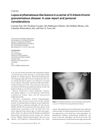
March 2004 in “International Journal of Dermatology” A woman with X-linked chronic granulomatous disease developed lupus-like skin lesions, improved with treatment, suggesting a unique skin condition in carriers.

Eclipta alba IIHR Sel EA 43 is best for large-scale cultivation due to high growth, yield, and wedelolactone content.

Low level laser or LED therapy combined with infiltrations may help hair growth.
5 citations
,
February 2005 in “Journal of the American Academy of Dermatology” Focal palmoplantar callosities may help diagnose non-Herlitz junctional epidermolysis bullosa.
 16 citations
,
January 2016 in “Journal of Investigative Dermatology”
16 citations
,
January 2016 in “Journal of Investigative Dermatology” Mice without the IL-6 gene had more hair growth after injury due to higher activity of a related protein, Stat3.
 326 citations
,
February 2009 in “The American journal of pathology”
326 citations
,
February 2009 in “The American journal of pathology” Lgr5 is a marker for active, self-renewing stem cells in the intestine and skin, important for tissue maintenance.
Low-level laser therapy is a safe, painless method that effectively treats acne and improves skin without post-treatment care.

An elderly woman developed severe skin discoloration after homeopathic knee injections, but the exact cause is unclear.
 April 2018 in “Journal of Investigative Dermatology”
 Lymphocytes, a type of immune cell, are crucial for wound healing as they help remodel damaged areas and reduce inflammation.
1 citations
,
June 2023 in “Journal of Visualized Experiments” A new laser method helps observe and understand how intestines heal and change over time.
July 2025 in “Journal of Investigative Dermatology” TRIV-509 quickly improves skin barrier and cell health in atopic dermatitis.
11 citations
,
December 2017 in “Orphanet Journal of Rare Diseases” A new mutation in the ST14 gene broadens the understanding of ichthyosis-hypotrichosis syndrome.
2 citations
,
October 2021 in “JID innovations” Uterine leiomyomas don't significantly change gene expression in the scalp of people with Central Centrifugal Cicatricial Alopecia.
 6 citations
,
December 2021 in “Scientific Reports”
6 citations
,
December 2021 in “Scientific Reports” Inhibiting class I HDACs helps maintain hair growth ability in skin cells.
July 2024 in “Journal of Investigative Dermatology” CRISPR/Cas9 and prime editing can potentially fix skin disorder genes safely and effectively.
 73 citations
,
April 2010 in “Anais Brasileiros de Dermatologia”
73 citations
,
April 2010 in “Anais Brasileiros de Dermatologia” Dermoscopy helps diagnose and monitor treatment for hair loss from scarring conditions like discoid lupus and lichen planopilaris.
2 citations
,
November 2023 in “Indian Dermatology Online Journal” A 4-year-old girl with a rare lupus condition was successfully treated with oral corticosteroids, leading to full recovery and hair regrowth.
 17 citations
,
April 2021 in “Biointerface Research in Applied Chemistry”
17 citations
,
April 2021 in “Biointerface Research in Applied Chemistry” Nanostructured lipid carriers are promising for improving drug delivery in medicine and food.
 April 2018 in “Journal of Investigative Dermatology”
 The conclusion is that the cornea has two types of stem cells, with Lrig1+ cells being key for renewal in aging corneas, independent of CD44.
 7 citations
,
December 2014 in “Gynecological Endocrinology”
7 citations
,
December 2014 in “Gynecological Endocrinology” LC-MS/MS is more reliable than immunoassays for diagnosing 21-hydroxylase deficiency.
1 citations
,
January 2005 in “Experimental Dermatology” MC-1R in skin cells may influence inflammation and collagen production.