September 2016 in “Journal of Dermatological Science” Hair follicles produce IL-7, which is essential for certain skin lymphoma cells to survive.
28 citations
,
June 2007 in “Journal of Cutaneous Pathology” IRS premature desquamation is not unique to CCCA and occurs in various scarring alopecias.
9 citations
,
January 1997 in “Horticultura: Revista de industria, distribución y socioeconomía hortícola: frutas, hortalizas, flores, plantas, árboles ornamentales y viveros” PRC2 is not essential for hair follicle stem cell maintenance or hair growth.
 September 2024 in “Portuguese Journal of Dermatology and Venereology”
 CCCA and LPP may be related hair loss conditions influenced by genetics and environment, needing early treatment.
 April 2017 in “Journal of Investigative Dermatology”
 Cholecystokinin may help reduce skin inflammation in psoriasis.
CCC1 is essential for ion balance and proper plant cell function.
June 2026 in “Experimental Dermatology” Laminin-332 is vital for skin health, repair, and disease prevention.
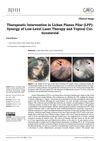 January 2024 in “Brazilian Journal of Hair Health”
 Combining low-level laser therapy with topical corticosteroids effectively improved Lichen Planopilaris symptoms.
 November 2023 in “The journal of investigative dermatology/Journal of investigative dermatology”
 ARQ-234, a protein designed to treat atopic dermatitis, shows increased effectiveness in early testing.
9 citations
,
March 2017 in “Journal of Visualized Experiments” The assay effectively identifies compounds that affect immune cell activation.
7 citations
,
May 2021 in “EBioMedicine” Increased methylation of the Filip1l gene may contribute to aggressive skin cancer.
 13 citations
,
October 2019 in “Journal of lasers in medical sciences”
13 citations
,
October 2019 in “Journal of lasers in medical sciences” CO2 laser treatment for aging skin significantly changes immune system-related genes.
Live imaging helps us understand skin immune responses and develop treatments.
April 2020 in “The Aesthetics” LED-LLLT helps heal wounds, reduce pain, and regrow hair using specific light wavelengths.
 7 citations
,
December 2021 in “European Respiratory Review”
7 citations
,
December 2021 in “European Respiratory Review” The document concludes that diagnosing and treating Interstitial Pneumonia with Autoimmune Features (IPAF) is challenging, needs a multidisciplinary approach, and further research for better diagnostic criteria and treatments. It also emphasizes regular checks for Connective Tissue Disease symptoms in all patients with Interstitial Lung Disease.
 April 2018 in “Journal of Investigative Dermatology”
 Ovol2 is important for proper skin healing and hair growth.
September 2017 in “Griffith Research Online (Griffith University, Queensland, Australia)” Blocking IL-17 can reduce joint inflammation in Ross River Virus infections.
 April 2024 in “The journal of investigative dermatology/Journal of investigative dermatology”
 ASH2L is essential for skin and hair development.
 April 2026 in “International Journal of Drug Delivery Technology”
 Lactobacillus acidophilus substances can kill and stop the spread of cervical cancer cells.
 1 citations
,
January 2022 in “bioRxiv (Cold Spring Harbor Laboratory)”
1 citations
,
January 2022 in “bioRxiv (Cold Spring Harbor Laboratory)” Blocking IL-17 signaling can delay skin aging and improve skin and hair health.
 November 2022 in “The journal of investigative dermatology/Journal of investigative dermatology”
 IL-15 promotes hair growth and protects hair follicles.
3 citations
,
June 2023 in “Modern Pathology” GLI1 RNA CISH effectively identifies basal cell carcinoma but is less specific for benign follicular tumors.
September 2021 in “The journal of investigative dermatology/Journal of investigative dermatology” Three genes linked to the development of trichilemmal cysts were found.
60 citations
,
September 2023 in “Science” BTNL proteins help control inflammatory bowel disease by maintaining specific immune cells.
11 citations
,
July 2022 in “Frontiers in Immunology” Four specific genes are linked to keloid formation and could be potential treatment targets.
13 citations
,
January 2018 in “Advances in experimental medicine and biology” 1 citations
,
December 2016 in “Revista română de medicină de laborator” The NIPAL4 mutation c.527C>A is common in Romanian patients with autosomal recessive congenital ichthyosis.
January 2011 in “Anhui nongye kexue” The vector successfully directed specific gene expression in hair follicles.
 17 citations
,
September 2014 in “PLoS ONE”
17 citations
,
September 2014 in “PLoS ONE” SK2 channels help control sensory signals in rat muscle spindles and hair follicles.
 January 2026 in “Clinical Cosmetic and Investigational Dermatology”
 Early diagnosis and targeted anti-inflammatory treatments can improve outcomes in androgenetic alopecia with perifollicular inflammation and fibrosis.