5 citations
,
May 2001 in “Proceedings of SPIE, the International Society for Optical Engineering/Proceedings of SPIE” The DWLSM provides detailed imaging of hair shafts and follicles with high accuracy.
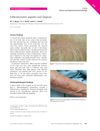 May 2014 in “Clinical and Experimental Dermatology”
 A 70-year-old woman with a rare skin condition improved after treatment with topical steroids and acitretin.
24 citations
,
December 2018 in “Inflammation and Regeneration” Phospholipase A2 enzymes play key roles in skin health and disease.
 April 2017 in “The journal of investigative dermatology/Journal of investigative dermatology”
 QMSI is a valuable method for studying drug penetration in skin tissues.
 36 citations
,
August 2011 in “Journal of dermatological science”
36 citations
,
August 2011 in “Journal of dermatological science” Human hair has a protective lipid layer that can be damaged by moisture and treatments, affecting hair growth and health.
15 citations
,
June 2021 in “Medicina” Combined light therapy improves eye health and quality of life for those with meibomian gland dysfunction.
July 2004 in “Journal of Clinical Oncology” Isolated limb perfusion is a safe and effective treatment for limb melanoma.
1 citations
,
March 2026 in “Scientific Reports” Intradiscal platelet-rich plasma injections can safely reduce discogenic low back pain symptoms.
 January 2005 in “Elektronische Hochschulschriften der LMU München (Ludwig-Maximilians-Universität München)”
 Topical immunotherapy with DPCP is most effective for certain alopecia areata types, with success linked to age and disease duration, and influenced by a gene polymorphism.
10 citations
,
May 2020 in “Dermatologic therapy” Tildrakizumab significantly improved recalcitrant lichen planopilaris and frontal fibrosing alopecia.
5 citations
,
September 2021 in “Clinical case reports” GLPLS is a rare skin condition with specific hair loss and skin symptoms.
LGF injections may improve early Peyronie's disease by reducing penile curvature and plaque size.
December 2015 in “OPAL (Open@LaTrobe) (La Trobe University)” QLT0267 stops hair follicle cell growth and movement.
24 citations
,
January 2014 in “PubMed” Imiquimod cream 5% effectively treated generalized discoid lupus erythematosus.
 November 2023 in “The journal of investigative dermatology/Journal of investigative dermatology”
 Removing MCPIP1 from myeloid cells in mice leads to hair loss and prevents skin tumors but causes pigmented spots.
 August 2023 in “The journal of investigative dermatology/Journal of investigative dermatology”
 Longer immunotherapy treatment may improve outcomes for Merkel cell carcinoma patients.
July 2024 in “Journal of Investigative Dermatology” PH-762 shows promise in treating skin cancer by effectively targeting and silencing PD-1 in tumors with minimal side effects.
 8 citations
,
June 2012 in “PloS one”
8 citations
,
June 2012 in “PloS one” Mutations in Plcd1 and Plcd3 together cause severe hair loss in mice.
 May 2011 in “Value in Health”
 CP-690,550 significantly reduced itching in patients with moderate-to-severe plaque psoriasis.
 9 citations
,
September 2006 in “Veterinary pathology”
9 citations
,
September 2006 in “Veterinary pathology” A dog with unusual skin lesions near its tail was successfully treated for a rare form of lupus.
 2 citations
,
June 2020 in “Dermatology and therapy”
2 citations
,
June 2020 in “Dermatology and therapy” Narrowband-UVB phototherapy successfully treated a rare case of Graham Little-Piccardi-Lassueur syndrome.
19 citations
,
July 2017 in “Clinical and experimental dermatology” Men with lichen planopilaris had earlier onset than women, and treatment usually improved the condition.
 6 citations
,
January 2021 in “Frontiers in Immunology”
6 citations
,
January 2021 in “Frontiers in Immunology” Certain immune cells worsen post-surgery gut paralysis by activating a specific immune response.
 90 citations
,
July 2008 in “Dermatologic therapy”
90 citations
,
July 2008 in “Dermatologic therapy” Lichen planopilaris is a chronic, scarring hair loss condition with no definitive cure, requiring accurate diagnosis and treatment to manage symptoms.
15 citations
,
January 2008 in “PubMed” Laser and IPL hair reduction is effective but requires multiple sessions and ongoing maintenance.
January 2026 in “China CDC Weekly” Large language models can accurately identify monkeypox from medical records.
September 2025 in “Indian Journal of Dermatology” A Turkish woman has a hair condition caused by a LIPH gene mutation.
 9 citations
,
May 2012 in “PLOS ONE”
9 citations
,
May 2012 in “PLOS ONE” ILK is essential for skin development, pigmentation, and healing.
 January 2026 in “DOAJ (DOAJ: Directory of Open Access Journals)”
 Early biopsy and targeting inflammation can improve treatment for hair loss in androgenetic alopecia.