 July 2025 in “Pakistan Journal of Intensive Care Medicine”
 Clobetasol propionate 0.05% ointment is more effective than tacrolimus 0.1% ointment for treating alopecia areata.
 July 2025 in “Scientific Reports”
 Pioglitazone, Trimipramine, and Dimetindene may be repurposed to treat psoriasis.
Patients with lichen planopilaris have a higher risk of heart disease.
 April 2025 in “Egyptian journal of Immunology”
 Calprotectin levels are higher in alopecia areata patients, indicating systemic inflammation.
 February 2025 in “Physician s Journal of Medicine”
 Recognizing skin symptoms can help diagnose and manage COVID-19.
 January 2025 in “Balkan Medical Journal”
 Baricitinib helps regrow hair in severe alopecia areata and is safe, but more research is needed.
 January 2025 in “Acta Dermato Venereologica”
 Mothers with alopecia areata have a higher risk of adverse birth outcomes.
 January 2025 in “Universidad de Córdoba Insitutional Repository (Universidad de Córdoba)”
 An imbalanced scalp microbiome may worsen alopecia areata severity and inflammation, but treatment can partially restore balance.
 December 2024 in “Clinical Cosmetic and Investigational Dermatology”
 Alopecia areata might help slow down certain cancers.
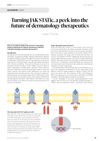 August 2024 in “New Zealand Medical Student Journal”
 JAK inhibitors show promise for treating skin diseases effectively and safely.
 May 2024 in “Frontiers in Immunology”
 Type-2 immunity may influence skin diseases and could be targeted for treatment.
 April 2024 in “International journal of women's health”
 Adult female acne is a complex condition that can worsen with menopause, requiring holistic treatment and tailored skincare at different life stages.
 March 2024 in “Clinical, cosmetic and investigational dermatology”
 Tofacitinib successfully treated vitiligo in a patient with lupus without side effects.
 February 2024 in “Sohag Medical Journal”
 Various local treatments for alopecia areata show promise, but individualized plans and more research are needed.
 January 2024 in “Dermatology practical & conceptual”
 Atopic dermatitis in kids with alopecia areata can predict poor response to topical immunotherapy.

Lichen planopilaris can occur with multiple autoimmune diseases.
 January 2024 in “American journal of clinical dermatology”
 Ritlecitinib is safe and well-tolerated for treating alopecia areata in patients aged 12 and older.
 December 2023 in “Health Information Jurnal Penelitian”
 Post-COVID syndrome causes long-lasting symptoms like fatigue, breathing issues, and anxiety.
 December 2023 in “Tuberkuloz ve Toraks/Tüberküloz ve toraks”
 Many COVID-19 patients have long-term symptoms, especially women, but certain medications may help reduce these symptoms.
 December 2023 in “Y Dược học”
 Older adults in Vietnam often experience hair loss after COVID-19, especially women, singles, and those hospitalized.
 October 2023 in “Journal of Medicine, University of Santo Tomas (JMUST Online)”
 Elderly patients frequently suffer from skin conditions, especially inflammatory ones, highlighting the need for better healthcare.
 October 2023 in “Frontiers in medicine”
 Comprehensive screening for infections is crucial before starting JAK inhibitors in alopecia areata patients.

Women with PCOS are at higher risk for gum disease, and managing shared risk factors can help both conditions.
 September 2023 in “Journal of Parasite Science”
 The dog's skin condition improved significantly after seven days of treatment.
 September 2023 in “Russian Journal of Skin and Venereal Diseases”
 A rare scalp condition caused scarring hair loss in a woman, improved slightly with treatment.
 August 2023 in “Clinical and experimental dermatology and therapies”
 Dupilumab may help hair regrowth in some patients with severe atopic dermatitis, but results vary.
 July 2023 in “Dermatology and therapy”
 People with alopecia areata may have a higher risk of blood clots.
 July 2023 in “Journal of skin and stem cell”
 Interferon beta treatment in MS patients can cause skin reactions and increased hair loss.
 July 2023 in “The Egyptian Journal of Hospital Medicine ”
 The conclusion is that emotional support and a variety of treatments are important for alopecia areata, but more research is needed.
 June 2023 in “International journal of biology, pharmacy and allied sciences”
 New medications are improving depression treatment, emphasizing accurate diagnosis and chronic care.