 October 2020 in “International Journal of Research in Dermatology”
 The review suggests more research is needed to understand Frontal fibrosing alopecia, a condition causing hairline recession in postmenopausal women.
 July 2018 in “British Journal of Dermatology”
 Hair regrowth was seen in 83% of children with alopecia, immune system plays a role in the condition, and various treatments showed effectiveness for hair and nail disorders.
July 2016 in “Cancer research” Mutant cells in hair follicles are influenced by their location and interactions with surrounding cells.
February 2006 in “DOAJ (DOAJ: Directory of Open Access Journals)” Alopecia areata treatments include immune inhibitors, topical sensitizers, irritants, and minoxidil, with future focus on immunosuppressive approaches.
 October 2022 in “Frontiers in Cell and Developmental Biology”
 Aging skin is affected by inflammation, reduced stem cell function, and slower wound healing.
 135 citations
,
December 2013 in “Seminars in Cell & Developmental Biology”
135 citations
,
December 2013 in “Seminars in Cell & Developmental Biology” Stem cells in the hair follicle are regulated by their surrounding environment, which is important for hair growth.
 115 citations
,
November 2004 in “Brain Behavior and Immunity”
115 citations
,
November 2004 in “Brain Behavior and Immunity” Stress increases nerve fibers and immune cell activity in mouse skin, possibly worsening skin conditions.
 59 citations
,
February 2012 in “Journal of Dermatological Science”
59 citations
,
February 2012 in “Journal of Dermatological Science” Environmental factors at different levels control hair stem cell activity, which could lead to new hair growth and alopecia treatments.
37 citations
,
April 2018 in “Journal of Allergy and Clinical Immunology” A mutation in the IKZF1 gene causes immune system overactivity, linked to autoimmune diseases like lupus.
 15 citations
,
June 1964 in “Experimental Biology and Medicine”
15 citations
,
June 1964 in “Experimental Biology and Medicine” Methotrexate can temporarily suppress certain immune responses without killing immune cells, potentially helping treat autoimmune diseases.
12 citations
,
September 2024 in “JID Innovations” Skin-on-a-chip devices better mimic human skin for research.
 10 citations
,
October 2024 in “Dermatology Practical & Conceptual”
10 citations
,
October 2024 in “Dermatology Practical & Conceptual” Dupilumab may worsen Alopecia Areata in some males but improve it in some females, suggesting personalized treatment is needed.
7 citations
,
October 2024 in “Acta Dermato Venereologica” Higher inflammation markers are linked to more severe alopecia areata.
 7 citations
,
November 2020 in “Experimental Dermatology”
7 citations
,
November 2020 in “Experimental Dermatology” Different cell types work together to repair skin, and targeting them may improve healing and reduce scarring.
 7 citations
,
January 2013 in “Journal of Investigative Dermatology”
7 citations
,
January 2013 in “Journal of Investigative Dermatology” Vitamin A may influence hair loss conditions like alopecia, but more research is needed to understand how.
 1 citations
,
August 2018 in “bioRxiv (Cold Spring Harbor Laboratory)”
1 citations
,
August 2018 in “bioRxiv (Cold Spring Harbor Laboratory)” A new mutation in the TMEM173 gene and a risk allele in IFIH1 cause a unique set of immune-related symptoms.
 1 citations
,
May 2012 in “Hair transplant forum international”
1 citations
,
May 2012 in “Hair transplant forum international” Hair loss in men may be caused by inflammation triggered by hormones, and treatments reducing inflammation could potentially promote hair growth.
 March 2026 in “European journal of ecology, biology and agriculture.”
 Patients with alopecia areata have higher levels of certain immune markers, suggesting new treatment targets.
September 2025 in “Immunological Reviews” The skin can independently form immune responses through special structures, offering new ways to treat skin diseases.
April 2019 in “The journal of investigative dermatology/Journal of investigative dermatology” A compromised gut may trigger the autoimmune hair loss condition Alopecia Areata.
34 citations
,
June 2020 in “British journal of dermatology/British journal of dermatology, Supplement” Frontal fibrosing alopecia is linked to increased immune system activity and reduced stem cells, suggesting early treatment targeting this pathway might prevent hair follicle damage.
 April 2023 in “Journal of Investigative Dermatology”
 An automated system can predict death risk in thin melanoma by analyzing immune cells.
 May 2024 in “European Journal of Immunology”
 Vitamin B5 and coenzyme A may help regulate the immune system and could improve treatments for chronic diseases and cancer.
135 citations
,
May 1994 in “Medical Entomology and Zoology” Mouse models help study genetic skin diseases.
 9 citations
,
July 2017 in “Dermatologic Therapy”
9 citations
,
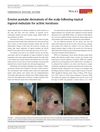
July 2017 in “Dermatologic Therapy” Two elderly men developed scalp inflammation after using a gel for skin lesions, which healed with treatment except for some permanent hair loss.
January 2025 in “Scholarly Commons (University of Pennsylvania)” UTX is important for skin health and its loss can lead to skin issues, especially in females.
 610 citations
,
April 2014 in “Nature Reviews Immunology”
610 citations
,
April 2014 in “Nature Reviews Immunology” The document concludes that understanding how the skin's immune system and inflammation work is complex and requires more research to improve treatments for skin diseases.
 82 citations
,
October 2019 in “Frontiers in Immunology”
82 citations
,
October 2019 in “Frontiers in Immunology” Changes to the Foxp3 protein affect how well regulatory T cells can control the immune system, which could help treat immune diseases and cancer.
 5 citations
,
May 2023 in “European Journal of Human Genetics”
5 citations
,
May 2023 in “European Journal of Human Genetics” NIPT can help detect potential maternal cancer, and GIPXplore can identify immune diseases in pregnancies.
Lichen planus commonly affects middle-aged adults, often involves limbs and mucosal areas, and can be linked to immune diseases.