7 citations
,
March 1990 in “Pigment Cell Research” Certain chemicals cause hair graying in black mice but not yellow mice.
33 citations
,
May 2018 in “Stem Cell Reports” Krt15+ cells in the mouse intestine resist radiation and can start tumors.
 9 citations
,
July 2022 in “EMBO molecular medicine”
9 citations
,
July 2022 in “EMBO molecular medicine” Blocking certain immune signals can reduce skin damage from radiation therapy.
4 citations
,
January 2025 in “Annals of the New York Academy of Sciences” Spiny mice can regenerate tissues instead of forming scars.
October 2025 in “Preprints.org” Male and female mice handle stress differently.
 23 citations
,
June 2015 in “Oncology Letters”
23 citations
,
June 2015 in “Oncology Letters” Adipose-derived stem cell-conditioned medium can reduce melanoma cell growth and spread.
 13 citations
,
July 2012 in “Pigment Cell & Melanoma Research”
13 citations
,
July 2012 in “Pigment Cell & Melanoma Research” A mutation in the Adam10 gene causes freckle-like spots on Hairless mice.

The document concludes that the development of certain tumors is influenced by genetic background and that a specific gene modification can lead to tumor regression and reduced growth.
15 citations
,
May 2014 in “Journal of Biological Chemistry” A chimeric keratin partially improved skin structure in mice lacking keratin 5, but didn't fully restore normal skin.
52 citations
,
October 2007 in “Molecular Therapy” Injecting lentiviral vectors into early gestation mice effectively targets skin stem cells for potential gene therapy.
January 2023 in “Faculty of 1000 Research Ltd” Androgen loss may speed up hair greying.
January 2011 in “Junshi yixue” Longer exposure to high-power millimeter wave radiation causes more severe skin damage in mice.
75 citations
,
February 2017 in “Aging” SkQ1 antioxidant improved health and lifespan in mice.
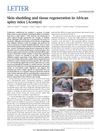 418 citations
,
September 2012 in “Nature”
418 citations
,
September 2012 in “Nature” African spiny mice can regenerate skin, hair, and cartilage, but not muscle, and their unique abilities could be useful for regenerative medicine.
14 citations
,
January 2023 in “Nature Immunology” iNKT cells help develop and maintain healthy skin in young mice.
July 2025 in “Journal of Investigative Dermatology” γδ T cells can prevent and treat alopecia areata, offering a new therapy option.
 5 citations
,
December 2021 in “Scientific Reports”
5 citations
,
December 2021 in “Scientific Reports” Age affects how certain proteins involved in COVID-19 infection are expressed in mice, but sex hormones and heart injury do not.
3 citations
,
December 2004 in “PubMed” A fungal infection caused skin lesions in farmed mink kits, but they remained healthy.
 2 citations
,
October 2022 in “The journal of investigative dermatology/Journal of investigative dermatology”
2 citations
,
October 2022 in “The journal of investigative dermatology/Journal of investigative dermatology” AIRE deficiency causes hair loss similar to alopecia areata in mice.
 27 citations
,
January 2012 in “Current Topics in Microbiology and Immunology”
27 citations
,
January 2012 in “Current Topics in Microbiology and Immunology” Mice that can regenerate tissue have cells that pause in the cell cycle, which is important for healing, similar to axolotls.
15 citations
,
September 2002 in “Journal of Biological Chemistry” Abnormal keratin expression in mice causes severe oral issues, affecting feeding.
16 citations
,
September 2006 in “The Journal of Immunology” MILL molecules are unique immune proteins in mice that don't need TAP to appear on cell surfaces.
 2 citations
,
March 2017 in “TURKDERM”
2 citations
,
March 2017 in “TURKDERM” Skin and mucous membrane issues are common in kids after bone marrow transplants, so careful monitoring is crucial.
10 citations
,
July 1994 in “Journal of Dermatological Science” Cyclosporin extends hair growth in mice, but high-dose corticosteroids block this effect.
Moderate immune responses help hair growth, while excessive responses slow it down.
October 2024 in “Frontiers in Immunology” Pertussis toxin may contribute to hair loss in alopecia areata.
36 citations
,
June 2015 in “International journal of toxicology” Trichloroethylene causes skin inflammation in mice by increasing certain immune proteins.
101 citations
,
July 1998 in “Journal of Investigative Dermatology” UVB exposure in human skin causes macrophages to produce more IL-10 and less IL-12, leading to immunosuppression.
23 citations
,
January 1985 in “Journal of Neuropathology & Experimental Neurology” Cupric chloride treatment corrected abnormal Purkinje cell development in brindled mice.
 28 citations
,
November 2013 in “The FASEB journal”
28 citations
,
November 2013 in “The FASEB journal” Mice with CBS deficiency are healthier on a low-methionine diet.