November 2025 in “Zenodo (CERN European Organization for Nuclear Research)” Alopecia areata causes sudden, patchy hair loss due to immune system attacks on hair follicles.
October 2025 in “Journal of Applied Genetics” Autoinflammatory skin diseases are complex, increasingly common, and significantly affect quality of life.
September 2025 in “The Open Dermatology Journal” The AI showed high accuracy in diagnosing skin conditions but needs improvement for immunological and infectious disorders.
June 2025 in “DiRROS repository (University of Maribor)” Stress, diet, and environment can worsen scalp seborrheic dermatitis.
 February 2025 in “PubMed”
 Alopecia areata cases have increased globally, affecting mostly women aged 30-34, with links to other health issues.
 February 2025 in “Quality in Sport”
 Pregnancy-related skin disorders need accurate diagnosis and treatment to prevent risks to the baby.
 January 2025 in “Annals of Thoracic and Cardiovascular Surgery”
 Removing the thymoma improved the patient's alopecia areata, suggesting a possible link between the two.
 May 2024 in “International Seven Journal of Multidisciplinary”
 More research is needed to better understand and treat Fibrosing Frontal Alopecia.
March 2024 in “Biomedicines” Mesenchymal stem cells show promise for effective skin repair and regeneration.
 February 2024 in “Recima21”
 Covid-19 can cause hair loss due to immune and psychological factors.
 January 2024 in “Elsevier eBooks”
 Increasing regulatory T cells may help treat alopecia areata by reducing autoimmunity and promoting hair growth.
January 2024 in “Case Reports in Endocrinology” Cortisone tapering may help improve severe myasthenia gravis and alopecia areata after thymectomy.

The document says hair loss can happen after recovering from COVID-19 and it can cause psychological discomfort.
 June 2023 in “Dermatology and therapy”
 The Middle East and Africa need better data, treatment consensus, and support for Alopecia Areata.
 June 2023 in “British journal of dermatology/British journal of dermatology, Supplement”
 A 13-year-old boy had both lichen planus and vitiligo, suggesting a possible link between the two conditions.
 May 2023 in “Sučasna pedìatrìâ. Ukraïna”
 An 11-year-old child with total hair loss may have a genetic autoimmune disease, and the outlook for hair regrowth is not good.
 November 2022 in “Journal of Investigative Dermatology”
 Patients with ichthyosis often experience symptoms similar to psoriasis and atopic dermatitis, suggesting that targeted therapies could improve their condition.
 March 2022 in “Egyptian Academic Journal of Biological Sciences. E, Medical Entomology and Parasitology”
 Demodex mites might help skin balance by eating bacteria, but their role in skin disorders is unclear and may involve other factors.
 January 2022 in “Medical research archives”
 Taking vitamin D might improve life for MS patients and reduce skin side effects from alemtuzumab treatment.
 September 2021 in “CRC Press eBooks”
 Fibrosing alopecia in a pattern distribution is a type of hair loss that may often be overlooked, especially in men.
 September 2021 in “CRC Press eBooks”
 Pregnancy can cause normal skin changes, including darkening of certain areas, nail changes, vascular changes, and breast changes like stretch marks.
October 2020 in “Revista Intertox de Toxicologia Risco Ambiental e Sociedade” Smoking is linked to various skin diseases.
 June 2020 in “IP Indian journal of clinical and experimental dermatology”
 Older people more commonly have skin conditions related to aging, and early treatment can improve their quality of life.
 January 2020 in “Annals of the Academy of Romanian Scientists Series of Medicine”
 Folliculitis decalvans is a rare skin disease causing hair loss and requires personalized treatment.
 June 2018 in “Journal of Clinical Periodontology”
 Finasteride may cause gum problems, but stopping the drug can improve these issues.
 June 2018 in “Journal of Clinical Periodontology”
 Finasteride may cause gum side effects in some patients.
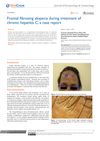 September 2017 in “Journal of Dermatology & Cosmetology”
 Hepatitis C treatment may cause frontal fibrosing alopecia.
November 2015 in “The journal of investigative dermatology. Symposium proceedings/The Journal of investigative dermatology symposium proceedings” Alopecia areata is now understood to be driven by genetic and immune factors.
 December 2004 in “Medicine”
 Pregnancy can cause skin changes and may affect pre-existing skin conditions, with some treatments not safe for use during pregnancy.
 June 2001 in “Annals of Internal Medicine”
 The document concludes that more research is needed on the hepatitis B vaccine's side effects and the effectiveness of certain treatments for specific diseases.