 43 citations
,
February 2019 in “International immunology”
43 citations
,
February 2019 in “International immunology” Special immune cells called Regulatory T cells help control skin inflammation and repair in various skin diseases.
5 citations
,
January 1999 in “Pediatric Dermatology” A young girl had both alopecia areata and immune thrombocytopenic purpura at the same time, suggesting a possible link between the two.
32 citations
,
May 2023 in “Frontiers in Immunology” Understanding cellular interactions in VCA may lead to better treatments and reduce rejection.
 January 2024 in “Elsevier eBooks”
 Increasing regulatory T cells may help treat alopecia areata by reducing autoimmunity and promoting hair growth.
 52 citations
,
March 2010 in “British Journal of Dermatology”
52 citations
,
March 2010 in “British Journal of Dermatology” Alopecia areata shows a unique type 1 interferon signature, suggesting potential treatment by targeting this pathway.
6 citations
,
October 2024 in “International Journal of Dermatology” Proinflammatory fibroblasts and vascular endothelial cells are key in keloid development.
 June 2006 in “Experimental Dermatology”
 Understanding skin patterns can help us learn about skin diseases and their treatments.
 2 citations
,
December 2020 in “Endocrinology, diabetes & metabolism case reports”
2 citations
,
December 2020 in “Endocrinology, diabetes & metabolism case reports” A man with hypoparathyroidism had other health issues that led to a diagnosis of a rare autoimmune disorder, APS-1.
 14 citations
,
April 2017 in “American Journal of Transplantation”
14 citations
,
April 2017 in “American Journal of Transplantation” Skin problems from transplant drugs are common and need careful management in organ transplant patients.
January 2015 in “ScholarlyCommons (University of Pennsylvania)” IL-19 and IL-24 help cells respond to DNA damage and could be targeted for cancer and age-related disease treatments.
 70 citations
,
October 2020 in “The journal of allergy and clinical immunology/Journal of allergy and clinical immunology/The journal of allergy and clinical immunology”
70 citations
,
October 2020 in “The journal of allergy and clinical immunology/Journal of allergy and clinical immunology/The journal of allergy and clinical immunology” Janus kinase inhibitors are promising drugs for treating autoimmune and inflammatory diseases.

New insights into cell communication in psoriasis suggest innovative drug treatments.
50 citations
,
April 2021 in “Frontiers in Immunology” New therapies targeting skin neuroimmune interactions could treat neuropathic pain.
November 2025 in “Skin Appendage Disorders” Immune cell-targeting biologics show potential for treating alopecia areata but need better-targeted therapies.
6 citations
,
January 2022 in “Veterinary Sciences” Feline cutaneous lymphocytosis is likely reactive, while canine cutaneous lymphocytosis needs more study to understand its nature.
 17 citations
,
August 2019 in “Frontiers in Immunology”
17 citations
,
August 2019 in “Frontiers in Immunology” Non-invasive methods show promise for diagnosing skin diseases like psoriasis and lupus but need more research for regular use.
1 citations
,
November 2016 in “Saengmyeong gwahag hoeji/Saengmyeong gwahak hoeji” New treatments for the autoimmune hair loss condition alopecia areata may include JAK inhibitors and other immunomodulators.
 April 2016 in “Journal of The American Academy of Dermatology”
 Certain scalp tissue features can predict how well alopecia areata responds to steroid injections.
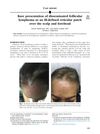 1 citations
,
April 2019 in “JAAD case reports”
1 citations
,
April 2019 in “JAAD case reports” A woman with lymphoma had a rare skin rash on her scalp and forehead, which was hard to diagnose but responded well to treatment.
IL-1 signaling is crucial for hair follicle stem cell growth and wound healing.
1 citations
,
May 2025 in “The Journal of Dermatology” Increased regulatory T cell activity may lead to better outcomes in acute diffuse and total alopecia.
 1 citations
,
August 2007 in “Indian Journal of Pediatrics”
1 citations
,
August 2007 in “Indian Journal of Pediatrics” A girl with symptoms like an autoimmune disorder actually had HIV and a fungal infection, which was hard to diagnose and treat, leading to her death.
12 citations
,
August 2013 in “Journal of Dermatological Science” The MAGE3 hypothesis for alopecia areata did not lead to a significant breakthrough.
2 citations
,
October 1990 in “PubMed” Severe alopecia areata involves higher levels of certain immune cells, which can be normalized with betamethasone.
33 citations
,
October 2018 in “BMJ Case Reports” Aggressive treatment in young patients with certain drug reactions may lead to multiple autoimmune diseases later.
 April 2023 in “Journal of Investigative Dermatology”
 Mast cells and the CB1 receptor may be key in causing IgA vasculitis.
6 citations
,
November 1984 in “Acta Dermato Venereologica” Hair follicles and sweat glands show different keratin staining patterns.
 January 2026 in “Scientific Reports”
 PCOS involves immune and genetic factors, with key roles for T cells and specific genes.
 179 citations
,
October 2018 in “American Journal of Clinical Dermatology”
179 citations
,
October 2018 in “American Journal of Clinical Dermatology” Cancer treatments targeting specific cells and the immune system can cause skin, mouth, hair, and nail problems, affecting patients' quality of life and treatment adherence.
85 citations
,
January 1996 in “International Journal of Cancer” AS101 reduces hair loss from chemotherapy.