 9 citations
,
May 2023 in “Inflammation Research”
9 citations
,
May 2023 in “Inflammation Research” New small molecule drugs show promise in treating complex skin diseases but need more safety research.
1 citations
,
January 2004 Low-dose intermittent corticosteroid therapy can effectively treat alopecia areata.
5 citations
,
July 2003 in “Annals of the Rheumatic Diseases” An antibiotic called co-trimoxazole can effectively treat autoimmune diseases.
October 2018 in “The American journal of gastroenterology” Pembrolizumab can cause serious liver issues, requiring close monitoring and early treatment.
 32 citations
,
June 2012 in “PLoS ONE”
32 citations
,
June 2012 in “PLoS ONE” Blocking IL-8 can reduce skin rashes from cancer treatment.
97 citations
,
January 2006 in “Dermatology” imTA and pulse therapy are effective for alopecia areata with manageable side effects, but relapse rates need improvement.
5 citations
,
January 1994 in “Dermatology” Corticosteroid therapy reduces specific immune cells and promotes hair growth in alopecia areata patients.
 August 2024 in “New Zealand Medical Student Journal”
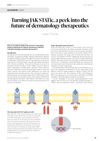
 JAK inhibitors show promise for treating skin diseases effectively and safely.
4 citations
,
January 2023 in “Proteomes” Tumor proteins can both promote and suppress cancer, depending on the situation.
August 1993 in “Journal of dermatological science” January 2014 in “Repository KITopen (Karlsruhe Institute of Technology)” Autoimmune diseases need combined therapy of tolerance induction and immunosuppression.
 9 citations
,
June 2013 in “Australasian Journal of Dermatology”
9 citations
,
June 2013 in “Australasian Journal of Dermatology” Infliximab improved skin and bowel symptoms in Crohn's disease but caused side effects and the disease returned after stopping treatment.
9 citations
,
June 2023 in “Cells” Certain natural and synthetic compounds may help treat inflammatory skin diseases by targeting a specific signaling pathway.
August 2021 in “The journal of investigative dermatology/Journal of investigative dermatology” TAGX-0003 protected hair follicles and reversed alopecia areata in a mouse model.
 July 2025 in “Russian Journal of Clinical Dermatology and Venereology”
 Tofacitinib may help hair regrowth in familial alopecia areata with immune issues, but more research is needed.
 9 citations
,
July 2022 in “EMBO molecular medicine”
9 citations
,
July 2022 in “EMBO molecular medicine” Blocking certain immune signals can reduce skin damage from radiation therapy.
 7 citations
,
April 2023 in “Frontiers in immunology”
7 citations
,
April 2023 in “Frontiers in immunology” Oral baricitinib and ruxolitinib are effective and safe for treating alopecia areata.
July 2025 in “Ultrasound in Medicine & Biology” UTMD with diclofenac and Doxil® improves cancer treatment by boosting immune response and reducing tumor-supporting cells.
 May 2023 in “Elsevier eBooks”
 Some treatments that modify the immune system might help with certain types of hair loss but haven't been explored for common hair loss alone.
7 citations
,
November 2021 in “JAAD Case Reports” Mogamulizumab can cause hair loss and skin rashes.
25 citations
,
January 1978 in “JAMA” Topical corticosteroids can cause serious side effects like Cushing's syndrome and hirsutism.
 1 citations
,
June 2021 in “Journal of dermatology and dermatitis”
1 citations
,
June 2021 in “Journal of dermatology and dermatitis” Tyrosine kinase inhibitors show promise in treating some skin diseases but their definitive role in dermatology is still unclear.
 31 citations
,
January 1981 in “Pharmacology & Therapeutics”
31 citations
,
January 1981 in “Pharmacology & Therapeutics” Oral retinoids are effective for treating severe skin disorders but have reversible side effects and risks for pregnant women.
 3 citations
,
February 2010 in “Clinical kidney journal”
3 citations
,
February 2010 in “Clinical kidney journal” Combining ciclosporin and simvastatin can cause severe kidney damage.
 3 citations
,
January 2021 in “Journal of Research in Medical Sciences”
3 citations
,
January 2021 in “Journal of Research in Medical Sciences” Certain medications can impact metabolic syndrome, with some improving conditions like high blood sugar and others having no effect.
 2 citations
,
July 2014 in “Our Dermatology Online”
2 citations
,
July 2014 in “Our Dermatology Online” Contact immunotherapy can cause vitiligo in patients with autoimmune conditions.
 2 citations
,
June 2020 in “AIDS”
2 citations
,
June 2020 in “AIDS” Recreational drug use can cause misdiagnosed conditions and drug interactions in HIV patients.
 1 citations
,
January 2014 in “Rinsho Shinkeigaku”
1 citations
,
January 2014 in “Rinsho Shinkeigaku” Immunological treatment improved both neuropathy and alopecia.
 May 2024 in “Frontiers in Immunology”
 Type-2 immunity may influence skin diseases and could be targeted for treatment.
1 citations
,
April 2020 in “Journal of the Endocrine Society” Immunotherapy with pembrolizumab significantly reduced cancer in a young woman with adrenocortical carcinoma.