Low doses of certain Chinese herbs can promote hair growth, while high doses may inhibit it.
September 2004 in “Experimental Dermatology” The model effectively studies how sensory nerves interact with skin components, aiding research on wound healing and hair growth.
January 2003 in “Journal of Clinical Dermatology” TNF-${\alpha}$ slows hair growth, and minoxidil doesn't help.
 2 citations
,
June 2016 in “Journal of Applied Biological Chemistry”
2 citations
,
June 2016 in “Journal of Applied Biological Chemistry” Glycine soja extract stimulates hair growth and could help treat hair loss.
 8 citations
,
September 2003 in “Journal of dermatological science”
8 citations
,
September 2003 in “Journal of dermatological science” Substance P helps hair grow longer and faster.
 8 citations
,
June 2019 in “Journal of Ginseng Research”
8 citations
,
June 2019 in “Journal of Ginseng Research” Gintonin-enriched fraction promotes hair growth and could be a potential alopecia treatment.
 7 citations
,
January 2020 in “Frontiers in Pharmacology”
7 citations
,
January 2020 in “Frontiers in Pharmacology” Jagged1 and Epidermal Growth Factor together significantly increased hair growth in mice with androgen-suppressed hair.
 December 2016 in “Paleontological Journal”
 Hair growth can be induced by transplanting certain cells, but these cells lose their properties during culturing. The best cell interaction happens in a liquid medium under gravity, and using collagen doesn't help. Future research could focus on using growth factors to stimulate these cells.
 108 citations
,
November 2006 in “Phytomedicine”
108 citations
,
November 2006 in “Phytomedicine” Green tea component EGCG could potentially promote human hair growth.
January 2002 in “Journal of Clinical Dermatology” Minoxidil boosts hair growth at low doses but slows it at high doses.
 7 citations
,
September 2014 in “Beni-Suef University Journal of Basic and Applied Sciences”
7 citations
,
September 2014 in “Beni-Suef University Journal of Basic and Applied Sciences” Cuscuta reflexa extracts and an isolate promoted hair growth and could be natural treatments for hair loss.
66 citations
,
August 1990 in “Journal of Investigative Dermatology” Epithelial cell growth in rat hair follicles needs contact with mesenchymal cells through the extracellular matrix.
 November 2023 in “Frontiers in veterinary science”
 The study provides insights into hair growth mechanisms in yaks.
35 citations
,
October 2013 in “Journal of Dermatological Science” VEGF165 influences hair follicle cell growth and movement through VEGFR-2 activation.
 48 citations
,
June 2013 in “Journal of Dermatological Science”
48 citations
,
June 2013 in “Journal of Dermatological Science” Valproic acid may help hair grow and could be a safe treatment for hair loss.
13 citations
,
November 2003 in “Humana Press eBooks” ES cells can be turned into hair follicle cells in a lab setting.
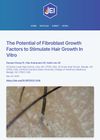
Some fibroblast growth factors may promote hair growth similarly to minoxidil and could potentially treat hair loss.
January 2008 in “Bradford Scholars (University of Bradford)” Alopecia areata may be caused by antibodies targeting specific hair follicle proteins, hindering hair growth.
 15 citations
,
April 2001 in “Journal of Dermatological Science”
15 citations
,
April 2001 in “Journal of Dermatological Science” KF19418 promotes hair growth similarly to minoxidil but is not better in live mice.
8 citations
,
March 2007 in “International Journal of Cosmetic Science” 6-O glucose linoleate helps human hair grow and produce lipids.
 23 citations
,
January 2020 in “Frontiers in Pharmacology”
23 citations
,
January 2020 in “Frontiers in Pharmacology” Dihydrotestosterone affects hair growth by changing the Wnt/β-catenin pathway, with low levels helping and high levels hindering growth.
1 citations
,
January 2017 in “Deleted Journal” Orthosiphon stamineus extract can significantly boost hair growth and cell proliferation in hair loss patients.
 1 citations
,
March 1994 in “Proceedings of the British Society of Animal Production”
1 citations
,
March 1994 in “Proceedings of the British Society of Animal Production” Prolactin and melatonin affect the growth of Angora and Cashmere goat hair differently.
December 2025 in “Preprints.org” Aging dermal papilla cells can be reprogrammed for potential hair growth and skin repair.
 March 2025 in “Journal of Cosmetic Dermatology”
 Thermus thermophilus extract improves hair growth and scalp health in men with hair loss.
 August 2023 in “Micromachines”
 The new method can create hair follicle-like structures but not complete hair with roots and shafts, needing more improvement.
13 citations
,
January 2002 in “Biochemical and biophysical research communications” Interferon β from hair cells stops the growth of other hair cells.
 5 citations
,
January 2017 in “Molecular Medicine Reports”
5 citations
,
January 2017 in “Molecular Medicine Reports” Human hair follicle cells can be turned into neural stem cell-like cells, which might help treat brain diseases.
 1 citations
,
January 2015 in “Journal of clinical and investigative dermatology”
1 citations
,
January 2015 in “Journal of clinical and investigative dermatology” IGF-1 from human placenta helps hair grow.
 60 citations
,
May 2014 in “British Journal of Dermatology”
60 citations
,
May 2014 in “British Journal of Dermatology” Caffeine affects hair growth and health differently in men and women.