25 citations
,
January 2013 in “Journal of Cell Science” Tenascin-C and tenascin-W help control stem cell movement and growth in whisker follicles.
 6 citations
,
March 2020 in “Scientific reports”
6 citations
,
March 2020 in “Scientific reports” Hair growth genes work better with more glucose due to changes in gene-regulating markers.
 2 citations
,
January 2002 in “The Journal of Korean Medicine Ophthalmology and Otolaryngology and Dermatology”
2 citations
,
January 2002 in “The Journal of Korean Medicine Ophthalmology and Otolaryngology and Dermatology” Sophora flavescens extract helps hair grow and prevents acne.
 17 citations
,
August 2012 in “Archives of Pharmacal Research”
17 citations
,
August 2012 in “Archives of Pharmacal Research” Acankoreoside J from Acanthopanax koreanum may help promote hair growth.
 35 citations
,
January 2018 in “Skin pharmacology and physiology”
35 citations
,
January 2018 in “Skin pharmacology and physiology” Nanoemulsion creams with certain enhancers can greatly increase caffeine delivery through skin.
30 citations
,
March 2008 in “Wound Repair and Regeneration” Estrogen affects scalp cell types differently, enhancing some wound healing processes.
19 citations
,
January 2022 in “Journal of Nanomaterials” NH-Tween-80 is a promising stable gel for treating acne.
January 2026 in “Journal of Biomaterials Applications” Fish skin-derived material helps diabetic wounds heal faster than current options.
12 citations
,
June 2012 in “Wound Repair and Regeneration” Regulating keratinocyte growth in engineered skin can improve wound healing.
 February 2024 in “Experimental Dermatology”
 IGFBP-rP1 could be a new treatment for a common type of hair loss.
 25 citations
,
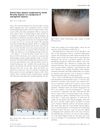
March 2013 in “British Journal of Dermatology”
25 citations
,
March 2013 in “British Journal of Dermatology” Woman has discoid lupus, frontal fibrosing, and androgenetic alopecia.
 4 citations
,
December 2024 in “International Journal of Nanomedicine”
4 citations
,
December 2024 in “International Journal of Nanomedicine” Resveratrol-loaded nanovesicles effectively promote hair growth and treat hair loss.
February 2026 in “European Journal of Pharmacology” Teicoplanin may help treat hair loss by reducing androgen receptors and boosting hair cell growth.
 May 2017 in “Journal of The American Academy of Dermatology”
 LED light helps human hair root cells grow and move by activating certain cell pathways.
January 2004 in “Giornale di Metafisica: revista bimestrale di filosofia” Increased Wnt signaling causes hair graying by depleting melanocyte stem cells in aged mice.
 22 citations
,
August 2009 in “Evidence-based Complementary and Alternative Medicine”
22 citations
,
August 2009 in “Evidence-based Complementary and Alternative Medicine” The composition with carnitine, thioctic acid, and saw palmetto extract may effectively reduce inflammation in hair follicle cells.
2 citations
,
June 2013 in “In Vitro Cellular & Developmental Biology - Animal” Melanocytes from human fetal hair follicles were successfully cultured, showing potential for hair disease research and clinical use.
35 citations
,
August 1987 in “In Vitro Cellular & Developmental Biology - Plant” The new device improves human hair follicle cell growth and differentiation.
Iontophoresis and chitosan microparticles improve minoxidil delivery and retention for hair loss treatment.
April 2019 in “Journal of Investigative Dermatology” Simvastatin reduces inflammation and promotes hair regrowth in alopecia areata.
 June 2025 in “Nanomedicine”
 Nanotechnology could improve hair loss treatments by delivering drugs more effectively.
January 2018 in “Refubium (Universitätsbibliothek der Freien Universität Berlin)” Polymeric nanoparticles effectively control corticosteroid release and penetration for skin applications.
84 citations
,
August 2013 in “Journal of Cellular Biochemistry” Human Wharton's jelly stem cells improve wound healing.
 25 citations
,
August 1992 in “In vitro cellular & developmental biology”
25 citations
,
August 1992 in “In vitro cellular & developmental biology” The new system can grow hair in the lab and test hair growth treatments.
 94 citations
,
February 1994 in “The journal of investigative dermatology/Journal of investigative dermatology”
94 citations
,
February 1994 in “The journal of investigative dermatology/Journal of investigative dermatology” EGF makes hair follicles grow longer but stops hair production.
 April 2017 in “The journal of investigative dermatology/Journal of investigative dermatology”
 Stress in hair follicle cells increases certain immune-related proteins, which might contribute to hair loss conditions.
 23 citations
,
May 1998 in “Journal of Dermatological Science”
23 citations
,
May 1998 in “Journal of Dermatological Science” Insulin or IGF-I is needed for hair growth in newborn mice, while minoxidil helps adult mouse hair grow, suggesting a way to study human hair loss.
 May 2026 in “Organoid Research”
 Hydrogel-based hair follicle organoids could help treat hair loss and improve drug testing.
 78 citations
,
August 2002 in “Experimental Dermatology”
78 citations
,
August 2002 in “Experimental Dermatology” Researchers developed a quick and easy way to get and grow cells from the base of human hair follicles.
 97 citations
,
September 2011 in “British Journal of Dermatology”
97 citations
,
September 2011 in “British Journal of Dermatology” The human hair follicle can store topical compounds and be targeted for drug delivery with minimal side effects.