The protein's size was reduced, but more work is needed to confirm its function.
June 2015 in “The American journal of dermatopathology/American journal of dermatopathology” The study found that a one-step antibody method is better than the LSAB method for accurately studying hair follicle structures without false positives.
 22 citations
,
January 2017 in “Advanced Healthcare Materials”
22 citations
,
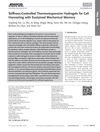
January 2017 in “Advanced Healthcare Materials” The hydrogels help harvest cells while preserving their mechanical memory, which could improve wound healing.
106 citations
,
December 2015 in “Biomacromolecules” Keratin hydrogels can be customized for better tissue healing.
42 citations
,
January 2002 in “Skin Pharmacology and Physiology” Reconstructed skin models are useful for studying how skin processes certain chemicals.
 2 citations
,
January 2020
2 citations
,
January 2020 The document describes a method for preparing hair for microscopy by embedding it in plastic, cutting it, and storing it cold before imaging.
April 2009 in “The FASEB Journal” Keratin biomaterials from human hair help nerve regeneration by activating Schwann cells.
 February 2024 in “Journal of medicinal food”
 The research found a way to develop hair growth materials by targeting a specific signaling pathway.
 2 citations
,
January 2015 in “Elsevier eBooks”
2 citations
,
January 2015 in “Elsevier eBooks” The document says biodegradable cosmetics and packaging are better for the environment and user experience.
 May 2014 in “Transfusion and Apheresis Science”
 Multiple plasma donations do not change donors' biochemical parameters.
May 1988 in “Journal of Forensic Sciences” A new method accurately determines hair blood type and can be used on dust samples.
9 citations
,
January 2021 in “Acta Cirúrgica Brasileira” Dipotassium glycyrrhizinate helps wounds heal faster, especially in the early stages.
71 citations
,
June 1993 in “Journal of Investigative Dermatology”  3 citations
,
October 2018 in “Archives of Dermatological Research”
3 citations
,
October 2018 in “Archives of Dermatological Research” Applying InlB321/15 to wounds sped up healing in mice.
January 2011 in “Zhongguo nongye Kexue” Transgenic sheep cells with spider silk gene were successfully created for future sheep hair expression.
 2 citations
,
January 2015 in “Sen'i Gakkaishi”
2 citations
,
January 2015 in “Sen'i Gakkaishi” Washing permed hair after using thioglycolic acid helps reform strong bonds, making hair stronger.
 January 2014 in “Sen i Gakkaishi”
 Liposome-encapsulated thioglycolic acid improves hair perming effectiveness and durability.
 April 2023 in “The journal of investigative dermatology/Journal of investigative dermatology”
 Lack of TG2 increases fat storage and lowers cell cleanup in skin oil cells.
 February 2025 in “Journal of Forensic Sciences”
 Sonication washing reduces nuclei in hair roots, affecting DNA extraction.
 January 2024 in “Biochemistry Research International”
 Compounds from Ziziphus spina-christi roots show strong antibacterial and antioxidant potential.
June 2010 in “Journal of Veterinary Clinics” The method visualized calcium ions in damaged canine skin, showing potential for studying skin recovery.
 11 citations
,
August 2016 in “Journal of dermatological treatment”
11 citations
,
August 2016 in “Journal of dermatological treatment” Tip cryotherapy effectively treats idiopathic guttate hypomelanosis with minimal side effects.
 35 citations
,
February 2006 in “Textile Research Journal”
35 citations
,
February 2006 in “Textile Research Journal” Enzymes xylanase and pectinase clean wool and specialty hair fibers effectively without damage, offering an eco-friendly alternative to soap and hot water.
 January 2025 in “PLoS ONE”
 ING5 is crucial for stem cell maintenance and preventing certain cancers.
3 citations
,
February 1983 in “Journal of Investigative Dermatology” Hair plucking quickly increases antizyme, reducing a specific enzyme activity in rats.
April 2023 in “Journal of Investigative Dermatology” CD8+ T cells attack hair follicle stem cells, causing scarring and hair loss.
7 citations
,
June 2025 in “Nano Energy” The hydrogels heal infected diabetic wounds quickly and effectively.
 8 citations
,
July 2013 in “PLoS ONE”
8 citations
,
July 2013 in “PLoS ONE” DNA can be quickly and effectively extracted from hair using laundry powder.
 January 2020 in “Majalah Kedokteran Gigi Indonesia”
 Freeze-drying collagen-activated PRP increases TGF-β1 levels, enhancing tissue regeneration potential.
67 citations
,
January 1992 in “Journal of Investigative Dermatology”