 23 citations
,
April 2018 in “Journal der Deutschen Dermatologischen Gesellschaft”
23 citations
,
April 2018 in “Journal der Deutschen Dermatologischen Gesellschaft” Permanent hair loss from cicatricial alopecia is treated by reducing inflammation and managing symptoms, but regrowth in scarred areas is unlikely.
23 citations
,
January 2017 in “Journal of Functional Biomaterials” Biomaterials can help reduce skin scarring and improve wound healing.
1 citations
,
January 2019 in “Dermatology Online Journal” A rare skin condition appeared on a 19-year-old woman's scalp.
2 citations
,
September 2019 in “Serbian Journal of Dermatology and Venerology” A rare skin condition causing scarring was successfully treated with topical erythromycin and benzoyl peroxide.

Traumatic anserine folliculosis is a harmless skin condition in young males that needs correct diagnosis to avoid unnecessary treatments.
November 2023 in “Neurosurgical Review” The incision along the superior temporal line is safe and looks good for bald male patients.

Acne keloidalis nuchae causes scarring on the scalp, mainly in African American males, and early treatment is important to prevent lasting damage.
 July 2025 in “Interdisciplinary materials”
 A microneedle patch with curcumin and stem cell components effectively treats hypertrophic scars and promotes healing.
 June 2008 in “Springer eBooks”
 The document concludes that permanent hair loss conditions are complex, require early specific treatments, and "secondary permanent alopecias" might be a more accurate term than "secondary cicatricial alopecia."
October 2022 in “The Laryngoscope” The InCISE score is a promising tool for assessing wound healing in head and neck surgery but needs more research for broader use.
 3 citations
,
January 2021 in “Skin appendage disorders”
3 citations
,
January 2021 in “Skin appendage disorders” Hair loss can occur about 4 weeks after scalp surgery but usually grows back within 3 months without treatment.
 March 2025 in “JEADV Clinical Practice”
 People with primary scarring alopecia have higher risks of other health issues like vitamin D deficiency and thyroid disease.
 December 2022 in “Indian Journal of Plastic Surgery”
 Hair transplant improved a facial scar and patient satisfaction.
20 citations
,
January 1997 in “Dermatology” The patient with EEC syndrome had scarring alopecia due to deep folliculitis, possibly linked to abnormal hair structure.
 June 2023 in “JAAD case reports”
 A rare scalp condition, cutis verticis gyrata, was found in a woman with primary scarring alopecia.
 May 2023 in “Elsevier eBooks”
 Scarring alopecia causes permanent hair loss, and treatment aims to reduce inflammation and stop it from getting worse.
 55 citations
,
April 2018 in “Advanced Healthcare Materials”
55 citations
,
April 2018 in “Advanced Healthcare Materials” Hydrogels could lead to better treatments for wound healing without scars.
October 2025 in “JMIR Dermatology” Exclamation-mark hairs and yellow dots indicate alopecia areata, while follicular ostia loss and white scarring indicate lichen planopilaris and discoid lupus erythematosus.
 November 2024 in “SKIN The Journal of Cutaneous Medicine”
 Visual signs are crucial for accurately diagnosing and treating different types of hair loss in Black patients.

Microneedling may improve neck scars, but more research is needed.
 1 citations
,
January 2021 in “Arthritis Research & Therapy”
1 citations
,
January 2021 in “Arthritis Research & Therapy” About 8% of people with systemic lupus erythematosus have chronic scarring alopecia, with certain symptoms and positive antibodies increasing the risk, while immunosuppressants may lower it.
 27 citations
,
January 2015 in “Current problems in dermatology”
27 citations
,
January 2015 in “Current problems in dermatology” The document concludes that primary scarring alopecias cause permanent hair loss, have unpredictable outcomes, and lack definitive treatments, requiring personalized care.
Transplanting beard hair into a scalp wound after hair transplant surgery improves scar appearance and hair keeps its normal traits.

Reprogramming adult fibroblasts may enable scar-free healing.
 April 2018 in “The journal of investigative dermatology/Journal of investigative dermatology”
 Skin heals with scars because only one type of fibroblast is used, not a mix.
March 2023 in “Journal of Cosmetic Dermatology” Trichoscopy is effective for diagnosing scalp ACC in darker skin tones.
 8 citations
,
July 1984 in “The Journal of Dermatologic Surgery and Oncology”
8 citations
,
July 1984 in “The Journal of Dermatologic Surgery and Oncology” A new suturing technique for hair transplant donor sites leads to better scarring and allows more grafts to be taken.
4 citations
,
September 2024 in “Cell Reports” Granulocyte colony stimulating factor helps heal wounds without scars.
 8 citations
,
September 2016 in “The American Journal of Dermatopathology”
8 citations
,
September 2016 in “The American Journal of Dermatopathology” Enlarged sweat gland ducts may indicate scarring hair loss.
 11 citations
,
June 2008 in “Dermatologic Surgery”
11 citations
,
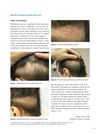
June 2008 in “Dermatologic Surgery” Transplanting chest hair into scalp scars may effectively treat wide donor scars in hair restoration.