 12 citations
,
June 2006 in “Anais Brasileiros de Dermatologia”
12 citations
,
June 2006 in “Anais Brasileiros de Dermatologia” The study found average numbers for different types of hair follicles in the scalp and observed differences between men and women, suggesting reasons for more common hair shedding in women.
 1 citations
,
January 2021 in “Skin appendage disorders”
1 citations
,
January 2021 in “Skin appendage disorders” Chemotherapy patients don't all lose their hair due to factors like hair growth rates, age, genetics, and the type of drugs used.
 13 citations
,
May 2022 in “Cell discovery”
13 citations
,
May 2022 in “Cell discovery” The study found new details about human hair growth and suggests that preventing a specific biological pathway could potentially treat hair graying.
 2 citations
,
January 2020 in “Skin appendage disorders”
2 citations
,
January 2020 in “Skin appendage disorders” Long hair can cause hair loss due to constant pulling.
 January 2014 in “Journal of Pigmentary Disorders”
 Women's hair gets thinner and grayer as they age, with treatments available for hair loss and graying.
January 2011 in “Bradford Scholars (University of Bradford)” Testosterone stimulates growth in intermediate hair follicles, but this can be blocked by cyproterone acetate.
 40 citations
,
August 2006 in “Current Drug Safety”
40 citations
,
August 2006 in “Current Drug Safety” Some drugs can cause hair loss, excessive growth, or color changes, often reversible but sometimes permanent.
March 2018 in “Journal of Experimental Biology” Hair curliness is caused by the arrangement and length of two different cell types.
 33 citations
,
June 2016 in “Pediatric Dermatology”
33 citations
,
June 2016 in “Pediatric Dermatology” Some congenital hair disorders improve in childhood or with treatments like minoxidil and retinoids, while others like Netherton syndrome and trichothiodystrophy have a poor prognosis.
 April 2016 in “Journal of Investigative Dermatology”
 Autophagy, a cell recycling process, is crucial for prolonged hair growth and could be a potential target for treating hair growth disorders.
65 citations
,
February 1992 in “Development” Type II keratin genes are crucial for hair follicle differentiation and have a conserved structure and expression pattern.
83 citations
,
October 1998 in “The American Journal of Human Genetics” A specific gene mutation causes complete hair loss in an Irish Traveller family.
July 1993 in “Journal of Radioanalytical and Nuclear Chemistry” Mouse hair element patterns vary, making it unreliable for tracking time.
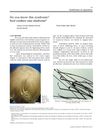
The document concludes that Loose Anagen Hair Syndrome is a benign condition where hair is thin and easily pulled out, often improving with age.
13 citations
,
April 1997 in “Biochemical and Biophysical Research Communications” Insulin-dependent diabetes alters hair's molecular structure, making it useful for studying diabetes effects.
 31 citations
,
December 2010 in “Journal of the American Academy of Dermatology”
31 citations
,
December 2010 in “Journal of the American Academy of Dermatology” Loose anagen hair syndrome is caused by structural abnormalities in the hair follicle's inner root sheath.
1 citations
,
August 2015 in “PubMed” Human hair's strength comes from a honeycomb-like structure and macrofibrils.
 8 citations
,
January 2016 in “Journal of Investigative Dermatology”
8 citations
,
January 2016 in “Journal of Investigative Dermatology” The research created a model to understand human hair growth cycle, which can help diagnose and treat hair growth disorders and test potential hair growth drugs.
May 2026 in “Applied Spectroscopy” Humidity affects hair structure changes during stretching.
 2 citations
,
December 1995 in “Pediatrics”
2 citations
,
December 1995 in “Pediatrics” Infant hair loss is usually temporary and grows back without treatment.
335 citations
,
March 2004 in “Development” Temporary activation of β-catenin can create new hair follicles, but ongoing activation is needed to keep hair follicle tumors.
 10 citations
,
August 2011 in “Clinics”
10 citations
,
August 2011 in “Clinics” The author clarified that Alopecia Areata Incognita (AAI) and diffuse Alopecia Areata (AA) are different conditions and the case discussed was actually AA, not AAI.
 21 citations
,
July 2014 in “British Journal of Dermatology”
21 citations
,
July 2014 in “British Journal of Dermatology” Hair thickness matters more than density for baldness in Japanese men over 25.
January 2017 in “British journal of dermatology/British journal of dermatology, Supplement”  June 2025 in “Clinical Cosmetic and Investigational Dermatology”
 There's an urgent need for better treatments for hair loss caused by radiation therapy.
June 2011 in “European Journal of Pediatric Dermatology” An 11-year-old girl with hair thinning was diagnosed with monilethrix and early androgenetic alopecia.
 January 2013 in “Juntendo Medical Journal”
 Understanding the normal hair cycle and different types of hair loss is important for maintaining healthy hair.
January 2026 in “International Journal of Dermatology” APKH in young males may signal early hair loss and needs early attention.
 50 citations
,
August 1999 in “Experimental dermatology”
50 citations
,
August 1999 in “Experimental dermatology” The control system for hair growth cycles is not well understood and needs more research.