Asian hair's unique features make hair loss management and surgery more challenging.
April 2023 in “The Medical Journal of Australia” A five-year-old girl has a harmless, unchanging bald patch on her scalp.
 September 2017 in “Journal of Investigative Dermatology”
 The research concluded that hyaluronic acid affects the formation and growth of hair follicle-like structures in a lab setting.
February 2026 in “Clinical and Experimental Dermatology”  46 citations
,
May 1986 in “Seminars in Reproductive Medicine”
46 citations
,
May 1986 in “Seminars in Reproductive Medicine” Testosterone and dihydrotestosterone affect hair growth, and new techniques like the folliculogram help study it, but fully understanding hair growth is still complex.
 86 citations
,
December 2001 in “Experimental dermatology”
86 citations
,
December 2001 in “Experimental dermatology” Mutant mice help researchers understand hair growth and related genetic factors.
 4 citations
,
April 2019 in “Cosmetics”
4 citations
,
April 2019 in “Cosmetics” Hair stiffness is higher when it has more para-like cortical cells.
1 citations
,
January 2013 in “Indian journal of dermatology, venereology, and leprology” A girl inherited excessive body hair from her mother and grandmother.
8 citations
,
January 2020 in “PeerJ” Alopecia Areata causes significant structural and compositional changes in hair.
27 citations
,
November 2007 in “Genomics” Mutations in specific keratin genes cause improper hair structure in mice due to faulty keratin protein assembly.
 52 citations
,
October 2012 in “Journal of Dermatological Science”
52 citations
,
October 2012 in “Journal of Dermatological Science” The document concludes that mouse models are crucial for studying hair biology and that all mutant mice may have hair growth abnormalities that require detailed analysis to identify.
61 citations
,
February 1997 in “Differentiation” Hair differentiation starts earlier than thought, involving multiple type-II keratins.
2 citations
,
March 1942 in “JAMA”  January 2023 in “Vìsnik problem bìologìï ì medicini”
 Androgenic alopecia causes hair follicle degradation and skin restructuring, but some hair elements remain.
 44 citations
,
January 2005 in “Dermatology”
44 citations
,
January 2005 in “Dermatology” Hair problems can be caused by genetics or the environment, and treatment should focus on the cause and reducing hair damage.
 April 2012 in “Informa Healthcare eBooks”
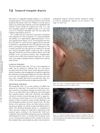
 Temporal triangular alopecia is a lifelong condition with hairless patches on the side of the head that may be present from birth.
 February 1994 in “Archives of Dermatology”
 Telogen effluvium is a condition that causes temporary hair loss.
412 citations
,
January 1998 in “Science” A mutation in the human hairless gene causes alopecia universalis.
 6 citations
,
March 2015 in “Journal of The American Academy of Dermatology”
6 citations
,
March 2015 in “Journal of The American Academy of Dermatology” Hair dye can make it hard to diagnose scalp conditions correctly.
 May 2009 in “Medical and surgical dermatology/Medical & surgical dermatology”
 Hair and nail conditions can stabilize or improve over time, and new treatments show promise.
 13 citations
,
December 1991 in “Annals of the New York Academy of Sciences”
13 citations
,
December 1991 in “Annals of the New York Academy of Sciences” Researchers created a lab model to study human hair growth, showing it can grow and self-regulate outside the body.
 40 citations
,
December 2011 in “British Journal of Dermatology”
40 citations
,
December 2011 in “British Journal of Dermatology” Women's hair generally gets thinner and less dense starting in their mid-thirties, with hair loss becoming more common as they age due to both genetics and environment.
 January 2026 in “Cosmoderma”
 A 9-year-old girl has a rare hair disorder causing beaded, sparse hair.
38 citations
,
September 1997 in “The journal of investigative dermatology/Journal of investigative dermatology” A mutation in mice causes hair loss and skin issues due to a defect in a gene affecting cell adhesion.
 16 citations
,
June 2017 in “PLoS ONE”
16 citations
,
June 2017 in “PLoS ONE” A 6-group hair classification is more reliable for drug testing than an 8-group system.
January 2021 in “Hair therapy & transplantation” Telogen effluvium causes temporary hair loss, but new hair still grows.
July 2025 in “Clinical and Experimental Dermatology” Hair loss (telogen effluvium) happens before male pattern baldness.
 May 2012 in “CRC Press eBooks”
 Different types of hair loss within Telogen Effluvium are caused by various disruptions in hair growth cycles.
 July 2022 in “Research Square (Research Square)”
 Hair analysis can somewhat track past testosterone levels but is influenced by factors like hair washing, growth rate, sex, and hair color.
 May 2024 in “JCI insight”
 A variant in the ADAM17 gene causes hair loss by increasing protein degradation through TRIM47.