 14 citations
,
November 2011 in “Journal of The American Academy of Dermatology”
14 citations
,
November 2011 in “Journal of The American Academy of Dermatology” Alopecia Areata Incognita causes widespread hair thinning, and treatment with systemic corticosteroids and psychiatric support can lead to remission.
 November 2022 in “The journal of investigative dermatology/Journal of investigative dermatology”
 IL-15 promotes hair growth and protects hair follicles.
55 citations
,
February 1975 in “Journal of Cutaneous Pathology” Dermal cell activity increases during hair growth in rats.
June 2023 in “Zenodo (CERN European Organization for Nuclear Research)” 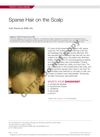
A 5-year-old girl has sparse, dry, and brittle hair but is otherwise healthy.
 10 citations
,
July 2007 in “PubMed”
10 citations
,
July 2007 in “PubMed” Chemotherapy causes hair loss in cancer patients by affecting both growing and resting hair.
6 citations
,
January 1981 May 2025 in “International Journal of Trichology” Partially bald areas in Indian AGA patients still have hair growth cells, suggesting early treatment is best.
2 citations
,
June 2024 in “JAAD reviews.” Some drugs can cause permanent hair loss, though it's rare.
2 citations
,
May 1979 in “PubMed” Monilethrix is not caused by a metabolic defect.
 155 citations
,
August 2003 in “Journal Of Experimental Zoology Part B: Molecular And Developmental Evolution”
155 citations
,
August 2003 in “Journal Of Experimental Zoology Part B: Molecular And Developmental Evolution” Understanding hair growth involves complex interactions between molecules and could help treat hair disorders.
9 citations
,
September 2016 in “Forensic science international” Hair area varies with age and sex, but hair index and medullary index do not.
 12 citations
,
January 2021 in “Journal of Investigative Dermatology”
12 citations
,
January 2021 in “Journal of Investigative Dermatology” Hair follicle studies suggest that maintaining telomere length could help treat hair loss and graying, but it's uncertain if mouse results apply to humans.
 3 citations
,
December 2011 in “Pediatric Dermatology”
3 citations
,
December 2011 in “Pediatric Dermatology” The patient's long-term hair loss was caused by leukemia treatments and low estrogen levels, worsened by her genetic tendency for hair loss.
18 citations
,
June 1992 in “Acta Histochemica” Human hair follicles have a unique cell distribution and differentiation pattern during growth.
235 citations
,
July 1999 in “Journal of biological chemistry/The Journal of biological chemistry” Human hair is made up of different keratins, some strong and some weak, with specific types appearing at various stages of hair growth.

A genetic variant in the KRT71 gene may cause loose anagen hair and wooly hair, and symptoms might improve with age.
 April 2018 in “Journal of Investigative Dermatology”
 The research found that a specific skin cell type not only triggers hair growth but also controls hair color, and that aging can lead to hair loss and color changes.
January 2025 in “Medical Research Archives” A new classification and scoring system is needed for alopecia areata to better assess severity.
27 citations
,
January 2000 in “Developmental Dynamics” Mutations in the Whn gene affect hair keratin gene expression differently.
 March 2024 in “Research Square”
 The model helps understand alopecia areata and suggests ways to improve treatment by targeting immune issues.
January 2013 in “프로그램북(구 초록집)” Hair perms or treatments seem safe to use up to 3 to 4 times during pregnancy.
 September 2017 in “Journal of Investigative Dermatology”
 Certain products and treatments can improve hair health and growth.
59 citations
,
February 2019 in “BMC Genomics” Hair length in rabbits is linked to differences in lipid metabolism and cell death.
 69 citations
,
March 1993 in “Archives of Dermatology”
69 citations
,
March 1993 in “Archives of Dermatology” The document says there are five types of hair loss conditions and different causes, including drugs.
 9 citations
,
July 2011 in “Scientific Reports”
9 citations
,
July 2011 in “Scientific Reports” Changes in the HR gene have influenced hair growth and may lead to hair loss conditions in humans.

Different types of hair loss and gender affect facial heat patterns, which may help diagnose and treat hair loss.
 March 2003 in “CRC Press eBooks”
 Telogen effluvium is hair loss caused by many hairs stopping growth suddenly, often due to stress or illness, but sometimes it's normal and not due to disease.
 55 citations
,
October 1992 in “Archives of Dermatology”
55 citations
,
October 1992 in “Archives of Dermatology” Loose Anagen Hair Syndrome is a hereditary condition causing hair loss in children due to abnormal hair follicles.
15 citations
,
January 2011 in “International journal of trichology” Using a hot iron on wet hair can cause dry, brittle hair with air bubbles inside.