 7 citations
,
July 2014 in “Facial Plastic Surgery Clinics of North America”
7 citations
,
July 2014 in “Facial Plastic Surgery Clinics of North America” Different ethnic hair traits must be considered for successful hair restoration surgery to achieve natural-looking results.
 2 citations
,
January 2017 in “Journal of Biotechnology Research Center”
2 citations
,
January 2017 in “Journal of Biotechnology Research Center” Hair dyes affect DNA analysis results, with the prepFiler kit working best for hair with follicles.
 1 citations
,
April 2023 in “Frontiers in Genetics”
1 citations
,
April 2023 in “Frontiers in Genetics” The document concludes that individuals with a rare genetic disorder linked to the AEBP1 gene may experience a unique type of hair loss and should be monitored for heart issues.
January 2026 in “Materialia” Porcine ADM scaffold helps hair growth in mice.

Perilla seed extract may help prevent hair loss better than some standard treatments.
 November 2023 in “The journal of investigative dermatology/Journal of investigative dermatology”
 Skin cells and certain hair follicle areas produce hemoglobin, which may help protect against oxidative stress like UV damage.
 March 2009 in “Medical & surgical dermatology”
 Women with androgenetic alopecia have fewer terminal hairs, phenol in nail surgery is safe, and a new hair transplant method is faster and less damaging.
 1 citations
,
January 2006 in “Dermatologic Surgery”
1 citations
,
January 2006 in “Dermatologic Surgery” The SAFE System may reduce hair transplant transection rates but has been critiqued for not being as minimally invasive as claimed.
 18 citations
,
April 2010 in “Actas Dermo-Sifiliográficas”
18 citations
,
April 2010 in “Actas Dermo-Sifiliográficas” Follicular unit hair transplantation is the standard method for natural-looking hair restoration in androgenic alopecia.
March 2024 in “Molecules/Molecules online/Molecules annual” Enzymatically extracted bear oil has more unsaturated fats and significantly increases hair growth in mice.
1 citations
,
October 2015 in “CRC Press eBooks” PRP and stem cells can help treat baldness by promoting hair growth.
 1 citations
,
February 2018 in “Plastic and Aesthetic Research”
1 citations
,
February 2018 in “Plastic and Aesthetic Research” The KD spreader makes hair transplants safer and easier, especially for beginners, by reducing damage to hair follicles.
 4 citations
,
November 2013 in “Hair transplant forum international”
4 citations
,
November 2013 in “Hair transplant forum international” The document calls for standardized terms and definitions in hair transplant methods.
 October 2022 in “IntechOpen eBooks”
 Hair loss due to scarring can be treated by reducing inflammation, removing scar tissue, and transplanting hair. The Follicular Unit Extraction technique is effective but requires skill and time. Future focus should be on scar-less healing methods.
30 citations
,
August 2004 in “British Journal of Plastic Surgery” Chest hair can be successfully used for scalp hair transplants, growing longer like scalp hair.

Germinated perilla seeds can naturally promote hair growth and prevent hair loss.
 27 citations
,
January 2008 in “Journal of Cutaneous and Aesthetic Surgery”
27 citations
,
January 2008 in “Journal of Cutaneous and Aesthetic Surgery” Modern hair restoration techniques have evolved from punch grafting to methods like micro-grafting and follicular unit transplantation, but they are labor-intensive, expensive, and can lead to patient dissatisfaction. Future treatments may involve cloned hair follicles and drugs like finasteride.
 January 2017 in “Journal of Investigative Dermatology Symposium Proceedings”
 The 2015 Hair Research Congress concluded that stem cells, maraviroc, and simvastatin could potentially treat Alopecia Areata, topical minoxidil, finasteride, and steroids could treat Frontal Fibrosing Alopecia, and PTGDR2 antagonists could also treat alopecia. They also found that low-level light therapy could help with hair loss, a robotic device could assist in hair extraction, and nutrition could aid hair growth. They suggested that Alopecia Areata is an inflammatory disorder, not a single disease, indicating a need for personalized treatments.
 13 citations
,
January 2013 in “Dermatologic Surgery”
13 citations
,
January 2013 in “Dermatologic Surgery” Experienced hair transplant surgeons suggest a limited number of hair follicles can be used for transplants, and recommend conservative methods to avoid scarring and depletion.
 8 citations
,
November 2017 in “Journal of Investigative Dermatology”
8 citations
,
November 2017 in “Journal of Investigative Dermatology” AGA linked to inflammation, stress, fibrosis, and disturbed hair follicle stem cells.
 1 citations
,
November 2009 in “Cambridge University Press eBooks”
1 citations
,
November 2009 in “Cambridge University Press eBooks” FUE is a less invasive hair restoration method with potential to become standard, offering benefits like reduced scarring and pain, but requires experience to minimize risks.
 27 citations
,
November 2008 in “Facial Plastic Surgery”
27 citations
,
November 2008 in “Facial Plastic Surgery” Follicular Unit Extraction is a less invasive hair transplant method with potential for natural results but has challenges like longer surgery time and higher cost.
 62 citations
,
November 2009 in “Aging Cell”
62 citations
,
November 2009 in “Aging Cell” Hedgehog signaling helps keep hair follicle stem cells the same in both young and old human skin.
 8 citations
,
April 2018 in “Facial Plastic Surgery”
8 citations
,
April 2018 in “Facial Plastic Surgery” Men and women have different hairline restoration needs, with natural design being more complex for women, and hairline changes being important for transgender individuals' transitions.
 May 2013 in “Trends in Urology & Men's Health”
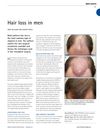
 Male-pattern hair loss is normal, often involves hormone effects on hair follicles, and can be treated with medication or surgery, but new treatments are being researched.
 April 2026 in “International Journal of Drug Delivery Technology”
 Alopecia can often be managed effectively with various treatments, but early diagnosis is crucial for preventing permanent hair loss.
 13 citations
,
August 2002 in “Dermatologic Surgery”
13 citations
,
August 2002 in “Dermatologic Surgery” FUE is a less invasive hair transplant method suitable for many patients, but it has limitations and may not replace traditional techniques.
 January 2025 in “MEDS Public Health and Preventive Medicine”
 Spermidine supplements can help extend the hair growth phase and may be useful for treating hair loss.
 7 citations
,
June 2020 in “Experimental dermatology”
7 citations
,
June 2020 in “Experimental dermatology” Researchers found that certain lipids, especially vitamin D3, are lower in prematurely grey hair than in pigmented hair.
 28 citations
,
July 2011 in “Journal of Plastic Reconstructive and Aesthetic Surgery”
28 citations
,
July 2011 in “Journal of Plastic Reconstructive and Aesthetic Surgery” A patient had skin tissue death at the hair removal site after a hair transplant, which was treated with surgery.