 2 citations
,
January 1998 in “Dermatology”
2 citations
,
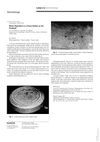
January 1998 in “Dermatology” Stopping forehead irritation and using hydrocortisone helped a man's skin, Martinique has lower melanoma rates, a man had an allergy to a specific antifungal, another had unexplained cysts, certain drugs can cause skin reactions without always being interrelated, a link between Fanconi anemia and a skin condition was suggested, high levels of a certain protein may play a role in a type of psoriasis, and there's a need to study the connection between scalp pain and hair loss.
 1 citations
,
October 2024 in “Dermatology Practical & Conceptual”
1 citations
,
October 2024 in “Dermatology Practical & Conceptual” Reflectance confocal microscopy is a promising non-invasive tool for diagnosing alopecia areata incognita.
 1 citations
,
August 2018 in “bioRxiv (Cold Spring Harbor Laboratory)”
1 citations
,
August 2018 in “bioRxiv (Cold Spring Harbor Laboratory)” A new mutation in the TMEM173 gene and a risk allele in IFIH1 cause a unique set of immune-related symptoms.
 1 citations
,
April 2018 in “Journal of Investigative Dermatology”
1 citations
,
April 2018 in “Journal of Investigative Dermatology” Oleoylethanolamide (OEA) safely boosts fat production in skin cells and may help treat dry skin and reduce inflammation.
 1 citations
,
May 2017 in “InTech eBooks”
1 citations
,
May 2017 in “InTech eBooks” The document concludes that alopecia areata is an unpredictable autoimmune hair loss condition with no cure, but various treatments exist that require personalized approaches.
 1 citations
,
April 2016 in “Journal of Investigative Dermatology”
1 citations
,
April 2016 in “Journal of Investigative Dermatology” UV photography can help identify people at higher risk for skin cancer, and male pattern baldness at age 45 is linked to a higher risk of certain skin cancers.
 1 citations
,
September 2013 in “Elsevier eBooks”
1 citations
,
September 2013 in “Elsevier eBooks” Hair ages and thins due to factors like inflammation and stress, and treatments like antioxidants and hormones might improve hair health.
 1 citations
,
March 2004 in “Journal of the American Academy of Dermatology”
1 citations
,
March 2004 in “Journal of the American Academy of Dermatology” ZD1839, a cancer drug, can cause mild skin rashes that are treatable without stopping the medication.

Targeting androgen receptors in the skin is the most effective treatment for hyperandrogenism-related skin issues.
 February 2026 in “ImmunoTargets and Therapy”
 Tumor immunotherapy can cause hair loss by disrupting hair follicle immunity.
 January 2026 in “Acta Dermatovenerologica Alpina Pannonica et Adriatica”
 Accurate diagnosis is crucial for effectively treating severe alopecia and related symptoms.
 December 2025 in “Dermatological Health”
 Using eyebrow powder caused eyebrow hair loss, but stopping its use led to regrowth.
 May 2025 in “The Journal of Rheumatology”
 Anifrolumab may help improve symptoms in patients with overlapping autoimmune diseases.
 December 2024 in “Cureus”
 Tirzepatide improved symptoms and hair regrowth in a man with folliculitis decalvans.
 September 2024 in “Portuguese Journal of Dermatology and Venereology”
 CCCA and LPP may be related hair loss conditions influenced by genetics and environment, needing early treatment.
 July 2024 in “Dermatology Practical & Conceptual”
 LC-OCT helps accurately diagnose different types of infant hair loss without invasive methods.

Non-invasive methods can effectively diagnose and manage alopecia areata.
 January 2023 in “Journal of orthopedics & bone disorders”
 Platelet-rich plasma may not be very effective for bone healing and hair growth due to a substance it contains that blocks these processes.
 January 2022 in “International Journal of Research Publications”
 Griseofulvin effectively treats tinea capitis caused by Microsporum canis.
 December 2021 in “The Sri Lanka Journal of Dermatology”
 COVID-19 can cause various skin issues, including rashes and lesions.
 October 2021 in “The Egyptian Journal of Hospital Medicine”
 Alopecia areata causes patchy hair loss and involves immune system disruptions.
 January 2021 in “Plant Archives/Plant archives”
 Dogs with ear infections have a higher rate of yeast infection, especially German Shepherds, with seasonal variations observed.
 May 2020 in “International journal of biology, pharmacy and allied sciences”
 Vitiligo is often found with other autoimmune diseases, which is important to know to help patients.
 July 2018 in “Elsevier eBooks”
 The most common cause of hair loss in children is tinea capitis, followed by alopecia areata and telogen effluvium.
 July 2018 in “Elsevier eBooks”
 Frontal Fibrosing Alopecia is a type of hair loss affecting mostly older women, with no agreed best treatment.
 April 2016 in “Journal of Investigative Dermatology”
 Male pattern baldness is linked to a higher risk of certain skin cancers, especially on the scalp.
 November 2012 in “South African Family Practice”
 The article concludes that early treatment of alopecia is crucial to prevent permanent hair loss.
 March 2012 in “Journal of The American Academy of Dermatology”
 Hair casts are often mistaken for head lice, scalp pain in hair loss is linked to certain nerve factors, eyelash growth treatment is safe and effective, and nail shedding in children may follow hand-foot-mouth disease.
 December 2007 in “CRC Press eBooks”
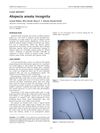
 Alopecia areata incognita causes widespread hair loss without patches and needs a scalp biopsy for diagnosis.
 August 1994 in “Drugs & Therapy Perspectives”
 Psoriasis treatments range from topical creams to systemic medications with serious side effects, and while treatments can manage symptoms, there is no cure.