 June 2026 in “HAL (Le Centre pour la Communication Scientifique Directe)”
 SH-1 effectively treats hair loss without side effects.
 April 2023 in “Journal of Investigative Dermatology”
 LSD1 is essential for healthy skin development and creating the skin's protective barrier.
1 citations
,
October 2010 in “2010 3rd International Conference on Biomedical Engineering and Informatics” The LEF-1 gene in cashmere goats was successfully cloned and analyzed, showing potential for improving cashmere production.
78 citations
,
October 2007 in “Journal of Investigative Dermatology” Delta1 is crucial for controlling skin cell growth and preventing tumors in mice.
6 citations
,
March 1996 in “Journal of Investigative Dermatology” July 2024 in “Journal of Investigative Dermatology” PH-762 shows promise in treating skin cancer by effectively targeting and silencing PD-1 in tumors with minimal side effects.
9 citations
,
February 2001 in “Journal of Dermatological Science” p21waf1/cip1 and p27kip1 help in hair follicle differentiation in rats.
 32 citations
,
January 2017 in “Orphanet journal of rare diseases”
32 citations
,
January 2017 in “Orphanet journal of rare diseases” FOXN1 gene mutations cause a rare, severe immune disease treatable with cell or tissue transplants.
 April 2017 in “Journal of Investigative Dermatology”
 PRC1 influences skin stem cell development by both turning genes on and off, affecting hair growth and skin cell types.
 July 2024 in “British journal of dermatology/British journal of dermatology, Supplement”
 A variant in the KRT31 gene causes a rare hereditary hair disorder called monilethrix.
38 citations
,
April 2016 in “The Journal of Pathology” Alkaline ceramidase 1 is crucial for healthy skin and energy balance.
 25 citations
,
May 1994 in “Journal of Investigative Dermatology”
25 citations
,
May 1994 in “Journal of Investigative Dermatology” Researchers found a new gene, hacl-1, that is active in mouse hair follicles during hair growth and may be important for hair biology.
 4 citations
,
September 2020 in “Cell division”
4 citations
,
September 2020 in “Cell division” XMU-MP-1 stops cell growth in a human mini-organ and reduces the effectiveness of the chemotherapy drug paclitaxel.
2 citations
,
September 2022 in “World Rabbit Science” The WIF1 gene is crucial for hair growth in Angora rabbits.
 1 citations
,
December 2018 in “Journal of genetic medicine”
1 citations
,
December 2018 in “Journal of genetic medicine” A small change in the TRPS1 gene leads to a less severe form of a syndrome affecting hair, nose, and finger development.
10 citations
,
October 2018 in “Journal of molecular and cellular cardiology/Journal of Molecular and Cellular Cardiology” The gene NM_026333 slows down aging by affecting the NCX1 pathway and could be targeted for anti-aging treatments.
2 citations
,
April 2008 in “PubMed” A gene mutation causes monilethrix in a Chinese family.
29 citations
,
December 2004 in “Developmental biology” cDermo-1 causes dense skin, feathers, and scales in chickens.
6 citations
,
December 2019 in “Frontiers in genetics” GLI1 might protect against the start of skin cancer and is not linked to cancer severity.
 June 2018 in “Surgical Case Reports”
 S-1 treatment led to a complete response in pancreatic cancer with manageable side effects.
 13 citations
,
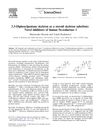
August 2007 in “Bioorganic & medicinal chemistry letters”
13 citations
,
August 2007 in “Bioorganic & medicinal chemistry letters” A new compound effectively inhibits human 5α-reductase 1.
 3 citations
,
July 2022 in “Stem Cell Research & Therapy”
3 citations
,
July 2022 in “Stem Cell Research & Therapy” Turning off a specific gene in stem cells speeds up skin healing by helping cells move better.
 35 citations
,
August 2010 in “The American journal of pathology”
35 citations
,
August 2010 in “The American journal of pathology” Researchers created a new mouse model for studying Citrullinemia Type I and similar conditions, showing symptoms and treatment responses like those in humans.
 6 citations
,
January 2020 in “Czech Journal of Animal Science”
6 citations
,
January 2020 in “Czech Journal of Animal Science” The FAT1 gene and its variations can help improve wool quality in Chinese Merino sheep through selective breeding.
 April 2023 in “Journal of Investigative Dermatology”
 Blocking casein kinase 1 in skin cells can help melanocyte precursors move better, potentially helping with conditions like vitiligo or gray hair.
 April 2018 in “Journal of Investigative Dermatology”
 Higher levels of nidogen1 and type IV collagen are found in basal cell carcinoma compared to normal skin.
27 citations
,
October 1998 in “Differentiation” Basonuclin helps identify and track hair follicle development and cycling in mice.
July 2025 in “Journal of Investigative Dermatology”  3 citations
,
April 2019 in “The journal of investigative dermatology/Journal of investigative dermatology”
3 citations
,
April 2019 in “The journal of investigative dermatology/Journal of investigative dermatology” ILC1 cells contribute to hair loss in alopecia areata.
477 citations
,
March 2004 in “Proceedings of the National Academy of Sciences” The DMI3 gene is essential for nodule development and symbiosis in certain plants.