43 citations
,
March 1942 in “The Journal of experimental medicine/The journal of experimental medicine” Mice need pantothenic acid to make inositol.
49 citations
,
January 2010 in “Plant and Cell Physiology” LPR1 regulates root growth under low phosphate stress independently of SIZ1 in Arabidopsis thaliana.
 January 2023 in “Brazilian Journal of Pharmaceutical Sciences”
 A method was found to accurately measure spironolactone and canrenone in blood samples using liquid chromatography-mass spectrometry.
20 citations
,
February 2017 in “European journal of pharmaceutical sciences” The MPA-ISO cocrystal improved solubility and dissolution rate, while the others did not.
 1 citations
,
April 2020 in “bioRxiv (Cold Spring Harbor Laboratory)”
1 citations
,
April 2020 in “bioRxiv (Cold Spring Harbor Laboratory)” Polyamines are important in deciding hair follicle stem cell behavior, affecting hair growth and loss.
 54 citations
,
December 2014 in “Wound Repair and Regeneration”
54 citations
,
December 2014 in “Wound Repair and Regeneration” PRP injections may improve hair thickness and density in female hair loss patients.
 1 citations
,
August 2023 in “Journal of Dentomaxillofacial Science”
1 citations
,
August 2023 in “Journal of Dentomaxillofacial Science” Freeze-dried platelet-rich plasma boosts bone growth in gum treatment.
 August 1994 in “Molecular Endocrinology”
 Changing protein kinase levels in pituitary cells affects calcium flow and beta-endorphin release.
4 citations
,
January 1994 in “Current Opinion in Endocrinology & Diabetes” PTHrP regulates various normal body functions, including bone development, skin, and muscle function.
17 citations
,
October 2023 in “Molecules” Plant-derived PDRN from ginseng roots effectively heals skin and improves its barrier.
6 citations
,
November 2021 in “Notulae Botanicae Horti Agrobotanici Cluj-Napoca” Phosphorus affects walnut root hair growth by altering auxin levels.
January 2005 in “Life sciences” Targeting LPA could help treat skin disorders.
15 citations
,
January 2017 in “Polymers” Polyelectrolytes can improve cell surfaces for better medical applications.
 December 2025 in “International Journal of Pharmacology”
 iPSC-derived artificial platelets show promise for consistent and effective regenerative therapies.
 March 2025 in “Frontiers in Plant Science”
 The ZmNF-YC1–ZmAPRG pathway in maize improves phosphorus efficiency and grain yield, suggesting it as a target for breeding better crops.
 26 citations
,
August 2016 in “ACS Applied Materials & Interfaces”
26 citations
,
August 2016 in “ACS Applied Materials & Interfaces” A boronic acid copolymer quickly forms cell clusters, useful for tissue and tumor modeling.
 13 citations
,
July 2019 in “Journal of Dermatological Science”
13 citations
,
July 2019 in “Journal of Dermatological Science” Increasing alkaline phosphatase in human skin cells helps to grow more hair.
19 citations
,
September 1971 in “Journal of Investigative Dermatology” 22 citations
,
October 2018 in “Molecular Medicine Reports” Classic PDRN improves wound healing quality by enhancing cell migration.
2 citations
,
February 2012 in “PubMed” Gp₄G promotes hair growth and improves skin health.
2 citations
,
May 1981 in “Journal of Animal Science” Hair mineral analysis is not very useful for assessing overall mineral composition in animals.
6 citations
,
October 2003 in “Journal of applied polymer science” A new method using poly(ethylene imine) improves hair dyeing at lower temperatures with better color retention.
April 2024 in “Актуальні питання педіатрії акушерства та гінекології” Inositol improves metabolism, hormone balance, and reproductive health in women with PCOS and obesity.
November 2023 in “Applied sciences” Pig blood can be used to mass-produce stable, low-cost platelet dry powder for medical use.
 March 2024 in “Romanian Medical Journal”
 Inositol shows promise in treating PCOS and other health issues, but more research is needed.
15 citations
,
March 1987 in “Phycologia” Phosphorus limitation causes significant hair growth in certain algae.
189 citations
,
July 2000 in “American Journal of Botany” Arabidopsis thaliana root hairs efficiently acquire phosphorus in low-phosphorus conditions.
 2 citations
,
September 1980 in “Experientia”
2 citations
,
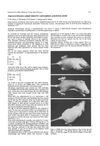
September 1980 in “Experientia” Polyethylene alanine caused hair loss in young lab animals but not in adults, with hair regrowth occurring within 20 days.
Encapsulating hair follicle cells in a special gel boosts their activity.
26 citations
,
June 2003 in “PubMed” Alpha-difluoromethylornithine prevents cancer in mice but causes hair loss.