 34 citations
,
September 2020 in “BMC Endocrine Disorders”
34 citations
,
September 2020 in “BMC Endocrine Disorders” Existing drug dexamethasone may lower death risk in severe COVID-19 cases; more research needed for other drugs.
 24 citations
,
February 2022 in “Reviews in Endocrine and Metabolic Disorders”
24 citations
,
February 2022 in “Reviews in Endocrine and Metabolic Disorders” Women with PCOS have a higher risk of severe COVID-19 due to related health issues.
 18 citations
,
November 2016 in “Neuromuscular Disorders”
18 citations
,
November 2016 in “Neuromuscular Disorders” Patients with myotonic dystrophy often have skin problems that suggest early aging and vitamin D issues, and the severity of these problems is linked to their genetic condition and vitamin D levels.
 11 citations
,
May 2021 in “Journal of Medical Virology”
11 citations
,
May 2021 in “Journal of Medical Virology” Men are more likely to have severe respiratory viral infections like COVID-19 due to hormonal and genetic differences, while women generally have stronger immune responses.
 6 citations
,
March 2021 in “Cytotechnology”
6 citations
,
March 2021 in “Cytotechnology” Mesenchymal stem cells show promise in treating COVID-19 by reducing inflammation and aiding recovery, but more research is needed.
 2 citations
,
December 2023 in “Journal of clinical immunology”
2 citations
,
December 2023 in “Journal of clinical immunology” Ruxolitinib significantly improves multiple autoimmune conditions in APS-1 patients.
 April 2026 in “Signal Transduction and Targeted Therapy”
 Balancing testosterone may reduce COVID-19 severity.

New-onset fibromyalgia after COVID-19 is poorly understood, needing better definitions and studies.
 April 2021 in “Journal of Investigative Dermatology”
 Female authorship in dermatology publications increased during the COVID-19 pandemic, but women are still underrepresented in senior roles.
 July 2016 in “American Journal of Dermatopathology”
 The meeting showcased rare skin disease cases, highlighting the need for accurate diagnosis and treatment.
 June 1996 in “Irish Journal of Medical Science (1971 -)”
 The document summarizes medical findings on topics like heart rhythm treatment, sleep apnea therapy, and various health conditions and treatments.
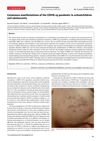 January 2023 in “Acta dermatovenerologica Alpina, Pannonica et Adriatica (Tiskana izd.)”
 The article concludes that schoolchildren and adolescents experienced various skin issues during the COVID-19 pandemic, including acne from masks and other skin reactions from the virus and vaccines.
 September 2022 in “Revista de la Asociación Colombiana de Dermatología y Cirugía Dermatológica”
 Skin symptoms appear in up to 20% of Covid-19 cases.
 125 citations
,
August 2020 in “Frontiers in Immunology”
125 citations
,
August 2020 in “Frontiers in Immunology” Men generally have more severe COVID-19 cases and higher death rates than women due to biological differences.
 42 citations
,
April 2021 in “Journal of clinical pharmacology”
42 citations
,
April 2021 in “Journal of clinical pharmacology” Baricitinib helps treat several diseases, including COVID-19, but has side effects and needs careful monitoring.
 21 citations
,
January 2021 in “Therapeutic Advances in Endocrinology and Metabolism”
21 citations
,
January 2021 in “Therapeutic Advances in Endocrinology and Metabolism” Testosterone may have a dual role in COVID-19, potentially worsening outcomes in men, and testosterone therapy could help some patients, but more research is needed.
 12 citations
,
January 2022 in “Journal of Menopausal Medicine”
12 citations
,
January 2022 in “Journal of Menopausal Medicine” Careful medical care is needed for those over 50 on hormone therapy during COVID-19.
 10 citations
,
January 2023 in “Molecular and Cellular Biochemistry”
10 citations
,
January 2023 in “Molecular and Cellular Biochemistry” Solanum nigrum shows promise for treating COVID-19 and its complications, but more research is needed.
 8 citations
,
February 2022 in “Journal of Clinical Medicine Research”
8 citations
,
February 2022 in “Journal of Clinical Medicine Research” The MATH+ protocol aims to improve COVID-19 outcomes using a combination of specific treatments.
 7 citations
,
January 2021 in “The journal of gene medicine”
7 citations
,
January 2021 in “The journal of gene medicine” Certain genetic differences may affect how likely someone is to get COVID-19 and how severe it might be.
 7 citations
,
December 2020 in “Clinics in Dermatology”
7 citations
,
December 2020 in “Clinics in Dermatology” Some alopecia treatments might help treat COVID-19, but more research is needed.
Lower LDL-c levels predict higher COVID-19 mortality.
 July 2021 in “International Journal of Research in Ayurveda and Pharmacy”
 Natural plant compounds may offer safer COVID-19 treatments with fewer side effects.
 105 citations
,
January 2004 in “The Journal of Urology”
105 citations
,
January 2004 in “The Journal of Urology” Finasteride improves chronic pelvic pain, saw palmetto doesn't.
 70 citations
,
July 2020 in “Pharmacological Reports”
70 citations
,
July 2020 in “Pharmacological Reports” Cepharanthine, a Japanese hair loss drug, shows promise as a COVID-19 treatment but needs more testing.
 27 citations
,
September 2017 in “Acta dermato-venereologica”
27 citations
,
September 2017 in “Acta dermato-venereologica” Adults with certain skin conditions may have higher levels of inflammation in their body.
 December 2022 in “Urology Herald”
 Hormonal status from androgen deprivation therapy may affect COVID-19 severity in men.
 June 2022 in “Organic communications”
 Natural compounds, especially Withaferin-A, may help treat post-COVID-19 complications, but some may have side effects.
 February 2022 in “International journal of KIU”
 Certain genes and nutrients like vitamin D, zinc, and omega fatty acids affect COVID-19 severity and infection risk.
 January 2022 in “International Journal of Science and Research (IJSR)”
 Women with PCOS may be more susceptible to COVID-19 due to hormonal and psychological factors.