The new hydrogel helps heal burn wounds better than current options by reducing bacteria and inflammation.
 August 2024 in “Frontiers in Pharmacology”
 Antibody treatments show promise for hair loss but need more research.
April 2024 in “International journal of molecular sciences” Dermal factors are crucial in regulating melanin production in skin.
 April 2024 in “Bioscience trends”
 Higher levels of certain DNAs in blood may indicate hair follicle damage in alopecia areata patients.
March 2024 in “Current issues in molecular biology” Personalized medicine in dermatology uses molecular biomarkers to improve diagnosis and treatment but needs further advancements for practical use.
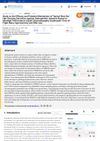 February 2024 in “ACS Omega”
 The Shen Bai Hair Growing Decoction may help treat hair loss by promoting hair growth and reducing inflammation.
 February 2024 in “Journal of Education, Health and Sport”
 Different treatments for PCOS should be tailored to the individual, including lifestyle changes and various medications.
July 2023 in “Journal of the European Academy of Dermatology and Venereology” Anti-IL17A therapy reduced venous leg ulcer size by 64% without major side effects.
 April 2023 in “Journal of Investigative Dermatology”
 Booster shots of mRNA vaccines for COVID-19 increased protective antibodies without worsening autoimmune skin conditions in patients.
 April 2023 in “Journal of Investigative Dermatology”
 The new recombinant human collagen can help slow skin aging and repair skin, while also controlling inflammation.
 January 2023 in “Biomedicine & Pharmacotherapy”
 Low oxygen conditions improve how well certain stem cells from embryos can make hair grow longer and faster.
January 2022 in “Faculty of 1000 Research Ltd” Understanding molecular mediators can improve skin healing treatments.
 December 2021 in “Daehanhanuihakoeji”
 The traditional herbal formulas Yongdamsagan-Tang and Paljung-san, along with the drug finasteride, can reduce inflammation and may work together without affecting each other's effectiveness against benign prostatic hyperplasia.
 April 2021 in “Sohag Medical Journal”
 Alopecia areata is an autoimmune condition causing hair loss, linked to genetic factors and immune system issues, with no cure yet.
December 2020 in “The journal of investigative dermatology/Journal of investigative dermatology” Papulopustular rosacea is an inflammatory skin condition treatable with lifestyle changes and medications.
 January 2020 in “Archives of Medicine and Health Sciences”
 Certain immune molecules and stress affect hair loss, and while genes play a role, more research is needed to fully understand and treat it.
 April 2018 in “Journal of Investigative Dermatology”
 IL-9 increases skin cell movement but decreases their ability to invade, and this effect is controlled by cell contractility, not by MMPs.
 April 2018 in “Journal of Investigative Dermatology”
 Cutaneous lupus patients have higher levels of certain immune cells in their blood and skin.
December 2017 in “Annales de dermatologie et de vénéréologie” In 2017, pediatric dermatology advanced with new treatments and insights into various skin conditions in children.
IL-1 and IL-7 help activate cells that boost hair follicle stem cell growth, aiding wound healing.
IL-1 signaling is crucial for hair follicle stem cell growth and wound healing.
 June 2017 in “Experimental dermatology”
 Skin has a larger surface area than thought, certain skin cells improve skin flap survival, better trials for skin conditions in children are needed, Stevens-Johnson syndrome rates vary by age and race, and better skin barrier function may reduce inflammation in the elderly.
 April 2017 in “Journal of Investigative Dermatology”
 Cow milk sugars increase fat production and inflammation in skin oil cells.
 July 2016 in “Cancer Research”
 A topical lotion helped manage hair loss from chemotherapy by affecting cell death, inflammation, and collagen, with no side effects.
 April 2016 in “Plastic and reconstructive surgery. Global open”
 Tafluprost could be a potential treatment for hair loss by promoting hair growth phase changes.
 April 2015 in “Plastic and Reconstructive Surgery”
 TLR3 activation helps improve skin and hair follicle healing in mice.
 October 2013 in “Journal of Investigative Dermatology”
 Collagen VII helps skin heal and stay strong, sirolimus may lower skin cancer risk in kidney transplant patients, high-molecular-mass hyaluronan helps naked mole rats resist cancer, dermal γδ T cells aid in hair growth in rodents, and overexpression of IL-33 in mouse skin causes itchiness, offering a model for studying allergic inflammation treatments.
 October 2012 in “Humana Press eBooks”
 Grape seed extract is good for skin care, with antioxidant, anti-inflammatory, and anti-cancer effects.
 March 2012 in “Journal of The American Academy of Dermatology”
 Higher levels of certain nerve-related proteins are linked to hair loss in women with scalp pain.
 October 2010 in “Journal of Men's Health”
 Larger prostate size in older men may be linked to poorer semen quality and fertility issues.