 1 citations
,
October 2023 in “JEADV. Journal of the European Academy of Dermatology and Venereology/Journal of the European Academy of Dermatology and Venereology”
1 citations
,
October 2023 in “JEADV. Journal of the European Academy of Dermatology and Venereology/Journal of the European Academy of Dermatology and Venereology” A man developed skin lesions as a side effect of a gamma secretase inhibitor used for treating a tumor.
 1 citations
,
August 2018 in “bioRxiv (Cold Spring Harbor Laboratory)”
1 citations
,
August 2018 in “bioRxiv (Cold Spring Harbor Laboratory)” A new mutation in the TMEM173 gene and a risk allele in IFIH1 cause a unique set of immune-related symptoms.
 56 citations
,
June 1970 in “The BMJ”
56 citations
,
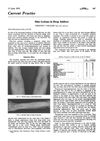
June 1970 in “The BMJ” Drug addicts often have scars, skin color changes, blocked veins, and bruising, with severe ulcers from barbiturate injections.
 165 citations
,
September 2011 in “Journal of Public Policy & Marketing”
165 citations
,
September 2011 in “Journal of Public Policy & Marketing” People who are more materialistic often expect life changes from buying things, leading to more debt and credit misuse.
December 2024 in “Clinical and Experimental Dermatology” Patients with central centrifugal cicatricial alopecia benefit from shared decision-making with their doctors.
24 citations
,
October 2018 in “Addiction Biology” Alcohol dependence affects stress hormone levels more than childhood maltreatment.
112 citations
,
January 2013 in “Experimental dermatology” Faulty Notch signalling may cause hair follicle changes and inflammation in hidradenitis suppurativa.
July 2025 in “Skin Appendage Disorders” Improving education, insurance, and support can help scarring alopecia patients access better care.
 2 citations
,
July 2021 in “Journal of The American Academy of Dermatology”
2 citations
,
July 2021 in “Journal of The American Academy of Dermatology” People with alopecia who are more resilient tend to feel less stressed.
November 2025 in “OPAL (Open@LaTrobe) (La Trobe University)” Androgenetic alopecia negatively impacts mental health, suggesting a need for psychological support in treatment.
 6 citations
,
December 2008 in “Clinics in Dermatology”
6 citations
,
December 2008 in “Clinics in Dermatology” Escitalopram might effectively treat delusions of parasitosis and possibly Morgellons disease, with psychological factors being important to consider.
 January 2024 in “Genetics in Medicine Open”
 A new IL6ST gene variant may cause a unique form of hyper-IgE syndrome with skin abscesses and high IgE levels.
 21 citations
,
August 2011 in “Body Image”
21 citations
,
August 2011 in “Body Image” Acceptance reduces hair loss distress and medical consultations; coping mechanisms increase them.
 April 2026 in “Zenodo (CERN European Organization for Nuclear Research)”
 Post-exposure syndromes are persistent conditions caused by past exposures, needing unique interventions.
 February 2026 in “Zenodo (CERN European Organization for Nuclear Research)”
 Gut bacteria overgrowth may cause some Post-Finasteride Syndrome symptoms.
 October 2023 in “Han'gug miyong haghoeji/Journal of the Korean society of cosmetology”
 Understanding psychological discomfort in hair loss can improve treatment outcomes.
4 citations
,
December 2024 in “JAAD Case Reports” Nirogacestat can cause severe skin issues like hidradenitis suppurativa.
 January 2017 in “Journal of clinical & experimental dermatology research”
 The case shows skin changes can indicate deeper health issues like insulin resistance, which are challenging to manage.
40 citations
,
October 2017 in “Acta Dermato Venereologica” Understanding patients' views on their illness can help improve their disease management.
 August 2025 in “Libyan Medical Journal”
 People with vitiligo or alopecia areata have higher anxiety and depression than healthy people.
 June 2021 in “International Journal of Research in Dermatology”
 Half of the people with alcohol dependency in the study had liver disease and skin issues like seborrheic dermatitis, which are important signs of alcohol abuse.
 3 citations
,
July 2020 in “Journal of Cosmetic Dermatology”
3 citations
,
July 2020 in “Journal of Cosmetic Dermatology” The COVID-19 pandemic led to more young people getting red stretch marks due to lifestyle changes like less activity and quick weight gain.
43 citations
,
December 2004 in “Journal of loss & trauma” People with alopecia areata often experience negative personal, social, and medical impacts, and need psychological support.
 May 2014 in “Journal of The American Academy of Dermatology”
 Patients with nonmelanoma skin cancers are most bothered by fear of progression, appearance concerns, and having cancer.
January 2021 in “Brazilian Journal of Development” Female hair loss causes emotional distress and needs holistic treatment.
May 2026 in “Pakistan Journal of Health Sciences” Comprehensive medical and psychosocial support is essential to improve the quality of life for alopecia areata patients.
 August 2025 in “Psychiatry Neurology and Medical Psychology”
 Mental health issues affect adaptation in alopecia patients more than the cause of hair loss.
 February 2024 in “International neuropsychiatric disease journal”
 Alopecia areata severely impacts quality of life, mental health, and work productivity.
 January 2017 in “Journal of cosmetology & trichology”
 Hair loss can cause anxiety and depression, especially in young, single women, and early psychological support is important.
 9 citations
,
February 2012 in “Social Semiotics”
9 citations
,
February 2012 in “Social Semiotics” The document concludes that modern photo stories help represent and challenge how breast cancer affects women's identities and societal norms.