The skin plays a key role in immune responses and reflects emotional and stress reactions.
The transcription factor Meis2 is essential for touch sensation and proper nerve development in touch receptors.
January 2026 in “Addiction Biology” Finasteride may help reduce alcohol cravings and related brain activity.
 December 2025 in “Nature Communications”
 Club-like receptors detect light touch but not whisking.
June 2020 in “Journal of Investigative Dermatology” Atopic dermatitis shows a link between skin layers in inflammation, detectable with detailed gene analysis.
21 citations
,
March 2023 in “Journal of Crohn s and Colitis” Microvascular damage and platelet issues persist in ulcerative colitis remission, helping assess disease states.
 September 2011 in “Urology”
 The IPP index is linked to storage symptoms and leftover urine, and may help manage urinary tract symptoms.
 April 2026 in “bioRxiv (Cold Spring Harbor Laboratory)”
 Dopamine receptors in the brain influence itch-related scratching behavior.
 6 citations
,
September 2021 in “Experimental Brain Research”
6 citations
,
September 2021 in “Experimental Brain Research” Rats have different touch receptors in their paws that help with movement and handling objects.
 6 citations
,
July 2007 in “Developmental Dynamics”
6 citations
,
July 2007 in “Developmental Dynamics” The molecule Wise is involved in the development of various structures in chick embryos.
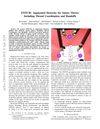 April 2024 in “arXiv (Cornell University)”
 STITCH improves suture accuracy and efficiency, especially with human help.
 October 2019 in “Academic medicine”
 The medical student learned to balance medical knowledge with empathy when delivering difficult news to patients.
May 2026 in “Journal of Controlled Release”  23 citations
,
January 2024 in “Nature Immunology”
23 citations
,
January 2024 in “Nature Immunology” γδ T cells adapt uniquely to different tissues in mice.
 3 citations
,
December 1962 in “Australasian Journal of Dermatology”
3 citations
,
December 1962 in “Australasian Journal of Dermatology” The current state and future directions of the field that studies the connection between the mind and skin are discussed.
22 citations
,
January 1992 in “PubMed” Higher CSF 5-HIAA levels may predict better response to serotonin re-uptake inhibitors in trichotillomania.
 July 2025 in “Discover Mental Health”
 Loneliness reduces academic enthusiasm in students.

Plant roots respond to fungus smells by possibly using certain proteins and a plant hormone to change root growth, but more research is needed.
 November 2025 in “Frontiers in Nutrition”
 Better nutrition may reduce fecal incontinence in stroke patients by lowering inflammation and improving antioxidant levels.
 August 2022 in “bioRxiv (Cold Spring Harbor Laboratory)”
 Mouse touch-sensitive nerve cells adjust their connections based on competition with other similar cells.
14 citations
,
February 2024 in “Biomolecules” TRPV channels are important in osteoarthritis and could be key to new treatments.
 September 2021 in “Physiology News”
 A neurodivergent physiologist reflects on how his unique perspective benefits his research, despite facing challenges with tasks and communication.
7 citations
,
July 2021 in “The journal of investigative dermatology/Journal of investigative dermatology” Human skin can be reconnected to nerves using stem cells, which may help with skin health and healing.
49 citations
,
March 1996 in “Experimental Brain Research” 20 citations
,
December 2013 in “PLoS ONE” β1 integrin is essential for the survival, growth, and movement of human epithelial progenitor cells.
 5 citations
,
January 2016 in “Stem Cells International”
5 citations
,
January 2016 in “Stem Cells International” Certain skin cells near the base of hair muscles may help renew and stabilize skin, possibly affecting skin disorder understanding.
12 citations
,
April 2019 in “Nature protocols” Scientists created a functional 3D skin system from stem cells that can be transplanted into wounds.
December 2006 in “Experimental Dermatology” Adipose tissue acts as an endocrine organ affecting metabolism, skin, and stress response.
8 citations
,
January 2022 in “Current topics in developmental biology/Current Topics in Developmental Biology” April 2017 in “bioRxiv (Cold Spring Harbor Laboratory)” The dfRootChip revealed how Arabidopsis roots adapt and grow in uneven conditions.