 February 2026 in “Nature Communications”
 A specific group of immune and skin cells may cause chronic inflammation in atopic dermatitis.
 February 2026 in “American Journal of Clinical Dermatology”
 Radiotherapy can cause skin fibrosis, which is often overlooked and needs better treatment and evaluation.
December 2025 in “Preprints.org” Aging dermal papilla cells can be reprogrammed for potential hair growth and skin repair.
 November 2025 in “Frontiers in Immunology”
 Immune cells are crucial for normal skin development and their dysfunction can cause skin disorders.
July 2025 in “Journal of Investigative Dermatology” Hhip-Cre effectively targets dermal papilla cells for gene manipulation in hair biology.
 May 2025 in “The Journal of Rheumatology”
 Chronic granulomatous disease may be linked to developing systemic lupus erythematosus.
 August 2024 in “Indian Journal of Skin Allergy”
 Stem-cell therapy shows promise for skin conditions but needs more research.
June 2024 in “Regenerative Therapy” Exosomes from stem cells may help rejuvenate skin and regrow hair, but more research is needed.
 March 2024 in “Cell communication and signaling”
 Lack of sleep in mice leads to prostatitis by reducing certain hormones and activating an inflammatory pathway, which can be temporarily fixed with normal sleep.
 September 2023 in “Clinical, cosmetic and investigational dermatology”
 A patient with a rare form of lupus improved after treatment for skin ulcers and hair loss on the face and scalp.
 August 2023 in “Malaysian Journal of Medicine and Health Sciences/Malaysian journal of medicine and health sciences”
 Pueraria mirifica extract may help treat benign prostatic hyperplasia.
 May 2023 in “International Journal of Molecular Sciences”
 Mesenchymal stem cells could help treat radiation-induced bladder damage but more research is needed to overcome current limitations.
 January 2023 in “Applied sciences”
 Gefitinib and Sasam-Kyeongokgo together significantly reduce cancer growth and improve immune response in mice.
 January 2023 in “Research Square (Research Square)”
 IGF2BP3 gene is up-regulated in keloid patients, suggesting potential targets for treatment.
 December 2022 in “KSBB Journal”
 Activating TLR3 boosts autophagy gene expression in skin cells.
Different types of sun exposure damage skin cells and immune cells, with chronic exposure leading to more severe and lasting damage.
 May 2021 in “International journal of developmental research”
 Estrogens and progesterone are key in regulating melasma pigmentation.
Live imaging helps us understand skin immune responses and develop treatments.
Microneedle technology is effective for skin rejuvenation and enhancing cosmeceutical delivery, with ongoing innovation and increasing commercialization.
 January 2017 in “Springer eBooks”
 The document explains various skin conditions and their treatments.
 April 2016 in “The journal of investigative dermatology/Journal of investigative dermatology”
 RPGRIP1L helps skin cells stick together by blocking PKCβII, which can prevent skin blistering like in pemphigus.
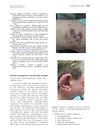
A 72-year-old man was diagnosed with a rare skin form of Rosai-Dorfman disease after years of misdiagnosis.
 May 2009 in “The American Journal of Dermatopathology”
 Mast cells play a significant role in hair loss conditions like male pattern hair loss and alopecia areata.
 January 1981 in “The Journal of Toxicological Sciences”
 Hydrocortisone 17-butyrate 21-propionate ointment caused reversible side effects like skin issues, weight gain, and organ changes in dogs.
December 2022 in “Nature Communications” Bead-jet printing of stem cells improves muscle and hair regeneration.
November 2022 in “Regenerative Therapy” Advancements in tissue engineering show promise for hair follicle regeneration to treat hair loss.
 28 citations
,
January 2016 in “Vitamins and hormones”
28 citations
,
January 2016 in “Vitamins and hormones” Thymosin β4 helps improve skin healing and reduce scarring.
 27 citations
,
July 2015 in “International Journal of Dermatology”
27 citations
,
July 2015 in “International Journal of Dermatology” Every elderly patient had at least one skin condition, often linked to other diseases, highlighting the need for integrated skin and general healthcare in the elderly.
 7 citations
,
December 2021 in “European Respiratory Review”
7 citations
,
December 2021 in “European Respiratory Review” The document concludes that diagnosing and treating Interstitial Pneumonia with Autoimmune Features (IPAF) is challenging, needs a multidisciplinary approach, and further research for better diagnostic criteria and treatments. It also emphasizes regular checks for Connective Tissue Disease symptoms in all patients with Interstitial Lung Disease.
 4 citations
,
July 2012 in “Dermatologic Clinics”
4 citations
,
July 2012 in “Dermatologic Clinics” New biopsy techniques and tools improve alopecia diagnosis, and both too much and too little selenium can cause hair loss.