47 citations
,
August 2016 in “American Journal Of Pathology” Fibroblast changes in systemic sclerosis may help understand disease severity and treatment.
 39 citations
,
December 2001 in “JNCI: Journal of the National Cancer Institute”
39 citations
,
December 2001 in “JNCI: Journal of the National Cancer Institute” Using a gene therapy with the Sonic Hedgehog gene helps mice regrow hair faster after losing it from chemotherapy.
 31 citations
,
April 2010 in “British journal of dermatology/British journal of dermatology, Supplement”
31 citations
,
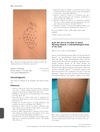
April 2010 in “British journal of dermatology/British journal of dermatology, Supplement” Frontal fibrosing alopecia can cause sudden hair loss on limbs, similar to scalp hair loss.
 34 citations
,
December 2012 in “Indian Journal of Dermatology, Venereology and Leprology”
34 citations
,
December 2012 in “Indian Journal of Dermatology, Venereology and Leprology” Mesotherapy shows promise for cellulite and facial rejuvenation but has mixed results for body sculpting and hair loss, with more research needed for safety and effectiveness.
 1 citations
,
May 2002 in “British Journal of Dermatology”
1 citations
,
May 2002 in “British Journal of Dermatology” Hair loss caused by longer latent hair cycle and sudden miniaturization, not gradual follicle size reduction.
 May 2002 in “British Journal of Dermatology”
 Hair loss caused by longer latent hair cycle and sudden miniaturization, not gradual follicle size reduction.
 53 citations
,
May 1987 in “The Lancet”
53 citations
,
May 1987 in “The Lancet” The document suggests a possible link between Crohn's disease and Johne's disease and calls for more research.
 499 citations
,
September 2011 in “Cell”
499 citations
,
September 2011 in “Cell” Fat-related cells are important for initiating hair growth.
 88 citations
,
July 2019 in “International Journal of Molecular Sciences”
88 citations
,
July 2019 in “International Journal of Molecular Sciences” Using human fat tissue derived stem cells in micrografts can safely and effectively increase hair density in people with hair loss.
 51 citations
,
October 2002 in “British Journal of Dermatology”
51 citations
,
October 2002 in “British Journal of Dermatology” Finasteride increases hair density in female androgenetic alopecia, but individual results may vary.
 3 citations
,
April 2020 in “British Journal of Dermatology”
3 citations
,
April 2020 in “British Journal of Dermatology” PRP treatment helps 70.1% of hair loss patients after two sessions.
 3 citations
,
April 2019 in “Annals of hepatology”
3 citations
,
April 2019 in “Annals of hepatology” Peanut allergies can be transferred through organ transplants.
 3 citations
,
July 2008 in “British journal of dermatology/British journal of dermatology, Supplement”
3 citations
,
July 2008 in “British journal of dermatology/British journal of dermatology, Supplement” Terbinafine can cause hair loss.
 1 citations
,
April 2018 in “Lasers in Surgery and Medicine”
1 citations
,
April 2018 in “Lasers in Surgery and Medicine” New treatments and technologies in laser medicine show promise for improving skin conditions, fat reduction, cancer treatment, wound healing, and hair restoration.
 1 citations
,
August 2012
1 citations
,
August 2012 The document discusses various diseases of the outer ear, categorized by symptoms like redness, crusts, bumps, pus-filled lesions, lumps, ulcers, and hair loss.
 January 2026 in “Drug Delivery and Translational Research”
 Multicomponent crystals in microneedles improve drug delivery for hair loss treatment.

Human placental extract effectively and safely improves melasma, ulcers, and alopecia areata.
 June 1930 in “Archives of dermatology”
 Dermatological conditions are complex, and treatments have mixed results.
 July 2008 in “British Journal of Dermatology”
 Cyclosporin doesn't stop hair loss.
 May 2021 in “Journal of the Endocrine Society”
 The 18-year-old girl likely has a condition called müllerian agenesis, which caused her to not have a uterus and experience no menstrual periods.
 80 citations
,
November 1975 in “Acta dermato-venereologica”
80 citations
,
November 1975 in “Acta dermato-venereologica” Large doses of glucocorticoids are not suitable for general use in treating severe alopecia areata due to inconsistent results and risks.
 77 citations
,
July 2012 in “Journal of Investigative Dermatology”
77 citations
,
July 2012 in “Journal of Investigative Dermatology” Wnt10b overexpression can regenerate hair follicles, possibly helping treat hair loss and alopecia.
 43 citations
,
August 2008 in “Regenerative Medicine”
43 citations
,
August 2008 in “Regenerative Medicine” Scientists created early-stage hairs from mouse cells that grew into normal, pigmented hair when implanted into other mice.
 25 citations
,
May 2014 in “Facial Plastic Surgery”
25 citations
,
May 2014 in “Facial Plastic Surgery” PRFM may help treat hair loss, especially in mild cases.
 22 citations
,
August 2013 in “PLOS ONE”
22 citations
,
August 2013 in “PLOS ONE” The method safely and efficiently delivers genes to the skin but may not work for conditions needing high levels of gene products.
 16 citations
,
February 2018 in “Journal of Cosmetic Dermatology”
16 citations
,
February 2018 in “Journal of Cosmetic Dermatology” Carboxytherapy may help increase hair growth in alopecia patients but requires ongoing treatment.
 16 citations
,
August 2014 in “Colloids and surfaces. B, Biointerfaces”
16 citations
,
August 2014 in “Colloids and surfaces. B, Biointerfaces” Lipid-coated silica nanoparticles penetrate human skin more deeply than bare silica nanoparticles.
 14 citations
,
April 2020 in “Journal of Cosmetic Dermatology”
14 citations
,
April 2020 in “Journal of Cosmetic Dermatology” QR678 treatments were more effective and comfortable for male hair loss than PRP treatments.
 10 citations
,
September 2020 in “Archives of Dermatological Research”
10 citations
,
September 2020 in “Archives of Dermatological Research” Both methods improve hair density and thickness; double-spin may be more effective.
 6 citations
,
February 2019 in “Scientific reports”
6 citations
,
February 2019 in “Scientific reports” A brain-produced steroid causes increased scratching in mice with a skin condition similar to eczema.