 January 2025 in “Dermatology and Therapy”
 UVFT helps diagnose hair and scalp diseases by showing different fluorescence patterns.
52 citations
,
October 2007 in “Molecular Therapy” Injecting lentiviral vectors into early gestation mice effectively targets skin stem cells for potential gene therapy.
May 1966 in “Zhurnal Tekhnicheskoi Fiziki (U.S.S.R.) For English translation see Sov. Phys. - Tech. Phys. (Engl. Transl.)” Finasteride can prevent breast cancer progression by blocking progesterone's conversion to a cancer-promoting hormone.
2 citations
,
December 2022 in “Bio-Design and Manufacturing” A new portable microscope can effectively monitor skin wound healing in real-time.
 28 citations
,
October 1992 in “JEADV. Journal of the European Academy of Dermatology and Venereology/Journal of the European Academy of Dermatology and Venereology”
28 citations
,
October 1992 in “JEADV. Journal of the European Academy of Dermatology and Venereology/Journal of the European Academy of Dermatology and Venereology” SIP is a better method for measuring hair growth accurately.
July 2013 in “Neurosurgery” Spinal fMRI can help understand brainstem and spinal cord function, especially in spinal cord injury patients.
November 2022 in “bioRxiv (Cold Spring Harbor Laboratory)” Neonatal blood vessels rearrange and stabilize as adults, with adult vessels better at self-repair after injury.
3D-ultrasound can non-invasively detect and predict alopecia areata phases and outcomes.
28 citations
,
December 2002 in “Der Hautarzt” TrichoScan accurately measures hair growth and loss, showing increased hair counts and thickness with treatment.
 3 citations
,
April 2025 in “Nature Communications”
3 citations
,
April 2025 in “Nature Communications” GIANT improves brain imaging by using genetics to better map brain regions.
 March 2014 in “Journal of The American Academy of Dermatology”
 Reflectance confocal microscopy can noninvasively diagnose onychomatricoma by showing unique features different from healthy nails or nail fungus.
October 2022 in “Hair Transplantation” Digital imaging tools help accurately assess hair transplant candidates.
4 citations
,
August 2020 in “bioRxiv (Cold Spring Harbor Laboratory)” The tool iCOUNT helps understand how stem cells divide and affect tissue development and repair.
A new method allows detailed tracking of cell regeneration in crustacean legs.
9 citations
,
November 2006 in “Journal of Microscopy” Dye mainly stays on the hair surface and endocuticle.
1 citations
,
April 2023 in “Heliyon” Disitamab vedotin and gemcitabine effectively treated bladder cancer without major side effects.
 September 2025 in “bioRxiv (Cold Spring Harbor Laboratory)”
 Non-invasive methods can effectively monitor hair growth cycles, aiding hair loss treatment development.
 44 citations
,
August 2008 in “Archives of Dermatology”
44 citations
,
August 2008 in “Archives of Dermatology” Trichoscopy is a non-invasive way to diagnose hair and scalp problems without needing hair samples.
 5 citations
,
March 2017 in “Laser Physics Letters”
5 citations
,
March 2017 in “Laser Physics Letters” Different scalp imaging methods are important for studying hair and scalp health and require more volunteers for better evaluation.
1 citations
,
November 2004 in “International Journal of Cosmetic Science” External agents penetrate skin more easily in areas with fewer lipids, especially through hair follicles.
 February 2023 in “International Journal of Multimedia Computing”
 The improved algorithm enhances low-dose CT image quality significantly better than other methods.
 3 citations
,
October 2021 in “Research Square (Research Square)”
3 citations
,
October 2021 in “Research Square (Research Square)” The model can effectively help diagnose meibomian gland dysfunction automatically.
 October 2023 in “Indian journal of ophthalmology. Case reports”
 A woman lost vision in one eye after a forehead injection, but prompt treatment led to partial vision recovery.
 July 2018 in “Journal of The American Academy of Dermatology”
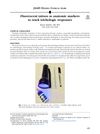
 Fluorescent tattoos are a good way to mark the scalp for hair treatments because they're accurate, invisible in normal light, and have low risk.
28 citations
,
June 2003 in “Applied immunohistochemistry & molecular morphology” Combining cell conditioning with mild protease digestion effectively shows versican mRNA in mouse skin sections.
 6 citations
,
January 2016 in “Springer eBooks”
6 citations
,
January 2016 in “Springer eBooks” Invasomes effectively deliver drugs through the skin and have potential for improved treatments.
 August 2022 in “Scholars academic journal of pharmacy”
 Invasomes loaded with clotrimazole gel could improve drug delivery through the skin for fungal treatment.
12 citations
,
May 2012 in “Journal of Biomedical Optics” Trichoscan® is best for measuring hair growth, RCM for analyzing hair follicles, and OCT is useful for both.
 2 citations
,
January 2008 in “Journal of The American Academy of Dermatology”
2 citations
,
January 2008 in “Journal of The American Academy of Dermatology” Trichoscopy is a helpful and quick method to diagnose hair loss without shaving.
5 citations
,
February 2019 in “bioRxiv (Cold Spring Harbor Laboratory)” 3D cell cultures produce extracellular vesicles similar to those in the body.