 1 citations
,
January 2006 in “Dermatologic Surgery”
1 citations
,
January 2006 in “Dermatologic Surgery” The SAFE System may reduce hair transplant transection rates but has been critiqued for not being as minimally invasive as claimed.
 July 2024 in “Journal of Cosmetic Dermatology”
 Fractional laser therapy is a promising, effective, and minimally invasive treatment for hair loss.
Deleting Smad4 and PTEN genes in mice causes rapid, invasive forestomach cancer.
Deleting Smad4 and PTEN genes in mice causes rapid, invasive stomach cancer.
 March 2023 in “Journal of skin and stem cell”
 Trichoscopy is a good, quick, non-invasive way to diagnose different types of hair loss.
 October 2015 in “Journal of Bioresource Management”
 Growing hair cells in the lab from plucked hairs could lead to a new, less invasive, and cheaper baldness treatment.
 67 citations
,
January 2022 in “Theranostics”
67 citations
,
January 2022 in “Theranostics” Advanced nanocarrier and microneedle drug delivery methods are more effective, safer, and less invasive for treating skin diseases.
 41 citations
,
August 2024 in “Drug Delivery and Translational Research”
41 citations
,
August 2024 in “Drug Delivery and Translational Research” 3D-printed microneedles improve drug delivery by being precise, cost-effective, and less invasive.
 8 citations
,
September 2015 in “Clinics in Dermatology”
8 citations
,
September 2015 in “Clinics in Dermatology” Hair loss in children is diagnosed and treated differently than in adults, with different common causes and a focus on less invasive methods.
 8 citations
,
January 2015 in “Clinical and Experimental Dermatology”
8 citations
,
January 2015 in “Clinical and Experimental Dermatology” A new model for hair regeneration in mice was created in 2015, which is faster and less invasive than the old method, producing normal hairs in about 21 days.
 8 citations
,
July 2008 in “Facial Plastic Surgery Clinics of North America”
8 citations
,
July 2008 in “Facial Plastic Surgery Clinics of North America” More men are getting non-surgical cosmetic treatments due to increased income and social acceptance, with less invasive options being preferred.
 7 citations
,
January 2012 in “International Journal of Trichology”
7 citations
,
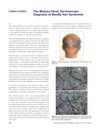
January 2012 in “International Journal of Trichology” A man with Woolly Hair Syndrome had very curly, fragile hair, and doctors used a special scalp examination to diagnose him without invasive tests.
 4 citations
,
January 2005 in “Elsevier eBooks”
4 citations
,
January 2005 in “Elsevier eBooks” Follicular Unit Transplantation is a precise hair restoration technique that requires careful planning and a skilled team, and Follicular Unit Extraction offers a less invasive option.
 4 citations
,
July 1992 in “Clinics in Dermatology”
4 citations
,
July 1992 in “Clinics in Dermatology” Skin surgery has significantly advanced since 1950, with improvements in chemical peels, hair restoration, lasers, and Mohs surgery, and the development of less invasive techniques and specialized training.
 1 citations
,
July 2021 in “Anais Brasileiros de Dermatologia”
1 citations
,
July 2021 in “Anais Brasileiros de Dermatologia” The conclusion is that three signs can help diagnose hair loss after it happens, potentially avoiding more invasive tests.
1 citations
,
January 2013 in “Lung India” Radiological findings help distinguish LAM, PLCH, and BHD to avoid invasive tests.
July 2024 in “LA CIENCIA AL SERVICIO DE LA SALUD Y NUTRICIÓN” The condition is harmless, doesn't worsen, and needs no invasive treatment.
 May 2021 in “Pakistan Journal of Medical and Health Sciences”
 Trichogram is useful for diagnosing hair disorders, but newer, non-invasive methods like trichoscopy are becoming more popular due to their sensitivity and ability to monitor treatment responses.
 November 2019 in “Journal of Aesthetic Nursing”
 The article concludes that a thorough diagnosis and treatment plan, including medications, non-invasive methods, or surgery, is important for managing hair loss, with a combination of minoxidil and finasteride being particularly effective.
January 2015 in “Faculty of 1000 Research Ltd” BPH treatment improved with personalized medicine, new drugs, and less invasive surgeries.
May 2013 in “Optometry and vision science” The document discusses challenges in eye care, including treating melanoma before macular hole repair, bloody tears resolved by blood pressure control, eyelash regrowth in hair-pulling disorder with medication, a non-invasive method to detect eyelash mites, and the psychological factors affecting contact lens comfort.
 August 2010 in “Journal of Investigative Dermatology”
 New hair regrowth model introduced, imiquimod kills skin cancer cells, T-cadherin loss makes skin cancer more invasive, no strong link between PTCH1 gene and skin cancer after transplant, and male teens more likely to have hereditary hair loss.
 July 2010 in “British Journal of Dermatology”
 New hair regrowth model proposed, imiquimod found to kill skin cancer cells, T-cadherin loss linked to invasive skin cancer, no clear gene link to skin cancer after transplant, and study on children's hair loss shows male dominance and genetic ties.
 November 2006 in “Dermatologic Surgery”
 Cutting hair follicles into pieces for transplantation results in poor growth and thinner hair, and the technique is more invasive than previously thought.
 February 2023 in “Journal of Advanced Research”
 A new method using Platelet-rich Plasma (PRP) in a microneedle can promote hair regrowth more efficiently and is painless, minimally invasive, and affordable.
17 citations
,
August 2021 in “Dermatologic surgery” Microneedling is generally safe but can cause minor, temporary side effects and requires caution for some patients.
1 citations
,
December 2024 in “Pomeranian Journal of Life Sciences” Microneedling helps heal and rejuvenate skin and gums effectively.
1 citations
,
February 2023 in “Arquivos de Ciências da Saúde da UNIPAR” Aesthetic hair treatments boost self-esteem and confidence by promoting hair growth, but more research is needed.
 July 2026 in “International Journal of Biology Pharmacy and Allied Sciences”
 Dermoscopy and natural oil blends help diagnose and treat skin issues effectively.
December 2025 in “International Journal of Pharmaceutics” PLGA-based microneedles show promise for painless, long-term drug delivery but need design and safety improvements.